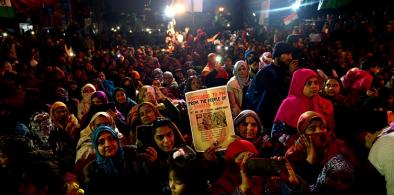
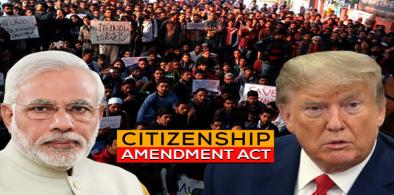
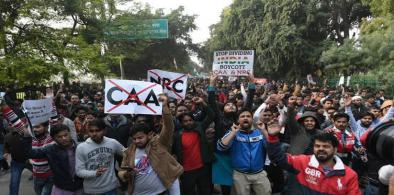
With Delhi assembly elections set for February 8, the battle lines are sharply drawn between two pitting ideologies that have polarised national discourse like at no time before, writes Tarun Basu for South Asia Monitor


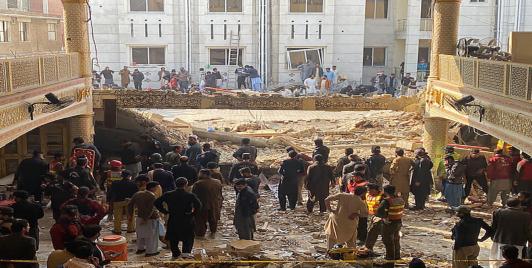
India must also recognise that Pakistan's internal security crisis has wider regional implications. Escalating Pakistan–Afghanistan tensions could create additional uncertainty along the western frontier, while attacks on Chinese projects could affect regional connectivity and investment.

India has demonstrated that it can develop and manufacture modern artillery systems. What needs reassessment is how quickly we acquire, integrate and field them, and how effectively we ensure that new technologies communicate and operate together.

If India says the security of its Northeast, border management, trade and connectivity matter, Bangladesh can equally say that water sharing, deaths at the border, market access, energy security, river management and sovereign equality matter to it.
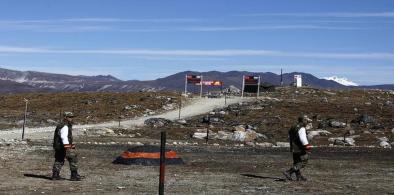
The Indian military views no disengagement in Arunachal Pradesh as part of a wider strategic recalibration, prompting India to match Chinese force rebalancing by shifting strike corps and resources equally across both northern and eastern fronts.

With Delhi assembly elections set for February 8, the battle lines are sharply drawn between two pitting ideologies that have polarised national discourse like at no time before, writes Tarun Basu for South Asia Monitor
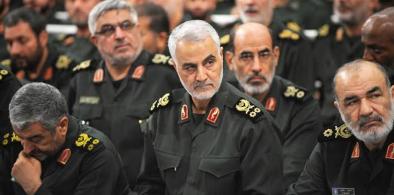
The re-emergence of IS would have a definite impact on the Af-Pak region, with its consequential fallout for India and regional peace and stability in South Asia, writes Brig Anil Gupta (retd) for South Asia Monitor

What makes the Shaheen Bagh rare in the history of Indian civil society movements is that this is the first-time Muslim women are leading a protest against a law passed by the state, writes Alakh Ranjan for South Asia Monitor

It is widely believed that India’s decision on CAA would ‘question the principle of equality before the law’ and emotionally impact the Muslim community of both India and its neighbouring countries, writes Sukanya Bali for South Asia Monitor

Shringla, who came in from Washington where he served as India’s ambassador, will have his work cut out, writes Nilova Roy Chaudhury for South Asia Monitor

The strategic gameplan of support to the Rohingya militancy is clearly visible. One, for China, making them into militants can be used to destabilize many countries, including India in South Asia, thus weakening its economic competitors, writes Swadesh Roy for South Asia Monitor

In South Asia, the issue of marine litter management is not taken as a priority by any of the nations, write Harsh Mahaseth and Shubham Sharma for South Asia Monitor

Salafist movements, such as Hizb ut-Tahrir and the Jamiat-E Eslah, while opposing Taliban methods, are generally the same, and these movements, consciously or unconsciously, pave the way for Taliban recruitment in Afghanistan, Writes Saleem Payenda for South Asia Monitor

Bangladesh and Maldives, amongst others, are the most afflicted and vulnerable victims of environmental pollution and climate change, Write Akmal Hossain for South Asia Monitor