Cyclone Mocha only reminds us of the urgency of India-Bangladesh-Myanmar-Thailand-China-Sri Lanka cyclone management cooperation. As a start, Myanmar-Bangladesh-India trilateral cooperation is a must in this regard.
The strategic significance of the offensive lies in control over Kachin State’s heavy rare-earth deposits, which account for roughly half of the world’s supply and are critical for electric vehicles and wind turbines. The KIA took control of these lucrative mining areas near Pangwa and Chipwi in late 2024 and has since heavily fortified its positions.
China in recent times has elevated some of its key bilateral relations, Vietnam, Pakistan, North Korea, to the level where they are now considered by Beijing as consequential to regional and global peace and stability. China’s foreign and 'grand strategy' is aimed at realizing a shared destiny for mankind and nurturing a new type of great-power relations within a multipolar world. This requires a strategic alignment between China’s strategy and others.
More importantly, the alleged sabotage occurred during a period of political transition following the developments of August 2024. Institutional loyalties, political rivalries, and competing networks of influence continue to shape Bangladesh's political landscape. In such a context, any breach involving the Prime Minister's secure communications infrastructure deserves careful examination.
India's MSME sector, the backbone of its export economy, remains largely unequipped to navigate European standards and certification requirements. As ABC Live noted, the next stage will be tougher than negotiation: India must now prove that its exporters, MSMEs, regulators, ports, testing labs, and state governments can actually use the agreement. A framework signed in Gothenburg means nothing to a textile exporter in Tiruppur who cannot get a product certified to EU standards.
Cyclone Mocha only reminds us of the urgency of India-Bangladesh-Myanmar-Thailand-China-Sri Lanka cyclone management cooperation. As a start, Myanmar-Bangladesh-India trilateral cooperation is a must in this regard.
After Karnataka, however, the BJP may be wary of going down that path when the world will be watching Modi’s forthcoming steps in the run-up to the 2024 general election
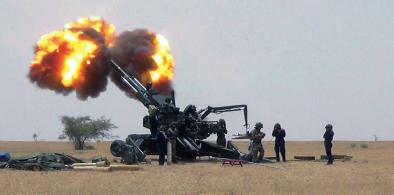
The lesson one can draw from 25 years of nuclear South Asia is that nuclear weapons are guarantors of stability at the highest or strategic levels, but they are certainly not the panacea to the security challenges faced by a nation, especially at the sub-conventional level. The case of the India-Pakistan conflict validates this point
Herein lies the paradox of Karnataka. The rest of educated India and the world knows the state mostly through the stories of its tech leaders and the vibrancy of Bengaluru, which has sometimes been voted as the top city to work for many and certainly for IT professionals. On the other hand, the state of Karnataka has become a tinderbox of communal strife.
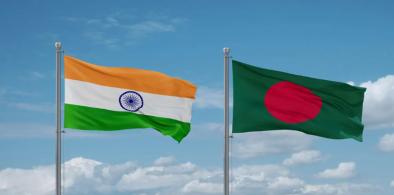
The concept of 'land-link' has already become operational. Credit is due to Bangladesh and its young foreign minister of state, Shahriar Alam, who has given a new dimension to ties between Northeast India and Bangladesh by showing the immense potential that can be exploited between the two countries by turning limitations into possibilities.
In a way, we are following the path of Pakistan and Sri Lanka. In Pakistan (Islamic nationalism), the hate manufactured against Hindus and Christians did result in their persecution there. In Sri Lanka (Buddhist Sinhala nationalism), Hindus (Tamils), Muslims and Christians have been on the receiving end of the consequences of hate.
The unceasing political chaos and the absence of a national consensus regarding the existential threat that stares Pakistan in the face are deteriorating the already fragile state of affairs. Political instability and economic meltdown not only compounds the system of governance but also create a fertile breeding ground for terrorism.
The rallying of such forces gives rise to fratricidal killings. Adivasis are close-knit groups. Pitting to kill one against the other sponsored by the State gives rise to not just distrust among the members of the group but against the State as well. The enmity that is being created among the Adivasis will have a long-term impact.
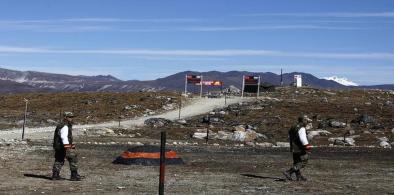
India needs to develop a more muscular political, diplomatic and military policy against China, military muscularity being contingent on political will. With clear designs on Indian territory, China cares two hoots about military-to-military cooperation.
The forthcoming SCO Defence Ministers' Meet at New Delhi on April 27-28, followed by the SCO Foreign Ministers Meet in Goa on May 5, and the G20 Summit in September 2023 in New Delhi will have participation by China, where ample scope for bilateral meetings exists. It is high time the Indian defence minister, foreign minister, and prime minister discuss the issue directly with their Chinese counterparts to determine what exactly the Chinese intentions are.
By establishing a bridge between South Asia and Southeast Asia, fostering closer interregional cooperation, and integrating Bangladesh into regional and global value chains, Japan's Bay of Bengal Industrial Growth Belt (BIG-B), an initiative for changing South Asia's economic outlook, can play a significant role in pitching Bangladesh into the center of the regional economy.
During his final weeks, Zafrullah was still thinking of the work that needed to be done. Having been a champion for maternal and child health for more than 50 years, he said we must think about old people and what must be done for the ageing population of Bangladesh.
Next month Indian Prime Minister Narendra Modi will be in Sydney for the Quad Summit and would also hold bilateral discussions with Australian Prime Minister Anthony Albanese, who was in New Delhi barely a month ago, reflecting the rapidly growing strategic partnership. At the meeting, education and research are likely to feature as a topic of discussion.
Afghanistan need not immerse itself in the Pakistan-China camp, as it would provoke India and the US. Afghanistan’s foreign policy now requires preparing for a multilateral relationship, prioritizing the economically driven interests of Afghanistan.
After the 2015 earthquakes in Nepal, human trafficking spiked. There were even early and forced marriages and widows were at risk of receiving unwanted sexual attention. Since there is hardly any gender-neutral discourse to the mitigation of gender-based violence after climate change, attempts are increasingly being made to change the gender-blind discourse on climate change and disaster management.