

The question also arises – is Delhi losing focus and getting diverted from the AEP by QUAD, Chinese influence on RCEP, and so on. If so then Delhi must decentralise the AEP to make it effective
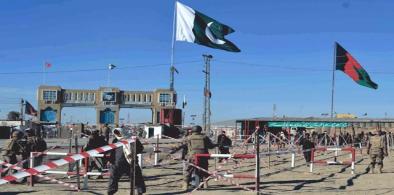
Any further instability in the region carries security implications for both countries. Escalating unrest along an already sensitive frontier can heighten tensions and reduce the already limited space for dialogue between New Delhi and Islamabad.
Rightly, India is now treating mass irregular Rohingya migration as an engineered, hybrid national security threat that requires a coordinated border guarding, diplomatic, and legal response.
Ultimately, sustainable peace between India and Pakistan cannot be built merely through meetings or declarations. It requires a fundamental transformation in Pakistan's approach towards terrorism, regional stability and bilateral relations. Until that happens, comprehensive dialogue is unlikely to produce meaningful outcomes.
When a Chinese company won the contract to establish hybrid wind and solar energy projects on three islands off the northern Jaffna peninsula—just 45 km from Rameswaram in Tamil Nadu—the security implications extended far beyond economics. Against this backdrop, India’s concerns are entirely justifiable. Sri Lanka faces a pressing question: how will the nation confront the infiltration of Chinese global criminal networks? Since Mahinda Rajapaksa’s tenure, Chinese presence in Colombo has steadily increased, with Sri Lanka positioned as a partner state in Beijing’s Belt and Road Initiative.
The question also arises – is Delhi losing focus and getting diverted from the AEP by QUAD, Chinese influence on RCEP, and so on. If so then Delhi must decentralise the AEP to make it effective
This doesn’t erase the irrefutable fact that a community that used to align with Kashmiri parties until now was shifting its preferences, the impact of which is bound to be felt in the electoral battle in the forthcoming assembly polls. If the BJP succeeds in reaping the electoral benefits in Jammu & Kashmir, it will have much more to tell the nation ahead of the 2024 polls in the country.
Activities of militant organizations have developed around the Rohingya camps in Cox's Bazar. A web of militancy is spreading in the camps with the money coming from six countries including the Middle East and Pakistan.
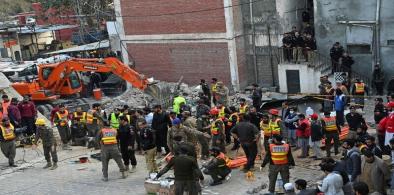
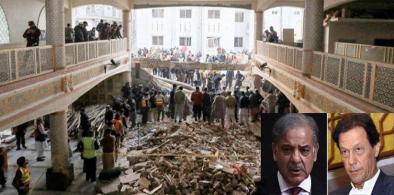
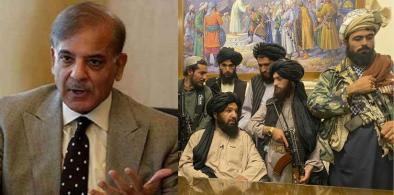
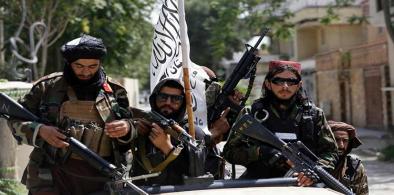
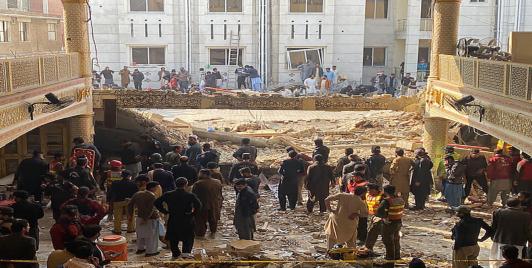
The Chinese presence in Pakistan, with or outside of the CPEC, and the TTP's defiance, although not directly related, do pose growing security challenges to Pakistan and China, especially when the two want to combine forces to extend the CPEC to Afghanistan.
Today the international image of India, courtesy the RSS-BJP, is a Hindu supremacist one where minorities are insecure, where identity issues are getting precedence over the issues of livelihood. RSS is the fountainhead of this politics; it needs introspection if it is serious about the process of dialogue and reconciliation.
India could reset its approach by engaging with Sri Lanka as a country in the Indo-Pacific region and not just as a neighbour.
For India, global governance reform starts with Security Council reforms and here New Delhi got support across blocs at the General Assembly meeting from both the US and Russia, as well as other countries. It is the only country to get the backing of both Washington and Moscow.
In a broadcast on Wednesday, Bangladesh Army Chief General S M Shafiuddin Ahmed stated that his troops were prepared to respond against Myanmarese provocations if necessary.
Building a reservoir on the Teesta will help Bangladesh create a climate-resilient infrastructure which will be useful in better managing the common river water.
Functioning trade unions, decreasing number of child labourers and the introduction of labour courts and foundations are demonstrations of the extraordinary achievements of Bangladesh in ensuring labour rights.
Today, several other countries are gaining greater respect and acceptability in the comity of nations. India, certainly, is one of them. What is perhaps likely to happen is that global leadership would be a shared responsibility.
For a country that embraces the principle of Vasudhaiva Kutumbakam (“The World is One Family”), and is often referred to by Prime Minister Narendra Modi as Vishwaguru (“Teacher of the World”), the discriminatory and hostile treatment meted out to the Rohingya is not only against its ethos but also makes for bad optics on the world stage.
Resurgent and dynamic, a young nation, old in history and culture is finally coming to terms with the painful legacy of slavery, colonialism and the pain of partition
India may consider quickly extending lines of credit to Sri Lanka and Bangladesh on softer terms than IMF loans as we have enough forex reserves at present to cope with their small needs to prevent economic collapse. This will result in consolidation of South Asian economies around the Indian one and allow us as Big Brother to lift our smaller siblings out of trouble
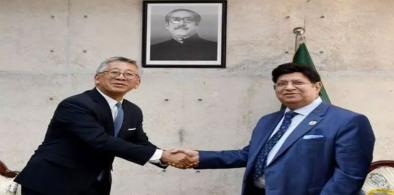
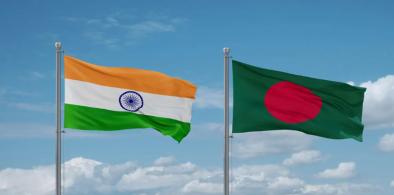
India's provision of tariff-free transit facilities to Bangladesh for exports to Nepal and Bhutan is considered a major step in bilateral cooperation. Also, since India can use Chittagong seaport, not only the "Seven Sisters" of Northeast India will benefit from it, but Dhaka will also benefit