Representational Photo

India-China Eight-Point Agreement: A Tactical Thaw, but Trust Remains Elusive

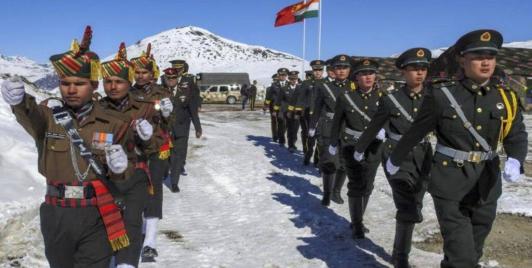
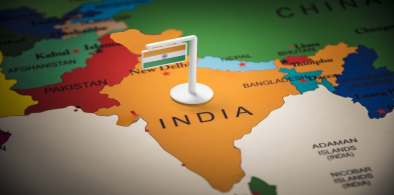
Hopes for Sino-Indian relations centre on a cautious diplomatic thaw, institutionalised border stability and renewed high-level engagement. Indian negotiators and defence planners are well aware that “trust must be verified”. While the activation of these eight points provides valuable channels to prevent an accidental kinetic clash on the ground, the real test of China’s sincerity will not be the joint statements signed in Beijing, but whether it ceases infrastructure build-ups and respects the historical patrolling rights of Indian troops along the LAC.

What's in a Name? Nomenclature Diplomacy Says Much About Changing Geopolitics

By removing the ‘Indo’ prefix from Indo-Pacific the US implicitly acknowledges that it no longer unilaterally defines the eastern strategic landscape. Regional organisations like BRICS continue to redefine the lexicon of ‘rules-based order’ to insulate themselves from western domination.

India-China Ties: Modi-Xi Meeting Signals Limited Thaw

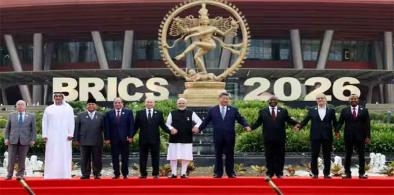
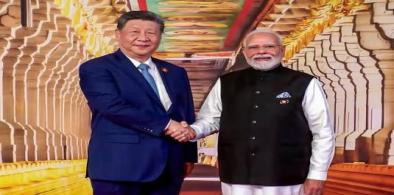
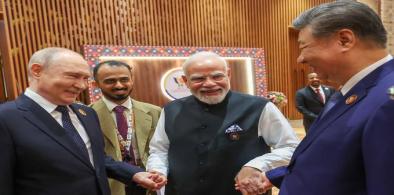
The bilateral discussion between Prime Minister Narendra Modi and Chinese President Xi Jinping on the sidelines of the 18th BRICS Summit indicates surge in mutual ties, particularly by way of trade. However, little can be expected by way of full settlement of the boundary dispute.

EU Fast-Tracks FTA with India as BRICS Summit Signals Shifting Geopolitical Dynamics

The timing of the EU announcement coincided with the BRICS+ Summit in New Delhi, creating speculation about whether the EU was seeking to reinforce its strategic engagement with India amid the growing influence of the BRICS grouping.

More on Geopolitics, Security and Strategic Affairs

India Must Recalibrate Its Grand Strategy To Face Emerging Geopolitical Headwinds

Today, India’s grand strategy faces a similarly critical moment—this time shaped not by the Kissinger Doctrine but by the Donroe Doctrine. New Delhi must avoid relying on limited or incremental approaches. Instead, its strategy must be upgraded to a level that allows it to take calculated risks, withstand U.S. diplomatic blitzkrieg, and navigate an anxiety-ridden global order with greater resilience and confidence.

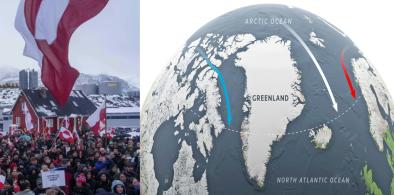
Greenland, Great Power Politics, And India’s Strategic Imperative: A Realist Geopolitical Analysis

Greenland’s geopolitical prominence illustrates how a distant region can reflect deeper shifts in global power, economics, and security. For countries like India, Greenland is not about territorial ambition; it is a reminder that structural shifts in global power dynamics transcend geography. In a realist world, engagement is not optional; it is necessary for safeguarding long-term interests in a system where power continually redistributes itself. 

The Quiet Unraveling Of The Global Nuclear Order And Its Dangerous Implications

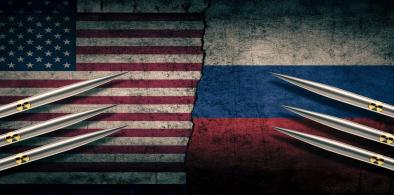
According to realist paradigms, nuclear weapons can be seen as the ultimate guarantee of national security and when there will be no restrictions, states will strive to dominate or achieve parity. Lapse of New START can thus create worsening security dilemmas, where efforts of any state to enhance its deterrent value is seen as a threat, and the state retaliates. The position of nuclear weapons as power projectors will, therefore, be more intense. 

Back-To-Back Visits And Differential Access: Sri Lanka’s Clever Foreign Policy Balancing Between India And China

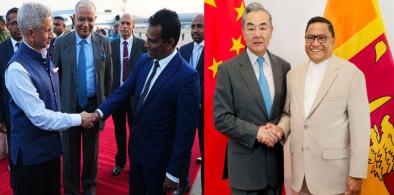
Some analysts are of the view that Sri Lanka’s differential access — full executive level for India versus foreign ministry level for China — may reflect Sri Lanka’s carefully calibrated foreign policy. Sri Lanka is leveraging India for urgent, high-impact assistance and wider policy coordination and engaging China for strategic reassurance and medium-to-long-term cooperative alignment that is less intertwined with immediate executive decisions.

Power In A Fragmented World: India Needs To Master Torque

India’s challenge, and opportunity, lies in mastering torque rather than seeking a mythical centre of gravity. In a world defined by flux, leverage matters more than alignment, and agility matters more than allegiance. Strategic autonomy will not be preserved through rigid doctrines, but through continuous recalibration anchored in national interest, economic resilience, and confidence in India’s civilisational depth.

Iran's Crisis Has Repercussions Beyond Borders: Will Sovereignty Survive Only By Permission?

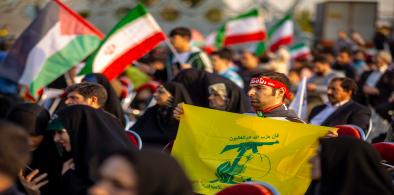
India’s response to Iran’s crisis illustrates the dilemmas facing middle powers navigating a polarised global order. While reaffirming principles of sovereignty, non-intervention and dialogue, New Delhi has largely confined itself to cautious diplomacy. For a country that positions itself as a voice of the Global South and a defender of strategic autonomy, such restraint invites scrutiny. Silence at moments of legal strain is never neutral. It contributes to the gradual normalisation of coercive precedent. 

Trump’s Tariff Gambit: Will It Deepen Cohension Among Global South?

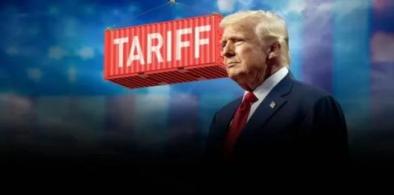
If Washington persists down this path, the response from the Global South will not be submission. It will be coordination. China, Russia, Brazil, India, and others have every incentive to deepen trade, energy, and financial cooperation—not out of ideological unity, but out of defensive necessity. Ironically, Trump’s economic nationalism may succeed in what decades of rhetoric could not - forging a more cohesive Global South.

India Will Remain Immune To Protest Waves Engulfing Neighbourhoo

So long as Indians do not find a true watchdog for the government, people will have to keep choosing the lesser evil. Youth are well aware of the situation of Arab countries post-revolution. In South Asia, although Sri Lanka and Nepal have been able to consolidate power to some extent, Bangladesh remains in a frenzy with rampant human rights violations, religious persecution and no legitimate government in sight. Hence, Indian youth prefer to seek reform from within rather than a full-blown revolution without any vision for the future

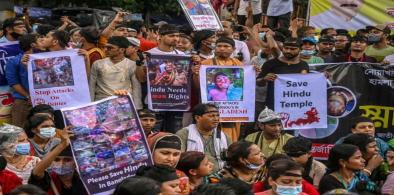
Violence Against Hindus: Is Bangladesh Burying Its Founding Ideals Of Secularism And Pluralism?

For Bangladesh’s Hindus, each funeral deepens the message that their lives are negotiable and their suffering invisible. If this trajectory continues unchecked, the country risks normalizing a culture of impunity that will ultimately consume more than one community. Violence ignored does not fade; it spreads. And the price of silence, as history repeatedly shows, is always paid in lives.

Tarique Rahman's Past Will Shadow His Nation's Future: Is Bangladesh Headed For Post-Election Conflict?

Keen observers of international and regional politics will not have missed the tacit presence of the invisible hand of the US in determining the democratic transition in Bangladesh.  Obviously, TarIque had been tutored by the Americans about the best way forward for the transition towards democratic rule and delivering on the promises of cooperation on regional security. The intelligentsia inside the country could have hoped for Tarique referring to ‘’historical’’ figures from the Indian subcontinent, the Muslim world, and Bangladesh’s past.

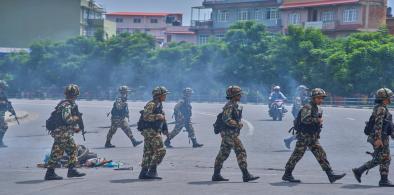
Nepal's Use Of Lethal Force And South Asia's Enforcement Vacuum

The South Asian Association for Regional Cooperation's (SAARC) Charter, by contrast, establishes no regional human rights treaty, monitoring body, or court. Scholars emphasize that governments in the subregion demonstrate a lack of deep commitment to human rights and remain unwilling to acknowledge subregional solutions. Victims of systemic violations have no forum for binding adjudication.

Trumpian Caprice Has India In A Bind: Will Need Foreign Policy Recalibration

This fully unfettered approach to everything Trump does also has serious consequences for India. At least through the duration of the Trump administration until 2028, the Modi government will have to spread around its geostrategic and geoeconomic needs among various countries such as Japan, Australia, Germany, France and the United Kingdom or collectives such as the European Union, even as it deals with America with some judicious leveraging.

Bangladesh: Where Blasphemy Is A Trigger To Weaponize Religion

The ruling governments in Bangladesh often seek to use these laws in various ways. Critical expression, especially criticism of the government or raising questions about religion, can be met with swift arrest and harassment through laws such as the Digital Security Act (DSA). In addition, allegations of religious blasphemy are used to pressure and marginalize political opponents, opposition parties, and dissenting voices. Religious extremist groups use these laws to promote their ideology or to intimidate people of different faiths or those who hold non-religious views.

Is Washington’s Move The Spark For A New Age Of Regional Hegemony?

The question now is whether Washington’s ambitions end with Venezuela—or whether this marks a broader return to Cold War-style regional dominance. History suggests that when smaller states fail to act as “good neighbors,” interventions by great powers become inevitable. India’s interventions under Indira Gandhi illustrate this dynamic in South Asia. As Henry Kissinger observed, “to create order, it is necessary to create it within regions first and then relate them to each other.”   

Is Migration Poised To Become A Global Flashpoint?

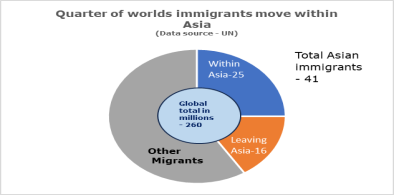
Contrary to popular belief, migration is not primarily a one-way movement from poor countries to rich ones. Nearly half of all migration from the Global South occurs between developing countries themselves, rather than towards the affluent Global North. Indeed, South-South migration, often taking place across contiguous borders with porous controls, is believed to account for nearly 80% of such flows.