

Nepal's Use Of Lethal Force And South Asia's Enforcement Vacuum
The South Asian Association for Regional Cooperation's (SAARC) Charter, by contrast, establishes no regional human rights treaty, monitoring body, or court. Scholars emphasize that governments in the subregion demonstrate a lack of deep commitment to human rights and remain unwilling to acknowledge subregional solutions. Victims of systemic violations have no forum for binding adjudication.
 Jan 10, 2026
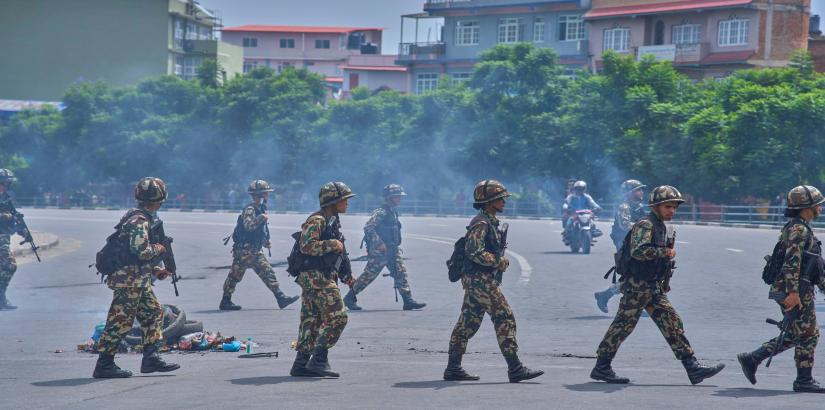
When Nepal's security forces opened fire on demonstrators in September 2025, killing at least 75 people, they exposed a fundamental flaw in how international human rights law operates across South Asia. Police fired 2,642 live rounds into crowds that included schoolchildren, starting barely five minutes after declaring emergency curfew, aiming for heads and chests. Yet four months later, as Nepal prepares for its Universal Periodic Review on January 21, 2026, not a single officer has faced prosecution. This gap between what the law requires and what states face when they violate it reveals how treaty obligations can exist on paper while enforcement remains absent in practice, particularly where no binding adjudication exists to compel compliance.
Violation To Attribution
Article 6(1) of the International Covenant on Civil and Political Rights (ICCPR) forbids arbitrary deprivation of life. The Human Rights Committee's General Comment 36 clarifies that ‘arbitrary’ means more than ‘illegal’; it encompasses actions that are inappropriate, unjust, or disproportionate. Potentially lethal force qualifies as an extreme measure permissible only when strictly necessary to protect life or prevent serious injury from an imminent threat.
Nepal's actions failed every element of this test. The protests began over social media restrictions and governance concerns, posing no imminent threat justifying lethal force. The demonstrations were peaceful, protected under Article 21 of the ICCPR.
Security forces gave protesters no meaningful chance to disperse. The UN's Basic Principles on the Use of Force and Firearms by Law Enforcement Officials require clear warnings and adequate compliance time (Principles 10 and 14). Amnesty International's investigation documented structural failures: no operational planning to minimize casualties, dangerous misuse of less-lethal weapons, tear gas fired from elevated positions violating UN guidance, and gas used inside hospitals, causing breathing difficulties. One emergency room doctor described the scene as feeling like a butcher's house. This wasn't poor training, but rather an institutional failure to internalize treaty obligations.
The International Law Commission's Articles on State Responsibility provide the doctrinal bridge from breach to accountability. Article 2 defines internationally wrongful acts as state-attributable conduct breaching international obligations. Article 4 establishes attribution for the conduct of state organs, regardless of organizational position, making Nepal's police actions clearly attributable. Article 1 establishes that every internationally wrongful act entails international responsibility, triggering cessation and non-repetition (Article 30) and full reparation (Article 31). But these secondary rules assume domestic implementation mechanisms exist. Nepal has systematically withheld them.
Accountability Vacuum
Nepal demonstrates how states control their accountability apparatus to render remedial obligations meaningless. Human Rights Watch documented that following the 2015 Madhesh protests (approximately 50 civilian deaths), an official investigation was ordered but never published, with no prosecutions. The pattern repeated in 2025. By November, police arrested 423 individuals for alleged violence on September 9, yet took no known action against officers who fired on protesters the previous day. On January 4, 2026, former Prime Minister K.P. Sharma Oli finally testified to the judicial inquiry commission after months of resistance. However, hundreds of protesters face charges, while not a single officer faces prosecution. This creates performative compliance, where states maintain formal treaty adherence while systematically violating their substantive obligations.
The doctrine of continuing violations, recognized in Article 14 of the Articles on State Responsibility, applies when wrongful acts have a continuous character. Nepal's pattern of impunity exemplifies a continuing breach of Article 6, with each investigation failure extending the violation. Yet international mechanisms prove structurally unable to interrupt this cycle.
Consider Nepal's reporting record. It submitted its last ICCPR periodic report in 2014, covering the period from 1995 to 2010. The Human Rights Committee’s (HRC) 2014 concluding observations identified excessive force as a priority concern requiring follow-up within one year, as per Rule 71 of the HRC's Rules of Procedure. Yet, Nepal failed to provide the necessary follow-up information. More striking still, Nepal's third periodic report, due in March 2018 under Article 40 of the ICCPR's four-year cycle, remains unsubmitted over seven years later.
This dual failure demonstrates how non-binding treaty body mechanisms permit states to maintain formal treaty adherence while violating substantive obligations, precisely because they lack enforcement powers. The structure reflects the Westphalian compromise, prioritizing state consent over enforcement efficacy. Nepal ratified the First Optional Protocol in 1991, establishing jurisdiction for individual communications; however, this alternative remedy proves equally ineffective in addressing systemic abuse patterns.
Structural Deficiencies
Three interconnected structural failures render international human rights law unenforceable against deliberate violations of its principles. First, treaty monitoring bodies work through persuasion, not compulsion. UN reviews and academic studies document a substantial implementation gap for treaty body recommendations, with follow-up information often missing and many recommendations remaining unimplemented.
Second, horizontal enforcement mechanisms are defunct. Article 41 of the ICCPR establishes the right to interstate complaints, but this provision has never been invoked. Across all UN treaty bodies, only three interstate communications have been registered in the past 50 years, all of which were filed in 2018 under a different convention. Article 60 of the Vienna Convention on the Law of Treaties permits treaty termination for a material breach, but requires the affected states to invoke this remedy; it fails when violations harm diffuse rather than bilateral interests.
Third, and most critically, South Asia stands alone as the sole major region without a binding human rights adjudication. The European Convention on Human Rights, American Convention on Human Rights, and African Charter on Human and Peoples' Rights empower regional courts (European Court of Human Rights, Inter-American Court of Human Rights) to receive individual petitions and issue binding judgments when domestic remedies prove ineffective.
The South Asian Association for Regional Cooperation's (SAARC) Charter, by contrast, establishes no regional human rights treaty, monitoring body, or court. Scholars emphasize that governments in the subregion demonstrate a lack of deep commitment to human rights and remain unwilling to acknowledge subregional solutions. Victims of systemic violations have no forum for binding adjudication.
Enforcement Vacuum
This enforcement vacuum creates perverse incentives. Nepal maintains its status as a major UN peacekeeping contributor despite systemic domestic impunity. The UN Framework of Analysis for Atrocity Crimes nominally bars support for forces committing grave violations, yet operational demands generate political pressures that override legal considerations. Nepal deploys thousands of troops annually, accessing UN training, funding, and international legitimacy precisely because the treaty system lacks mechanisms to disqualify deliberate violators. This inverts the remedial logic of Articles 30-31: rather than triggering cessation and reparation, continuing violations yield institutional rewards.
The normative-remedial disjuncture documented here is architectural, not incidental. South Asia's unique position as the sole major region without binding adjudication transforms justiciable violations into diplomatic talking points. When consent-based monitoring coexists with regional enforcement voids, states capture the accountability apparatus itself, selectively participating in peacekeeping to accrue legitimacy while withholding domestic implementation mechanisms that secondary obligations presuppose.
Nepal's Universal Periodic Review on January 21, 2026, presents a critical test of whether this enforcement vacuum can be interrupted. The question will be whether SAARC states can be induced to establish compulsory jurisdiction, or whether performative compliance has become structurally optimal for governments prioritizing sovereignty over remedial effectiveness.
(The author is a lecturer at Jindal Global Law School, O.P. Jindal Global University, Sonipat, India. Views expressed are personal. He can be contacted at bhavya.johari@jgu.edu.in )





Post a Comment