Representational Photo

India-China Eight-Point Agreement: A Tactical Thaw, but Trust Remains Elusive

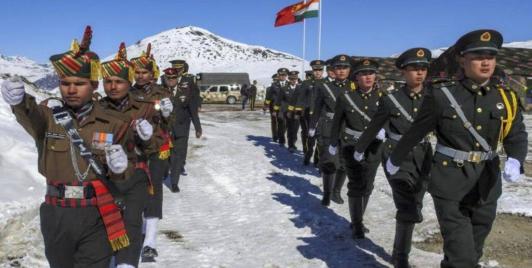
Hopes for Sino-Indian relations centre on a cautious diplomatic thaw, institutionalised border stability and renewed high-level engagement. Indian negotiators and defence planners are well aware that “trust must be verified”. While the activation of these eight points provides valuable channels to prevent an accidental kinetic clash on the ground, the real test of China’s sincerity will not be the joint statements signed in Beijing, but whether it ceases infrastructure build-ups and respects the historical patrolling rights of Indian troops along the LAC.

What's in a Name? Nomenclature Diplomacy Says Much About Changing Geopolitics

By removing the ‘Indo’ prefix from Indo-Pacific the US implicitly acknowledges that it no longer unilaterally defines the eastern strategic landscape. Regional organisations like BRICS continue to redefine the lexicon of ‘rules-based order’ to insulate themselves from western domination.

India-China Ties: Modi-Xi Meeting Signals Limited Thaw

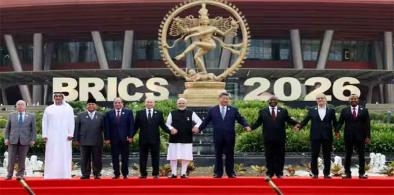
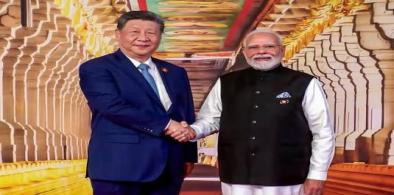
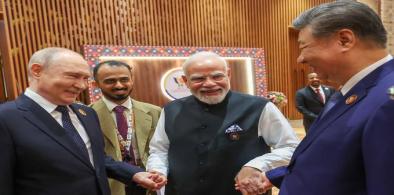
The bilateral discussion between Prime Minister Narendra Modi and Chinese President Xi Jinping on the sidelines of the 18th BRICS Summit indicates surge in mutual ties, particularly by way of trade. However, little can be expected by way of full settlement of the boundary dispute.

EU Fast-Tracks FTA with India as BRICS Summit Signals Shifting Geopolitical Dynamics

The timing of the EU announcement coincided with the BRICS+ Summit in New Delhi, creating speculation about whether the EU was seeking to reinforce its strategic engagement with India amid the growing influence of the BRICS grouping.

More on Geopolitics, Security and Strategic Affairs

South Asia in the Asian perspective: Macroeconomic policies and the triple crisis (Part I of a two-part analysis)

South Asia has no strong trade ties within the region, unlike many parts of Asia, and more particularly the developed parts of Asia, namely Southeast Asia and East Asia. South Asia, therefore, has to formulate its own macroeconomic policies to sustain growth keeping in mind global economic trends.

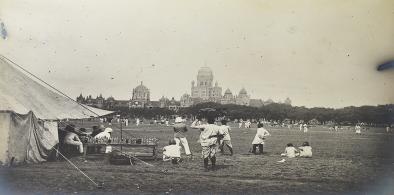
Caste, class and cricket: How a colonial sport became a religion in South Asia

The Hindus entered cricket due to their long-standing social and business rivalry with the Parsis. The first Hindu club, the Bombay Union, was formed in 1866. Muslim cricket began with the Luxmani and Tyebjee families, who helped establish a Muslim cricket club in 1883.

Bangladesh in the time of cyclones: When gender-based violence peaks

Wife battering is universal in Bangladesh in almost all homes. However, this increases manifold during and after cyclones. There is a breakdown of social and familial infrastructure and livelihood patterns and violence increases with economic stress and anxiety.

The challenge of Artificial Intelligence to higher education: Policymakers need to answer critical questions

Higher Educational Institutions (HEIs) need to have policy responses to ensure checks and balances against generative AIs. The top-down policy approach may focus on banning the use of generative AIs. But participatory and adaptive approaches focus on developing policies that could accept the use of generative AIs in varying degrees, with the realisation that generative AIs are here to stay.

Violence must not be allowed to continue in Manipur; implement confidence-building measures

What is painful is the inability of civil society groups in the state to intervene during this critical time since the contending groups are not ready to negotiate with each other. However, one must not lose faith in the civil society which is based in Manipur's immediate neighbouring states like Nagaland, Mizoram, and Assam.

Uniform Civil Code should not be pushed through in haste; first make all personal laws gender-just

The Muslim Personal Law Board is committing the same mistake by opposing the UCC as it did during the discourse on the abhorrent Muslim practice of instantaneous triple talaq without realising its far-reaching consequences.

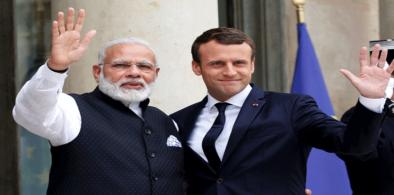
Modi meets Macron: World needs transformational diplomacy, not transactional diplomacy

Macron and Modi should shun transactional diplomacy that engages in multi-billion dollar agreements for military fighter jets and machinery, nuclear reactors and pharmaceutical products. Instead, they should embrace some transformational diplomacy to make the planet sustainable again.

Russian nuclear diplomacy in Sri Lanka will have wider strategic and security implications for region

Russia’s proposal to establish Sri Lanka’s first nuclear power plant comes on the heels of the completion of a similar nuclear power plant in Bangladesh, which has paved the path for Russia to play a larger role in South Asian geopolitics.

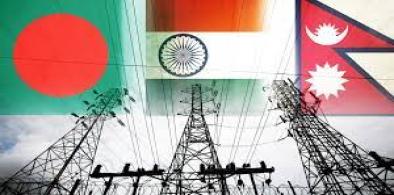
India-Nepal-Bangladesh power diplomacy is a big step for regional cooperation in South Asia

In recent years India has been prioritising regional integration among South Asian countries, excepting Pakistan. As per the joint vision statement between Nepal and India in April last year, the two countries agreed to expand sub-regional cooperation in the power sector among Bangladesh, Bhutan, India and Nepal (BBIN)

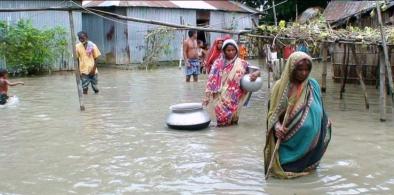
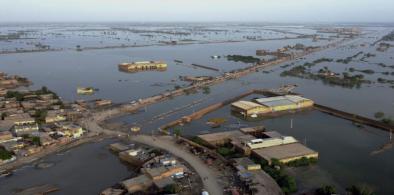
2022 floods in Pakistan: Violence and vulnerabilities of women increase during climate disasters

Climate crisis is a lesser word to describe the transformative shifts that are taking place in weather conditions across the Global South affecting mostly countries like Pakistan in South Asia. Attitudes of society need to change towards women. Societal attitudes, traditional norms and cultural practices create entrenched gender disparities that hinder women’s participation in development plans and in survival strategies devised to save them in the post-disaster period.

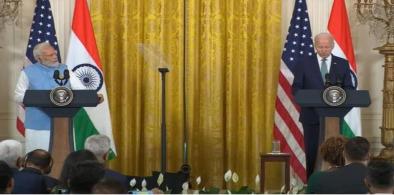
Modi's state visit to the US: A visit rich in style and substance

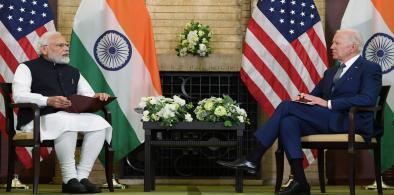
From Modi's standpoint, the visit unfolded precisely as he desired. The exceptional reception he received from the leader of the free world, less than a year before facing the billion-strong Indian electorate, serves as a significant boost for him. 

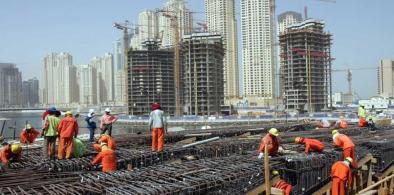
Labor in the Gulf: Unlocked goldmine or a bottomless pit for low-income Nepalese workers?

It is high time the Nepalese government strengthens its diplomatic muscle and stands up strongly for the legal rights of its citizens working overseas.

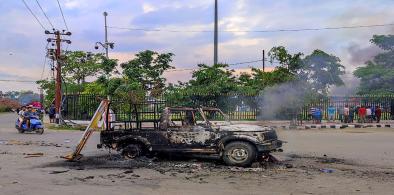
Manipur: Where ignorance and hatred fed into policy slants

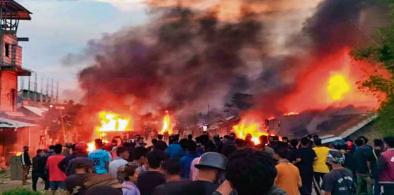
Manipur is burning and the government knows not what to do next. This is a sensitive state in a sensitive region with not very friendly neighbours. The collapse of State machinery here should be a cause for alarm.

Indian Navy conducts twin-carrier exercise in vaunted 'power projection'; but fund scarcity hobbles full combat potential

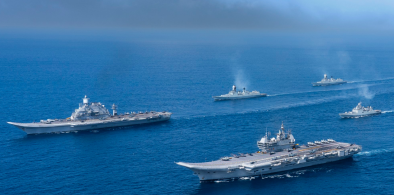
The June 10 deployment of two carriers by IN  has received favourable notice internationally and  this has added salience on the eve of Prime Minister Narendra Modi’s state  visit to the USA (June 21)  in relation to India’s naval capabilities. 

Modi’s state visit to the US: Its significance for Indo-US ties and global politics

The centerpiece of Modi’s state visit to the US is expected to be a jet engine agreement that can propel Indo-US relations to a new sphere altogether. The application by General Electric to co-produce GE-F414 jet engines in India, along with technology transfer, has already received approval of the Biden administration.