Osama bin Laden's Compound

Never Forget Abbottabad: The Other Chapter of 9/11 Should not Fall Victim to Selective Memory

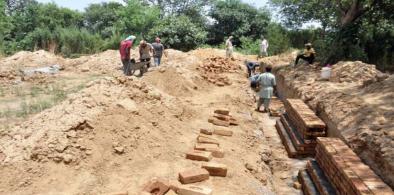
Abbottabad itself is symbolic. Just 30 miles north of Islamabad, along the historic Karakoram Highway, it is home to Pakistan’s premier military academy. For bin Laden to live there undetected is not simply a mystery—it is a reminder of the uncomfortable realities of counterterrorism

India’s Push-Ins Could Push Bangladesh Towards China

Amid strategic challenges from Beijing in Bangladesh, New Delhi cannot separate border management with foreign policy. New Delhi should hold high-level dialogue with Dhaka and develop a cooperative roadmap to facilitate the identification and repatriation of undocumented migrants from India. 

Growing Sri Lanka-India Defence Cooperation Throws Up Air-Defence Questions

The visit therefore should not be viewed simply as another bilateral defence engagement. It represents an attempt by New Delhi to institutionalise India's security relationship with Sri Lanka, while simultaneously reassuring Colombo that India's expanding security interests need not threaten Sri Lankan sovereignty.

Belgium and India: Building a Strategic Partnership Beyond Economics and Trade

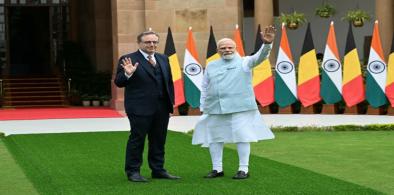
Belgium views India as an opportunity to reduce its economic dependence on China and limit vulnerability to developments in the United States. India offers scale, growth, industrial capacity and ambition, while Belgium offers technology, specialised expertise, logistics and access to the European market.

More on Geopolitics, Security and Strategic Affairs

Is the Diamer-Bhasha dam in Pakistan a boondoggle?

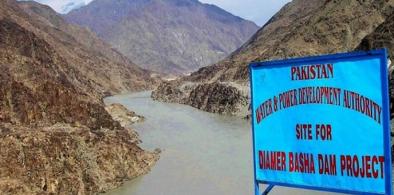
The Pakistan government claims that the Diamer-Bhasha dam project will generate 4,500 megawatts of electricity which will be much cheaper in cost. But the reality is that the world has much better, environmental-friendly, cheaper, and sustainable solutions to generate electricity, writes Muhammad Abbas Khaskheli  for South Asia Monitor

India-US naval exercises: Can symbolism translate into powerplay?

Despite the US raising the ante with China over South China Sea and prioritizing freedom of the oceans, New Delhi remains wary of entering into a formal alliance with Washington, writes C Uday Bhaskar for South Asia Monitor

Ershad's first death anniversary: Despotism still survives in Bangladesh

Ershad may have gone, but his shadow can still be seen in the political theatre of Bangladesh, writes Aashish Kiphayet for South Asia Monitor

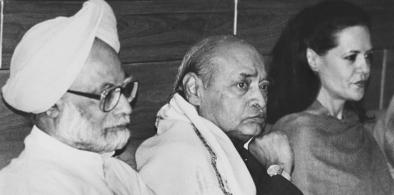
P.V. Narasimha Rao: The undervalued PM who changed India's destiny

It is to Rao's credit that within a short period of time he not only arrested the decline of his party but was able to unite the country on the most productive political platforms since the freedom movement - the pursuit of prosperity, writes Tarun Basu for South Asia Monitor

Tidings of a bountiful monsoon could lessen economic woes in India, South Asia

The southwest monsoon’s impact is felt throughout South Asia. Above-normal rainfall is likely over Pakistan, the Maldives, and Sri Lanka, while it could be less than normal in Bangladesh, writes N Chandra Mohan for South Asia Monitor

India's Chabahar challenge: Is China putting paid to New Delhi's connectivity plans?

The Chabahar connectivity project envisages uninterrupted access and movement of goods and services via the sea route and road-rail facilities, making it cost-effective, convenient, and feasible for all parties and boosting the regional economy, writes Vishakh Krishnan Valiathan for South Asia Monitor 

Needed a bicycle renaissance to promote environment-friendly road culture

From lockdown, we learned that there is a big opportunity for cities to support non-motorised transport to achieve sustainable cities and a non-polluting environment, writes George Cheriyan & Amar Deep Singh for South Asia Monitor

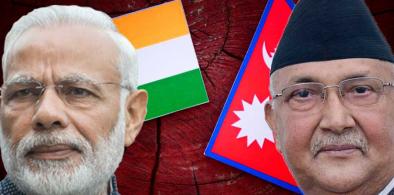
Recurrent anti-Indianism in Nepal: Need to restructure bilateral ties

As India prepares for anti-Indianism 2.0  it will eventually have to also address the deeper Nepalese yearning for a sense of equality and mutual respect, writes Amb K V Rajan (retd) for South Asia Monitor

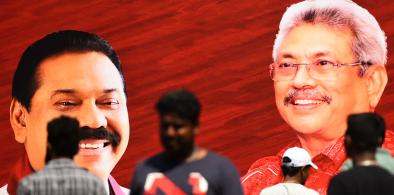
Is it the end of the road for two main national parties of Sri Lanka?

Two major national political parties that took turns in ruling the country for seven decades are about bite the dust, perhaps ending a healthy democratic system in which these two parties ensured a stable government and a strong opposition in parliament most of the times, writes Sugeeswara Senadhira for South Asia Monitor

Resilience of the real sector key to sustenance in South Asia

In terms of a more vulnerable population which is less well paid, Afghanistan, India, Bangladesh and Nepal are more vulnerable as compared to the rest of the countries of the region, writes Partha Pratim Mitra for South Asia Monitor

India and the European Union: Virtual summit has sent positive signals to the world

The signing of the India-EURATOM Agreement on research and development cooperation in the peaceful uses of nuclear energy will cover all aspects of research and technological development, writes Amb Bhaswati Mukherjee (retd) for South Asia Monitor

Why the BJP remains unchallenged in Indian politics

There is little doubt, therefore, that the opportunism of Indian politicians is a reason for the BJP’s success, writes Amulya Ganguli for South Asia Monitor
Giving Iran and Afghanistan on a platter to China

China will use its increased presence and influence in Iran and Afghanistan to target Indian interests, writes Lt Gen P. C. Katoch (retd) for South Asia Monitor

To build or not to build a temple - in Pakistan

The government’s move on the temple, some media commentators suggest, is to show Pakistan in a better light in comparison with India,  which is seen as being driven by Hindutva forces that are against India's religious minorities, writes Mahendra Ved for South Asia Monitor

India should extend wholehearted assistance to Maldives government

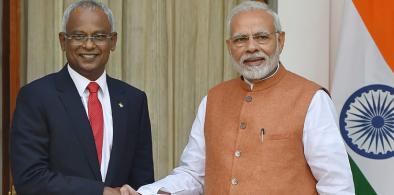
The Maldivian open support against Pakistan in OIC is a victory of Indian diplomacy, writes Jai Kumar Verma for South Asia Monitor