


Not surprisingly, India has not come out with any condemnation of China for its atrocities in Xinjiang, a classic example of India in recent times trying to steer clear of global contestations
The China tale offers important lessons. China’s rise in the renewable sector is not just fuelled by demand for clean energy, but by a broader strategy, linking energy policy with manufacturing, technology development and global trade. India now seems to have begun taking steps in this direction. Policy measures such as the production-linked incentives scheme for solar manufacturing and efforts to expand domestic battery production are intended to strengthen the country’s clean energy ecosystem.
China’s expanding influence in Myanmar and Bangladesh does not operate in isolation. It is reinforced by Beijing’s long-standing strategic partnership with Pakistan, frequently described by both sides as an “all-weather” alliance. In recent years, Islamabad has sought to revive and expand diplomatic engagement with both Dhaka and Naypyidaw, reflecting a broader effort to re-establish its presence along the eastern arc of the Bay of Bengal. While Pakistan lacks China’s financial scale or infrastructure capacity, its diplomatic signalling complements Beijing’s presence
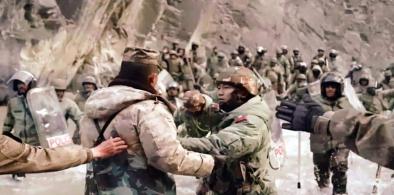
Officially, India maintained that no territory was lost. Strategically, however, many analysts described the situation as a shift in the status quo—an altered operational environment in which access, patrolling patterns and tactical depth were recalibrated.
India’s rise coincides with China’s structural slowdown, reshaping Asia’s strategic landscape. For Malaysia, the choice is not between India and others—but between preparing early for India’s ascent or adjusting late. Prime Minister Modi’s visit represents a strategic inflection point. Deepening ties in defence, technology, semiconductors, energy, food security, education, and culture is not merely prudent—it is foundational to Malaysia’s long-term prosperity, security, and strategic autonomy.
Not surprisingly, India has not come out with any condemnation of China for its atrocities in Xinjiang, a classic example of India in recent times trying to steer clear of global contestations
It will be for the first time that the Pentagon is getting involved in a high-altitude exercise with Indian troops, a fact that will not go unnoticed in Beijing. Is staging these combat drills so close to the disputed region indicative of a strategic shift on the part of New Delhi?
A new, long and potentially ugly physical and mind games have begun, where conventional and tactical firepower alone would not guarantee long term success and acceptance
With no diplomatic ties with Bhutan, prevailing border tensions with India and a changing geo-strategic sphere in Nepal, China's Himalayan neighbourhood security is critically tied to safeguarding Tibet
Ever since Sri Lanka leased Hambantota port to China, both India and the US have flagged their concerns that this may eventually lead to it becoming a hub for the PLA Navy in the Indian Ocean
Both Sri Lanka and Bangladesh remain crucial in the eyes of New Delhi and Washington in denying further incursions by Beijing, underscored by the scramble for reassertion of American influence and ties with both nations
One particular observation that gets highlighted, although not explicitly stated as such by the author, is the huge clout and influence wielded by some key diplomats and political advisers who seem to have literally hijacked the formulation of policy and response to this, complex relationship during the Nehru years
Beijing should be wise enough in realizing the dangerous impact of its using pugnacious responses to Pelosi’s visit that can risk greater backfiring from its strategic adversaries in the future
In view of China’s build-up all along the Line of Actual Control (LAC) till Arunachal Pradesh, it is just as well that India is pursuing efforts to equip its armed forces with AI-backed systems
A new spectrum of tactical competition has begun in the Indo Pacific, and it requires more than threats and deterrence to determine the path and pattern of the conflict; it needs wisdom and strategic foresight by all the players in playing both the short and long game with both conventional and new tools of war and diplomacy
The Indian Army’s notification in July 2022 inviting applications from persons fluent in Mandarin to properly communicate with the Chinese military along the Line of Actual Control (LAC) is a beginning in fulfilling a decades-long important requirement
Regardless of future leadership transitions in Washington, the pivot to the Indo-Pacific will be here to stay in safeguarding America’s status quo and primacy, writes Collins Chong Yew Keat for South Asia Monitor
Interestingly, despite gaining significant influence and footprint in Sri Lanka, China’s failure to assist the crisis-hit country has left analysts baffled about Beijing’s thought process. The restructuring of loans, which Colombo sought repeatedly, was ignored by China
During the military commanders' meeting, the Indian side asked for the PLA to move back from all the “friction points”, which is a euphemism for "intrusions" used by India to avoid acknowledging it has lost control of some 1,000 sq km of territory during the 2020 Chinese aggression. For the same reason, India keeps asking of more military-to-military talks, with each round continuing 12-13 hours without any progress, writes Lt Gen P.C. Katoch (retd) for South Asia Monitor
The I2U2 is an attempt to replicate in a different environment the Indo-Pacific Quad of India, the US, Japan and Australia, the goal of which is developing a bulwark of democracies against China