Building collapse in Delhi’s Satya Niketan

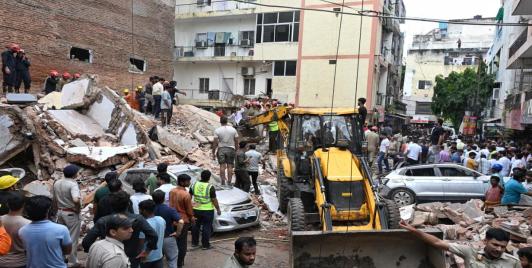
India’s Housing Challenge: Bridging the Gap Between Macro Development and Basic Needs

Aggressive migration of youth and workers to metro cities in search of better opportunities is common across the region. And so is the response deficit by local and central governments in providing them with basic, dignified lifestyles. The time has come for the elected representatives to think differently and narrow the gap between government schemes and results on the ground. 

Digital Public Infrastructure in South Asia: A Bridge or a New Divide?

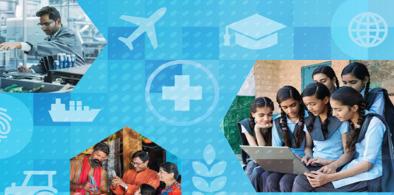
These achievements have positioned India as a digital governance exporter. Singapore, Nepal, Bhutan, France, Mauritius, Sri Lanka, and the United Arab Emirates have already established UPI connectivity, and more than 50 countries have expressed interest in replicating aspects of India Stack’s open digital infrastructure. 

Who Governs Islamabad? A Capital Without its Governance

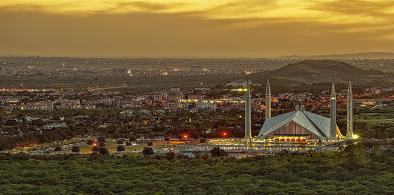
This raises the issue not whether Islamabad has surpassed its outmoded and fragmented administrative structure but whether governance would keep pace with its growth. Islamabad has to evolve from being administered as a capital city into being governed as a metropolis.
 

Whither Constitutional Equality and Laws Against Discrimination? A Manipuri Musician's Murder Raises Governance Questions Anew

The inhabitants of Manipur have had long-standing experiences of living insecurely in their own homeland, even as migrants from the Northeast have encountered prejudice in metropolitan India....India has produced a paradox where communities that belong formally to India can also face exclusion from the social mainstream.

More on Governance, Public Policy and Law

India a transactional democracy, government beholden to its people

The debate around freebies and promises in a democracy often centers on balancing short-term relief with long-term solutions to societal problems. Often, in these giveaways, economic prudence is a casualty in favour of transactional political advantage.

India Inc. needs to give better compensation to its blue-collar workers

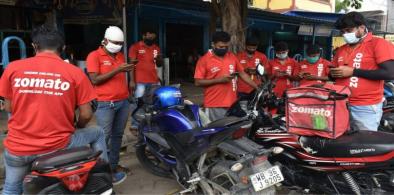
The share of workers in industry has stagnated for far too long. And so have wages. As per a report of WorkIndia, more than 57 percent of blue-collar jobs in India pay less than 20,000 rupees a month.  That is probably justified because of low average productivity.

Forty years after Bhopal gas disaster: Court ruling reveals 'sorry state of affairs'

A strong India is not only about protecting the borders but equally about systems and processes that do not allow companies, particularly giants from foreign shores, to get away with anything less than standards that some of these companies are required to follow in their home countries. Even if the clean up happens, at long last, the other lesson for holding companies to account is yet to be learned.

India should institutionalise arbitration, avoid unilateral appointment of arbitrators

Allowing neutral arbitration institutions to appoint and administer arbitrators will help to address the challenges of unilateral arbitrator appointment by interested organisations, reduce the additional burden on courts to appoint arbitrators, and eliminate our arbitrators' bias in awards issued by arbitrators appointed by financial institutions.

Mosque-temple dispute in India: How far back can surveys go in determining ancestry?

Indian polity and judiciary have opened a Pandora’s Box which is deepening the religious divides in society. What is the need of the hour? To search for temple underneath every mosque or to build the ‘temples of Modern India’ as defined by Jawaharlal Nehru, “while starting the construction of the Bhakra Nangal Dam to describe scientific research institutes, steel plants, power plants, dams being launched in India after independence to jumpstart scientific and industrial progress.”

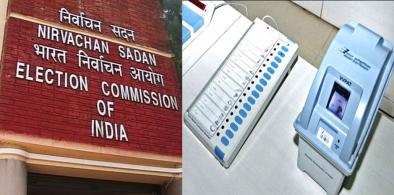
To restore faith in Indian democracy, EVMs need to go

There is no denying that the changing numbers have dented the image of the Election Commission of India, and the credibility of the election process itself under the EVM system is increasingly coming under strain. This is a blow to democratic systems, processes and traditions in India. 

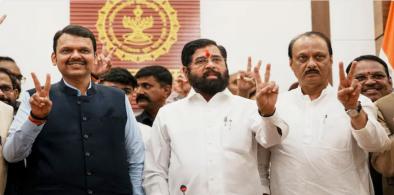
Populism is a race to the fiscal bottom: What the Maharashtra verdict means for the state's economy

The LB scheme has been a successful formula which was used in Jharkhand as well and is part of at least a dozen other states which offer cash or kind benefits targeting women, It pays electoral dividends by increasing female voter participation. But what it does to the fiscal situation, and consequent drag on growth, inflation and interest rates as well as future tax burdens is not well examined. 

Why de-dollarisation of international trade is unlikely to happen anytime soon

India perceives Russia and China’s push for de-dollarisation to a large extent as ideological and remains hesitant in rallying behind BRICS’ de-dollarisation efforts. With the recent expansion of BRICS, varying national interests of member states will further complicate coordination efforts on de-dollarisation. 

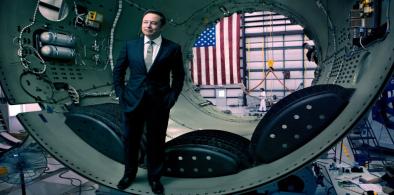
Elon Musk and big tech imperialism: Indian policymakers be forewarned

If the East India Company used complex mechanisms and took 100 years to seize control and loot a subcontinent, the tech imperialists of today have the power to replay that story with nothing more than code, clicks, and clips that can divide people, break institutions and incite violence.

Unsustainable human practices can tilt earth's ecological balance

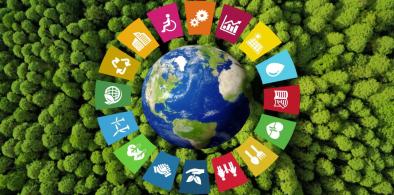
Seeing humans as the earth’s primary inhabitant has led to policies and practices that prioritize short-term economic gains over long-term ecological sustainability. Recognizing our role within a broader ecological system is key to developing strategies that respect the Earth's carrying capacity. Johan Rockström’s concept of 'planetary boundaries' outlines nine thresholds, like climate change and biodiversity loss, that shouldn't be crossed to maintain a 'safe space for humanity’.

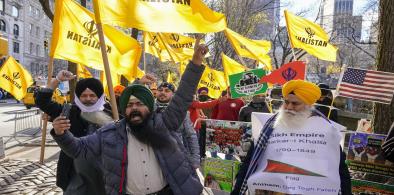
India needs to talk bluntly to the US over sheltering of Khalistani extremists

India sent full details of Nijjar’s terrorist activities to Canada in 2014 but Canada simply sat on it. Canada also didn’t hand over Bangladeshi Noor Chowdhury who admitted being one of the killers of Sheikh Mujibur Rehman, Bangladesh's founder president, in 1975. Stewart Bell wrote in his book ‘Cold Terror’’ that Canada became an operational base of international terrorism long ago and by 1998 every terrorist group in the world was operating in Canada.

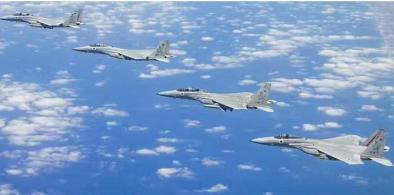
Will Israel strike Iran's nuclear targets following its 100-fighter strike?

If Israel fails to attack Iran’s nuclear facilities now, it will be doing an ‘INDIA’, which too failed to allow Israel to strike Kahuta in Pakistan. Pakistan today is a formidable nuclear power. Had India allowed staging facility to Israeli fighters at Jamnagar, Kahuta might have met the same fate as Osirak in Iraq.

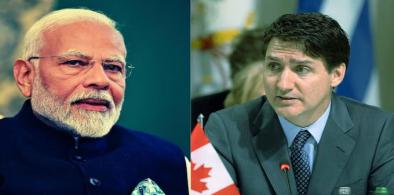
Pandering to separatists, Trudeau damages India-Canada relations

Trudeau, whose closeness to Canadian Khalistanis is amply borne out by photographs on the internet and his public outreach, has obviously not given any thought about risks to Canada’s future from the activities of the Khalistanis. 

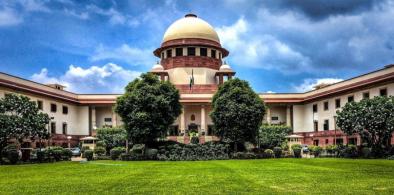
The hand of God in the temple of justice: CJI's statement a disservice to sanctity of judiciary

The conduct of the CJI has thus invited some questions from even his admirers, and given rise to a new conversation on the motives for this distinctly religious bent being brought out openly in public debate, given that the CJI recently visited the Ram temple at Ayodhya. This is not good news for the legal system and the two sides in the Ayodhya judgement 

Climate meet COP 29: More despair than hope

Even as all countries are concerned about climate issues  and almost all of them are participating in the  global climate meets, some of the participating countries  are indulging in bloody conflicts and wars such as the ongoing Russia Ukraine war and the Israel-Hamas war.  All such wars and terrorist  activities involve use of missiles, dropping of bombs, shootings, drone attacks and so on  which cause emission of huge quantities of toxic gases and severe atmospheric pollution. It appears that climate meets have not discussed these conflict issues at all.