Since India enacted the Mediation Act of 2023, one can not only reduce the burden on courts but also maintain family relationships through dialogue and discussion among family members with the assistance of a qualified mediator.


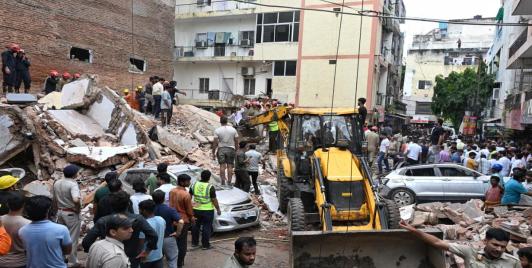
Aggressive migration of youth and workers to metro cities in search of better opportunities is common across the region. And so is the response deficit by local and central governments in providing them with basic, dignified lifestyles. The time has come for the elected representatives to think differently and narrow the gap between government schemes and results on the ground.

These achievements have positioned India as a digital governance exporter. Singapore, Nepal, Bhutan, France, Mauritius, Sri Lanka, and the United Arab Emirates have already established UPI connectivity, and more than 50 countries have expressed interest in replicating aspects of India Stack’s open digital infrastructure.
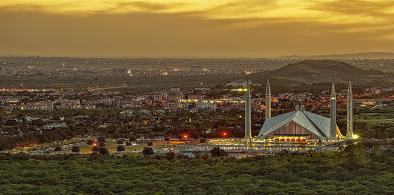
This raises the issue not whether Islamabad has surpassed its outmoded and fragmented administrative structure but whether governance would keep pace with its growth. Islamabad has to evolve from being administered as a capital city into being governed as a metropolis.

The inhabitants of Manipur have had long-standing experiences of living insecurely in their own homeland, even as migrants from the Northeast have encountered prejudice in metropolitan India....India has produced a paradox where communities that belong formally to India can also face exclusion from the social mainstream.

Since India enacted the Mediation Act of 2023, one can not only reduce the burden on courts but also maintain family relationships through dialogue and discussion among family members with the assistance of a qualified mediator.

The Bareilly judgment shows how this propaganda is influencing Indian society, including judges who are supposed to base their verdict on concrete evidence.
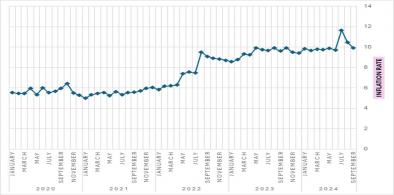
Time is of the essence for the interim administration to take the bull by the horns and rein in the inflation by adopting innovative methods. Since the interim administration is composed mostly of professionals from reputable NGOs, many people are beginning to believe that the newly appointed advisers lack experience in statecraft, strategic thinking, and crisis management.
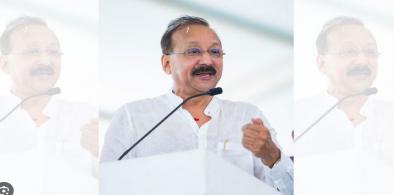
In some cases, politicians themselves are closely associated with land deals and builders, as Baba Siddique allegedly was, or politicians are builders themselves, like the BJP’s guardian minister for suburban Mumbai, Mangal Prabhat Lodha.
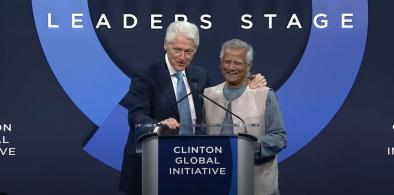
Those who are welcoming external forces by promoting Yunus should re-examine history. Yunus is being seen by many as a Morsi figure for Bangladesh. When Mohamed Morsi came to power in Egypt following the Arab Spring with Western support, it led to deterioration of law and order, spike in the prices of essential goods, and extreme public suffering. Even after two months of Yunus' interim government, there has been no significant improvement in law and order, market stability or public well-being.

As cities grow and urbanise, they are becoming frontline battlegrounds in the fight against climate change. Incorporating green spaces, sustainable building practices, and raising public awareness are key to mitigating extreme heat. Indian metropolises are recognizing the need for comprehensive strategies, but climate action demands a coordinated, multisectoral approach at all levels of governance.

While tax-funded media can work under specific conditions, India's experience suggests that a model focused on subscriptions and private advertisements is more suitable for maintaining editorial independence, fostering innovation, and creating a more democratic and informed society
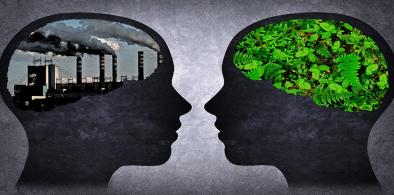
Governments should recognise the fact that unaddressed environmental concerns will transform into a radical form of action if not into eco-terrorism. The religious terrorism what Middle East nations have been experiencing these days may turn into environmental terrorism down the line due to progressive resource crunch and the steady degradation of natural resources.

Heat domes have severely impacted India, particularly during intense heat waves. In the 2022 North India heat wave, temperatures soared above 45°C across Delhi, Uttar Pradesh, Rajasthan, and Madhya Pradesh, with some areas nearing 50°C. A high-pressure system caused stagnant hot air and minimal cloud cover, intensifying the heat.
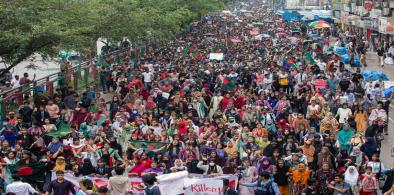
There is a saying revolution devours its children. Like the ousted regime who were the self-proclaimed legacy bearers of the revolution of 1971, the July revolution of 2024 could create a similar thermidorian reaction in the future if the torchbearers of this revolution play a similar political game of ‘Us’ and ‘Them’
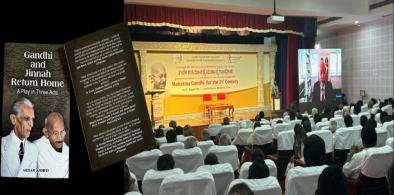
If a true aristocrat is to be defined by courtesy and good manners, then the Mahatma was no less than the most refined princes and maharajas of India. His interactions were marked by legendary grace, respect and courtesy even in times of acrimony and division. He even addressed Mr. Jinnah, a political opponent, as the Quaid-I-Azam, the title given to Mr Jinnah by his supporters.
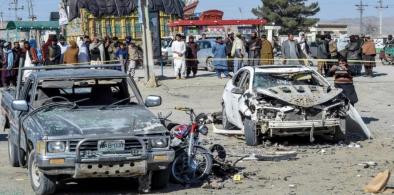
Balochistan remains a Pakistani faultline and it must be understood that it is a ‘political problem' even though the Pakistani state has been trying to deal with it all through as 'security problem'. The clear dissatisfaction of the people during accession to Pakistan is yet to be resolved. Forced disappearances and extrajudicial killings are now the trademark policy impulses of the oppressive Pakistani regime.
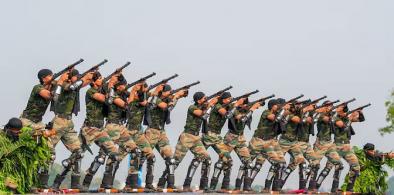
The recruitment of Nepali Gorkhas into the Indian Army being stopped after 77 years post-Independence is not only going to be a major loss to the Indian Army but also a serious and avoidable blow to cordial India-Nepal relations.

While there are uncertainties with regard to the possibilities and prospects of generating green hydrogen in a cost-effective manner it is surprising that green hydrogen is being hailed as the ultimate solution to overcome the emission issue and prevent climate disaster.

Many of us spend hours on social media doom scrolling, which then ceases to be just a source of recreation; it becomes an alternative world where algorithms and trends decode and shape individuals.