

Bangladesh–India Relations at a Crossroads: Needed Recalibration, Not Rupture
The current strains in Bangladesh–India relations should therefore be seen not as an inevitable deterioration, but as a test of diplomatic maturity. Bangladesh and India share more than geography and history; they share a responsibility to ensure that temporary political frictions do not harden into structural mistrust. In a time of regional uncertainty, neither country benefits from a relationship defined by grievance or miscommunication.
 Dec 19, 2025
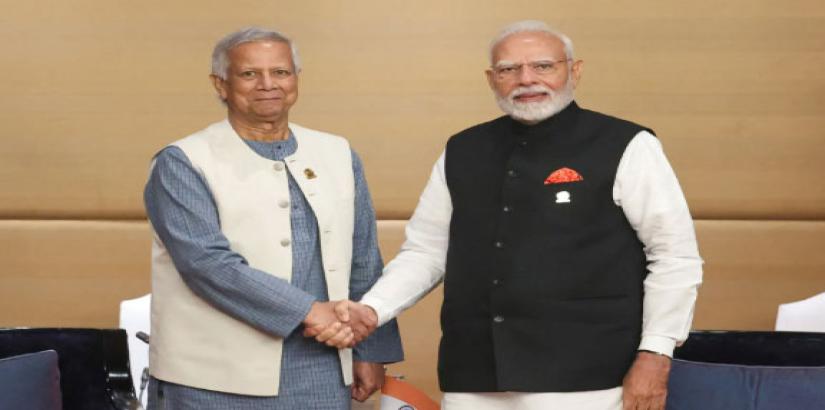
Bangladesh–India relations stand at a delicate crossroads, shaped by the interaction of historical memory, political transition, and evolving public expectations. Recent controversies—most notably surrounding India’s Victory Day message in 2026—may appear, at first glance, to concern matters of diplomatic phrasing or symbolic emphasis. Yet the intensity of the reaction they provoked in Bangladesh suggests something more consequential: the surfacing of long-standing anxieties over recognition, agency, and balance within an inherently asymmetrical bilateral relationship.
The Victory Day episode, in which Prime Minister Narendra Modi highlighted India’s military victory over Pakistan, without explicitly foregrounding Bangladesh’s central role, quickly became a focal point for public debate. Victory Day marks the birth of Bangladesh as a sovereign state and commemorates a liberation struggle led by the Bangladeshi people and the Mukti Bahini, with decisive Indian support at a critical juncture. In periods of political stability, ambiguities in historical narration might be absorbed quietly. In moments of transition, however, symbolic misalignment resonates more sharply. The controversy illustrates a broader pattern in South Asian diplomacy: political ruptures often expose unresolved sensitivities that had been managed—but not resolved—under more stable political arrangements.
The strain on bilateral relations has not been confined to symbolism alone. A series of developments have injected a sharper security and political edge into the relationship. The shooting of Osman Hadi, one of the July protesters in Bangladesh, and the widespread perception that the attacker fled across the border into India, reignited concerns among some Bangladeshis about the political implications of Sheikh Hasina and senior party members residing in India, reinforcing perceptions—fair or otherwise—that external actors may be influencing domestic instability.
Around the same time, remarks by a young Bangladeshi political leader invoking India’s “Seven Sisters” northeastern region provoked strong reactions in India, underscoring how political rhetoric—particularly in a climate of heightened nationalism—can destabilise already fragile trust. These episodes culminated diplomatically when both Dhaka and New Delhi summoned each other’s high commissioners, a rare reciprocal gesture that signalled how symbolic disputes, border anxieties, and political messaging have begun to intersect in increasingly consequential ways.
What matters in these incidents is less the intent behind individual actions than their cumulative effect on trust, especially at a moment when political authority is fragmented and public narratives are rapidly shifting. In border-sensitive relationships, unresolved security perceptions often travel faster than official clarifications, particularly when political authority is fragmented. Taken together, these episodes reveal that Bangladesh–India relations are being tested simultaneously on symbolic, security, and political fronts. What may appear as isolated flashpoints are, in fact, interconnected stressors challenging the moral and political equilibrium of the relationship.
Post‑Hasina Adjustment
For more than a decade, bilateral ties were anchored in a highly personalised framework centred on the Sheikh Hasina government. This model delivered tangible outcomes: enhanced counterterrorism cooperation, expanding energy trade, improved connectivity, and progress in subregional initiatives. Yet it also limited the institutional depth of the relationship, narrowing channels of engagement and muting public debate. From New Delhi’s perspective, continuity in Dhaka was closely associated with border stability, counterinsurgency cooperation, and insulating India’s northeast from political volatility. The political rupture of July 2024 exposed the constraints of this approach. With familiar interlocutors gone, both countries now face a new reality: the relationship must be sustained through institutions rather than personalities.
In this transitional context, symbolic gestures have acquired disproportionate political weight. In asymmetrical relationships, symbolic recognition functions as a proxy for equality. Victory Day narratives, therefore, are not merely about historical accuracy but about contemporary political recognition. When legitimacy is being renegotiated and national confidence reasserted, shared history becomes contested terrain—not because the past has changed, but because the present remains unsettled.
Since July 2024, many Bangladeshis have reassessed India’s role in the country’s internal political trajectory. India’s perceived proximity to the previous regime, its decision to provide Sheikh Hasina shelter, and its cautious early response to the uprising have shaped public perceptions—fairly or otherwise—at a moment when democratic accountability and political identity are being redefined. Longstanding issues once managed quietly—border incidents, water-sharing arrangements, and trade practices—have now entered a more openly contested public space.
Yet interpreting these tensions as evidence of an irreversible downturn would be misleading. The structural foundations of cooperation remain robust. India remains among Bangladesh’s most significant trading partners and a key source of energy imports, while Bangladesh occupies a pivotal position in India’s eastern neighbourhood strategy, the Bay of Bengal economy, and subregional frameworks such as BBIN. Security coordination along the border and against transnational crime continues to serve the strategic interests of both sides.
What has changed is not the importance of the relationship, but the terms on which it must now be managed. Recalibration is no longer a diplomatic preference; it has become a strategic necessity. The post-Hasina phase demands a shift from leader-centric diplomacy to more institutionalised, transparent, and plural engagement. This requires clearer communication channels, greater sensitivity in symbolic and historical representation, and a willingness to acknowledge evolving public opinion in both countries.
Recalibration As Strategic Necessity
For India, recalibration means engaging Bangladesh as a dynamic, pluralistic society undergoing political transition—not as a predictable political constant. It entails reaffirming respect for Bangladesh’s sovereignty and historical agency, particularly in public narratives that resonate deeply with national identity. Symbolic diplomacy—statements, commemorations, and gestures—must be crafted with an awareness of asymmetries in power and voice.
For Bangladesh, recalibration means articulating legitimate concerns with clarity and restraint, without allowing grievances to harden into reflexive suspicion. As Bangladesh’s economic and diplomatic profile grows, so too does its capacity to engage India on a more equal, interest-based footing. Constructive diplomacy requires distinguishing between structural disagreements and symbolic slights, and resisting the temptation to conflate the two.
Spirit of 1971
At a broader level, both countries must recognise that regional instability—from great power competition in the Indo-Pacific to climate-induced vulnerabilities—makes cooperation more, not less, necessary. Retreating into mutual defensiveness would weaken their ability to shape outcomes in South Asia and beyond. Recalibration, by contrast, offers an opportunity to renew the relationship on firmer, more transparent foundations.
The spirit of 1971 remains a powerful reminder of what Bangladesh and India can achieve when moral clarity, political will, and regional responsibility converge. Preserving that legacy does not require uniformity of perspective or the absence of disagreement. It requires mutual respect, historical balance, and an understanding that partnerships endure not by avoiding friction, but by managing it wisely.
The current strains in Bangladesh–India relations should therefore be seen not as an inevitable deterioration, but as a test of diplomatic maturity. Bangladesh and India share more than geography and history; they share a responsibility to ensure that temporary political frictions do not harden into structural mistrust. In a time of regional uncertainty, neither country benefits from a relationship defined by grievance or miscommunication. Recalibration—not rupture—is both the wiser and more necessary path forward. Handled with foresight, today’s tensions could mark not a rupture, but the beginning of a more mature, institutionally grounded partnership—one capable of withstanding the pressures of a changing region.
(The author is Professor and Chair of the Department of Economics, International University of Business Agriculture and Technology (IUBAT), Dhaka. His research focuses on regional trade, sustainable development, and South Asian economic cooperation. Views expressed are personal. He can be reached at golam.grasul@gmail.com)





Post a Comment