

Is National Sovereignty in the 21st Century Conditional - Mediated by Hierarchy?
The strikes on Iran are not just another flashpoint in the Middle East. They are a reminder that the rules of the system are applied through hierarchy. Law speaks the language of equality; power writes the terms of enforcement. For smaller states, this is not a philosophical dilemma — it is a strategic one. Their sovereignty is rarely absolute. It must be guarded, bargained, and constantly recalibrated in response to forces beyond their control.
 Mar 05, 2026
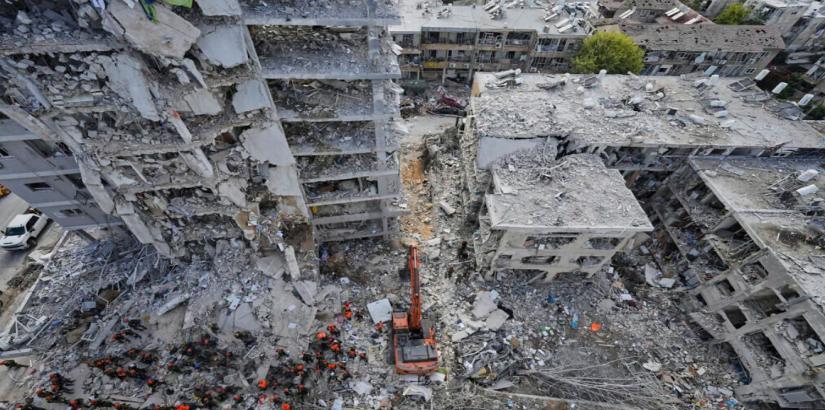
When the United States and Israel struck Iran, the missiles did more than target military facilities. They struck at an idea that has anchored international politics for nearly four centuries: sovereignty.
Sovereignty was once the sacred cornerstone of international politics. The Westphalian order promised equality among states, protection of territorial integrity, and freedom from external interference. The UN Charter reaffirmed these principles after 1945, declaring that law would stand above power. These principles promised equality among nations. Yet history shows that power often bends law.
The recent strikes on Iran are not an exception but a vivid reminder that sovereignty in the 21st century has become conditional. This is not merely a Middle Eastern crisis; it is a window into how the global system truly functions. Formal equality may remain inscribed in international law, but real autonomy depends on position within a hierarchy of power. Military reach, control over global finance, and institutional leverage now define the boundaries of independence.
The modern world still speaks the language of sovereign equality. But in practice, sovereignty today is conditional.
Promise vs. Practice
The UN Charter enshrines three principles: territorial integrity, political independence, and non‑intervention. In theory, force is prohibited except in self‑defense or with Security Council authorization. This architecture was meant to guarantee equality among states. But the empirical record tells a different story.
Hegemonic powers routinely override sovereignty, justifying their actions as providers of global public goods—security, monetary stability, open trade. By underwriting these goods, they claim legitimacy and acquire leverage.
This gap between principle and practice is most visible in the role of the United States whose financial and institutional dominance extends sovereignty beyond borders. As custodian of the global reserve currency and architect of post‑war institutions like the IMF, World Bank, and WTO, it extends influence far beyond its borders. Sanctions regimes, dollar‑clearing systems, and export controls reshape economies without a single soldier crossing a frontier. Sovereignty, in this reality, operates within hierarchy. States are formally equal but materially dependent.
Iran’s vulnerability lies not only in exposure to military strikes but also in exclusion from global finance and trade networks. Its juridical equality remains intact, yet its autonomy is hollowed out by systems governed elsewhere. Sovereignty is not abolished—it is mediated by hierarchy.
Autonomy Contingent on Compliance
Sovereignty today is shaped not only by financial and institutional leverage but also by new doctrines that redefine its meaning. In the post–Cold War era, principles such as humanitarian intervention, the Responsibility to Protect, and conditional aid have shifted the debate from rights to obligations. States are no longer judged solely by their autonomy; they are expected to protect populations, prevent proliferation, and adhere to global norms.
Failure to meet these obligations opens the door to external intervention. Yet the critical question remains: who decides when obligations are violated? In practice, it is dominant powers that interpret and enforce these norms, legitimizing coercion under the banners of humanitarianism, democracy, or security.
This reframing creates flexibility for hegemonic actors but fragility for smaller states. Autonomy becomes contingent on compliance. Those who align with dominant powers may find protection; those who resist face sanctions, isolation, or force. Sovereignty, once universal and absolute, has become conditional—its survival increasingly dependent on geopolitical positioning within a hierarchy they cannot control.
Sovereignty not Absolute
The strikes on Iran are not an isolated episode. Across regions, sovereignty has been bent and reshaped in different ways—through military force in Iraq, humanitarian language in Libya, economic sanctions in Venezuela, and great‑power rivalry in Ukraine. Taken together, these cases reveal sovereignty as conditional, not absolute.
In Iraq (2003), the U.S. invasion bypassed international consensus and sidelined the UN system. Framed in the language of weapons of mass destruction, it raised a fundamental question: can sovereignty be overridden by a single state’s perception of danger? Iraq’s sovereignty endured in law but collapsed in practice under overwhelming military force.
In Libya (2011), NATO’s intervention invoked the Responsibility to Protect, claiming legitimacy in safeguarding civilians. Sovereignty became contingent on humanitarian interpretations rather than juridical equality. Yet the aftermath exposed its fragility: governance collapsed, institutions disintegrated, and humanitarian language masked strategic intervention.
In Venezuela (ongoing), sovereignty eroded through economic instruments and direct coercion. Sanctions restricted access to global markets, hollowing out autonomy. Episodes of force underscored how sovereignty can be contested simultaneously through finance and military pressure.
In Ukraine (2022–present), Russia’s invasion violated territorial integrity, asserting historical claims over international law. Western sanctions and military support reshaped the conflict’s trajectory. Ukraine’s sovereignty was stretched between competing hierarchies—Russian coercion and Western backing. Autonomy became conditional not only on compliance with norms but also on the balance of power in its neighborhood.
Across these cases, sovereignty emerges less as an absolute principle and more as a variable shaped by power distribution. Military strikes, humanitarian doctrines, sanctions, and great‑power rivalry converge to redefine autonomy. Each episode underscores the same reality: sovereignty today is mediated by hierarchy, contingent on compliance, and fragile in the face of coercive authority.
Convergence of Coercive Instruments
The recent strikes on Iran illustrate vividly how sovereignty in the 21st century is reshaped by overlapping forms of coercion. Iran today embodies all dimensions of conditional sovereignty at once—military strikes layered atop economic exclusion, institutional paralysis, and geopolitical rivalry. It is the convergence point where law collides with hierarchy.
Military force, combined with longstanding sanctions, has excluded Iran from global finance and trade networks. Its juridical equality as a UN member remains intact, yet materially it is constrained by powers with far greater reach. The very system designed to safeguard equality—the United Nations—stands paralyzed by veto politics or sidelined altogether.
Iran thus exemplifies the fragility of sovereignty in the modern era. Autonomy is mediated by hierarchy, conditional on compliance, and vulnerable to coercive authority. In Iran’s case, sovereignty is not abolished but hollowed out, reduced to a legal shell while its substance is defined by external power.
Implications for Smaller States
For smaller states, sovereignty is not a shield but a negotiation. Protection comes with alignment; resistance invites coercion. In practice, sovereignty for small and mid‑sized states is less about formal equality and more about managing vulnerability within a hierarchy they cannot control. Autonomy depends on navigating asymmetries of power: those aligned with dominant actors may enjoy protection, while those who resist face sanctions, isolation, or force. Sovereignty becomes contingent, a bargaining position rather than a guarantee.
In a hierarchical international order, sovereignty for smaller states is not a guarantee. It is a constant calculation — an exercise in managing exposure rather than asserting independence.
The paradox is enduring: law promises equality, yet power enforces hierarchy. For smaller states, the challenge is not simply to preserve autonomy but to survive within a world where sovereignty bends under pressure and compliance often determines protection.
Paradox and the Challenge Ahead
From Iraq to Libya, from Venezuela to Ukraine — and now Iran — the message is unmistakable: sovereignty today depends on power. Military reach, control over finance, and institutional influence decide whose independence is defended and whose is tested. Some nations can strike across borders with impunity. Others struggle to protect their own economic and political space.
The doctrine of sovereign equality still sits in the texts of international law, but it no longer defines reality. In practice, sovereignty has become uneven. It stretches for the strong and tightens for the vulnerable.
The strikes on Iran are not just another flashpoint in the Middle East. They are a reminder that the rules of the system are applied through hierarchy. Law speaks the language of equality; power writes the terms of enforcement. For smaller states, this is not a philosophical dilemma — it is a strategic one. Their sovereignty is rarely absolute. It must be guarded, bargained, and constantly recalibrated in response to forces beyond their control.
The real question is stark: can a world built on asymmetry ever deliver universal sovereignty, or will autonomy remain strongest where power is concentrated? Until that tension is resolved, sovereignty will remain secure for some — and conditional for the rest.
The future of global order depends on which of those realities prevails.
(The author is Professor and Chair of the Department of Economics, International University of Business Agriculture and Technology (IUBAT), Dhaka. His research focuses on regional trade, sustainable development, and South Asian economic cooperation. Views expressed are personal. He can be reached at golam.grasul@gmail.com




Post a Comment