

Needed An Independent and Sovereign Foreign Policy for Bangladesh Centred on National Interests
In shaping foreign policy toward India, the people of Bangladesh expect a relationship based on mutual respect, sovereignty, and fairness. Public opinion often emphasises resolving border-related tensions, preventing cross-border push-in incidents, and ensuring humane management of migration and security issues. There is also a domestic expectation for constructive dialogue regarding political matters, including discussions surrounding the status or repatriation of former Prime Minister Sheikh Hasina, if relevant under legal and diplomatic frameworks.
 Mar 04, 2026
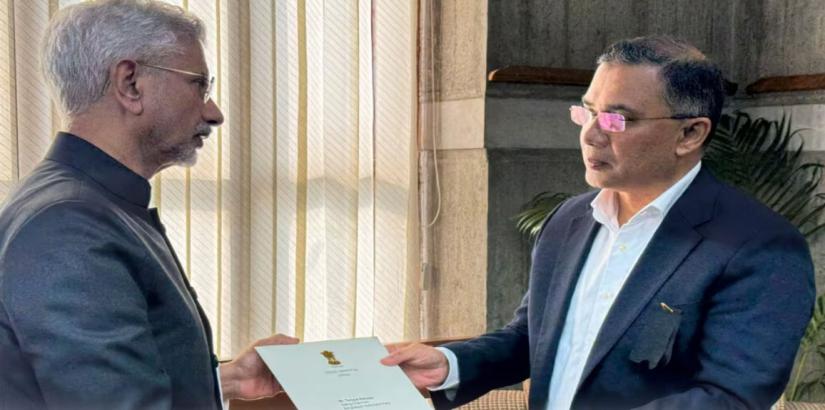
After 35 years of rule, a male Prime Minister took an oath in Bangladesh on 17 February 2026. The law and order situation in the country is now taking a new shape, alongside efforts to revamp Bangladesh’s internal and external relations. In particular, people are eagerly awaiting developments in Bangladesh’s bilateral and multilateral relations. After ousting an autocratic regime, this government assumed leadership of the country, and public sentiment is largely favorable toward it to run Bangladesh smoothly by handling the economic downturn and political unrest, regardless of conspiracies against one another.
Generation Z (Gen Z) hopes to see Bangladesh stand firmly on its own foundations rather than compromising its national integrity and sovereign equality. Therefore, the government undoubtedly faces considerable pressure regarding how it implements its foreign policies.
Dealing with India, China
The people of Bangladesh would prefer to see this government from a different angle due to its inception in the aftermath of a terrible uprising in July 2024. However, the government also needs to prove itself in certain areas. In shaping foreign policy toward India, the people of Bangladesh expect a relationship based on mutual respect, sovereignty, and fairness. Public opinion often emphasises resolving border-related tensions, preventing cross-border push-in incidents, and ensuring humane management of migration and security issues. There is also a domestic expectation for constructive dialogue regarding political matters, including discussions surrounding the status or repatriation of former Prime Minister Sheikh Hasina, if relevant under legal and diplomatic frameworks. At the same time, the educated civil society of Bangladesh seeks to address narratives about minority rights through transparent engagement and confidence-building measures, aiming to prevent misinformation and maintain internal harmony while strengthening bilateral trust.
In dealing with China, the people of Bangladesh expect a cautious and strategic approach that safeguards national interests. There is strong public emphasis on avoiding excessive debt dependency or any form of “debt-trap” vulnerability, ensuring that Chinese investments remain transparent, sustainable, and development-oriented. At the same time, Bangladeshis generally prefer using diplomatic engagement with China as a balancing tool in the regional context, particularly in managing tensions with India. However, the expectation is not to escalate rivalry, but to maintain strategic equilibrium and discourage any external interference especially concerning security sensitivities in the Chittagong Hill Tracts (CHT). Overall, the public outlook favours a pragmatic, balanced, and sovereignty-focused foreign policy.
No Humanitarian Corridor
In relations with Myanmar, the common people prefer a peaceful and diplomatic approach rather than any form of military confrontation. The primary public expectation is the safe, voluntary, and dignified repatriation of Rohingya refugees to Myanmar under international supervision. Bangladeshis generally support sustained diplomatic pressure, multilateral engagement, and humanitarian coordination to resolve the crisis, while maintaining border stability and avoiding escalation. They also refrain from opening their border for a humanitarian corridor, as they perceive this as a security threat. Bangladesh is widely expected to have stronger and respectful ties with eastern countries as well, recognising both economic interests, such as labour migration and energy cooperation, and shared cultural and religious bonds.
In the context of regional tensions, including the crises involving Iran and Palestine, public sentiment often favours a principled and humanitarian stance, advocating peace, justice, and solidarity while maintaining balanced diplomatic relations with all relevant actors in the region.
Functional Ties with Pakistan
Bangladeshis prefer rebuilding relations with Pakistan through a careful check-and-balance approach, without positioning Bangladesh against India. The expectation is to pursue pragmatic cooperation based on mutual interests, while preserving sovereignty and historical sensitivities. Some also believe that maintaining functional ties could be strategically useful in times of regional instability, though without entering into military alignments or compromising Bangladesh’s independent foreign policy.
Regarding the Western world, Bangladeshis generally expect greater trade diversification with Western countries, like the United Kingdom (UK), Germany, the Netherlands, France, Italy, Australia, and New Zealand, expanding beyond traditional sectors like ready-made garments (RMG). Strengthening access to markets, attracting quality investment, and enhancing technology transfer are seen as priorities to reduce overdependence on any single region and ensure sustainable economic growth.
No Foreign Military Base
Public opinion often favours a balanced and interest-based relationship with the United States. Many believe Bangladesh should avoid committing to any foreign military base on its soil, while instead focusing on expanding export-oriented trade, securing preferential market access, and deepening economic and development cooperation. The overall expectation is to maintain sovereignty while benefiting from strong economic and diplomatic engagement.
Above all, it is earnestly hoped that Bangladesh will fulfil the aspirations of its people by implementing an independent and sovereign foreign policy under the first parliamentary government formed through the July uprising. Such a policy, genuinely centred on Bangladesh’s national interests, is expected to usher in the emergence of a new Bangladesh-centric strategic landscape.
(The author is a foreign policy and security analyst and educator who holds a postgraduate degree from the Department of International Relations, Rajshahi University, Bangladesh. Views expressed are personal. He can be contacted at alaminislamshuvo16@gmail.com.)





Post a Comment