

White-Collar Terror And Their Radicalised Network In India
The exposure of a sophisticated white-collar terror network underscores the evolving nature of radicalisation and the need for comprehensive security reforms. Measures that merit consideration include: a)Reinstating long-term President’s Rule in J&K to stabilise governance and security; b) Implementing an organised, sustained deradicalisation programme, particularly among youth and educated professionals; c) Strengthening the permanent presence of the Indian Army in the Valley and increasing the number of cantonments; and d) Ensuring that elections are conducted only when broader community representation is viable, including Kashmiri Pandits, Dogras, Sikhs and other displaced groups
 Dec 11, 2025
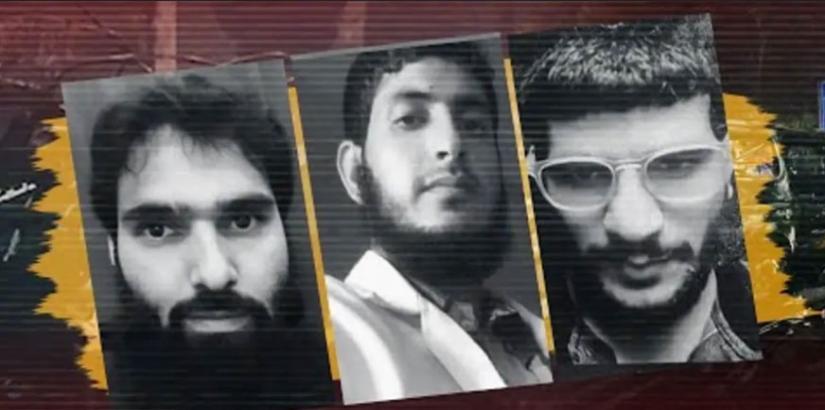
The term “white-collar terrorists” entered public discourse in October 2025, when a network of Kashmiri doctors was found in possession of materials used to manufacture highly lethal chemical explosives. One of the doctors accidentally detonated an incomplete bomb in a car near Delhi’s Red Fort, causing multiple fatalities.
While this module surfaced more than five years after the abrogation of Articles 370 and 35A, its emergence should not have been surprising. The constitutional changes reduced—but did not eliminate—Pakistan-supported terrorism in Jammu & Kashmir (J&K). For over three decades, several educated and economically well-off Kashmiri youths were radicalised and recruited into terror networks backed by Pakistan. Sections of the Kashmiri population, often openly or discreetly sympathetic to Pakistan, were accused of propagating, supporting or facilitating extremist violence, including targeted killings and the mass displacement of over 400,000 Kashmiri Pandits.
Historical Context, Political Failures
Kashmiri Pandits—Hindu natives of the Kashmir Valley and the last remaining members of the region’s original Hindu community following medieval-era conversions—faced severe persecution during the rise of Pakistan-supported militancy in the late 1980s and early 1990s.
Responsibility for the Kashmiri Pandit exodus has long been debated, with allegations of governance failures and political misjudgments levelled against successive governments led by the Abdullah and Mufti families. Analysts and Kashmiri Pandit groups argue that inadequate administrative responses, combined with the rise of terror outfits like the Jammu & Kashmir Liberation Front (JKLF) and Hizbul Mujahideen, enabled an environment of fear marked by threats such as “Ralive, Tsaliv ya Galive” (convert, leave, or die).
The 1989 kidnapping of Rubaiya Sayeed—daughter of then Union Home Minister Mufti Mohammad Sayeed—and the subsequent release of five jailed militants is widely seen as a turning point that emboldened terrorist groups. Statements attributed to key political figures from that period are often cited as evidence of indifference during a humanitarian and security crisis.
Despite persistent demands for a high-level judicial probe into the 1990s violence, including the ethnic cleansing of Kashmiri Pandits, meaningful investigation has remained elusive. In 2023, the Supreme Court recommended establishing a Truth and Reconciliation Commission for events since the 1980s, but no progress was made.
Terror Persists Post-Article 370 Abrogation
On August 5, 2019, the Government of India revoked J&K’s special status and bifurcated the state into the Union Territories of J&K and Ladakh. The night before the announcement, political leaders including Farooq Abdullah, Omar Abdullah and Mehbooba Mufti were placed under preventive detention to forestall unrest.
Terror incidents declined in the subsequent years but did not cease. In 2024, when the Supreme Court directed that elections be held in J&K, several displaced Kashmiri Pandits argued that the region remained unprepared due to continuing radicalisation.
Their concerns appeared validated when terrorists attacked Hindu tourists in Pahalgam in April 2025. Investigations suggested that their presence and movements were known to segments of the local population. Commenting on this, Lt Gen D.P. Pandey (Retd) stated that judicial interventions made without fully appreciating on-ground conditions could unintentionally undermine counterterror efforts. He argued that national security decisions require greater operational autonomy for the government and armed forces.
White-Collar Terror Network
On October 19, 2025, a Jaish-e-Mohammed-linked module was uncovered when police probed threatening posters in Srinagar’s Nowgam area. CCTV analysis led to the arrest of three overground workers (OGWs), whose interrogation revealed connections to cleric and former paramedic Maulvi Irfan Ahmad from Shopian. Ahmad had allegedly used his position as an imam to radicalise educated professionals, including doctors, and maintain a network across J&K, Haryana and Uttar Pradesh.
Subsequent raids led to the arrest of:
-
Dr Adeel Ahmad Rather, from Saharanpur, where an AK-47 rifle was recovered from his former workplace locker
-
Dr Muzammil Ganaie, at Al-Falah University, Faridabad, from whose rented accommodations police seized nearly 2,900 kg of explosive materials, including ammonium nitrate and two AK-series rifles
-
Dr Umar Ul Nabi, who allegedly panicked and prematurely detonated a vehicle-borne explosive device near Red Fort on November 10, 2025, leading to 13 deaths—including his own
DNA testing confirmed Nabi as the driver of the blast vehicle. Investigators later determined that he and Ganaie had conducted reconnaissance at Red Fort earlier in the year.
Further arrests included:
-
Dr Shaheen Saeed, a Lucknow-based doctor accused of raising ₹20 lakh for explosive materials
-
Amir Rashid Ali, linked to procurement of the Hyundai i20 car and preparation of explosives
-
Jasir Bilal Wani, a technician exploring drone-based delivery systems for explosives
Authorities questioned more than 50 doctors in Kashmir. The module reportedly used online platforms such as Telegram and organised foreign trips—particularly to Turkey—to facilitate radicalisation and fundraising.
Al-Falah University in Faridabad, despite being a recognised private institution, emerged as a hub for several accused individuals, prompting scrutiny of its oversight mechanisms.
Policy Lessons, Road Ahead
The exposure of a sophisticated white-collar terror network underscores the evolving nature of radicalisation and the need for comprehensive security reforms. Measures that merit consideration include:
-
Reinstating long-term President’s Rule in J&K to stabilise governance and security
-
Implementing an organised, sustained deradicalisation programme, particularly among youth and educated professionals
-
Strengthening the permanent presence of the Indian Army in the Valley and increasing the number of cantonments
-
Ensuring that elections are conducted only when broader community representation is viable, including Kashmiri Pandits, Dogras, Sikhs and other displaced groups
(The author is a strategic affairs analyst and former spokesperson, Ministry of Defence and Indian Army. He can be reached at: wordsword02@gmail.com, LinkedIn: https://www.linkedin.com/in/anil-bhat-70b94766/, YouTube: @ColAnilBhat8252 )




Post a Comment