Why the Afghanistan-Pakistan Border Keeps Burning

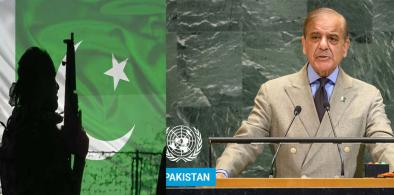
Why the Afghanistan-Pakistan Border Keeps Burning: Keys to Peace Lies With Group Whose Loyalties Answer to No One

The borderland TTP now exploits is the same terrain that Pakistan's own security establishment worked for decades to create as "strategic depth."  The world of proxy-war infrastructure seldom remains directed towards where its architects have aimed.

India and Australia Enhance Strategic Relationship, Prioritise Maritime Domain Awareness to Secure Indo-Pacific

A significant factor that emerged after India launched Operation Sindoor against Pakistan in May 2025 was the strain in the India-US relationship under the Trump administration, driven by aggressive tariff disputes and policy friction. This indirectly accelerated India’s push to diversify partnerships, prompting New Delhi to lean more pragmatically into closer economic and strategic ties with middle powers such as Australia.

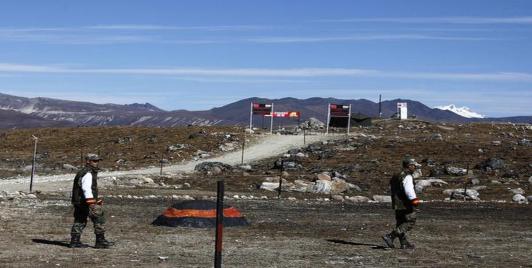
The Reopening of Nathu La and a Pragmatic India-China Compact: Opportunity for Both Countries to Move Beyond Symbolism

India and China need not share identical geopolitical visions to agree that a stable border, prosperous border communities and transparent rules are preferable to uncertainty. The most useful measure of Nathu La’s success may therefore be not how many tonnes cross the pass, but how routinely two neighbouring systems learn to work together.

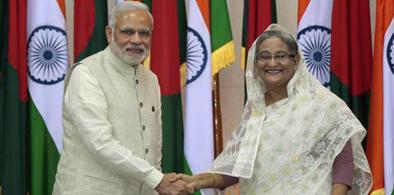
Hasina’s December Gamble: Will it Become a Moment of Confrontation or Reconciliation?

December could therefore become much more than Victory Month. It could become a test of whether Bangladesh's next chapter will be written through democratic accommodation or another round of political vengeance. The danger is that a leader returning to face her past could inadvertently reopen the country's deepest wounds. 

More on Geopolitics, Security and Strategic Affairs

Myanmar’s Rakhine conflict threatens regional peace

It would be in the interest of all stakeholders, including India, to drive the agenda for peace to ensure the insurgency does not spiral into an uncontrollable cycle of violence which engulfs the region, writes Jaideep Chanda for South Asia Monitor

‘Aurat March’: A groundbreaking rally against patriarchy in Pakistan

The term ‘Aurat’ itself signifies the negative connotation, vernacularly, with which South Asian women have to contend. The significant rally cry, “Mera Jism, Meri Marzi” highlighted women’s body rights and gender equality, writes Azeemah Saleem for South Asia Monitor

With laws, more social awareness needed to curb child pornography in South Asia

We have strict laws but it is quite difficult to control child pornography based on only laws. We must create social awareness to stop this horrific crime, writes Monira Nazmi Jahan for South Asia Monitor

India’s challenged foreign policy: Diplomatic missteps and domestic mismanagement

The domestic turmoil at the moment is not only reshaping the country’s foreign policy but also causing an inordinate impact on the trajectory of India’s international affairs, write Muhsin & Mufsin Puthan Purayil for South Asia Monitor

India, US need to realign tech relationship to meet rapidly changing global order

Now with the world increasingly getting caught in a spreading viral infection, and the US political theatre getting embroiled in approaching elections, the India-US agreement on trade doesn’t seem likely to happen before 2021, writes Kumardeep Banerjee for South Asia Monitor

Whither police reforms? Law enforcement may be failing Indian democracy

The current pattern of law enforcement in India dilutes the claim to be a  robust and equitable democracy and  the hapless citizen pays a heavy price, writes C Uday Bhaskar for South Asia Monitor

Modi's cancelled visit: Coronavirus saves the blushes for Delhi, Dhaka

The moment of relief for both sides, as it were, stems from the unstated, but nevertheless evident situation whereby Modi could have faced hostile protests in Dhaka that the Hasina regime was preparing meticulously to avoid, writes Mahendra Ved for South Asia Monitor

Covid-19 turning point for globalisation, a challenge for India

While China may re-emerge from the crisis slightly weakened, the consequences can be devastating for countries like India, which missed out on most of the benefits of rapid globalisation and do not have the capital accumulation, unless they can reinvent themselves, writes Arul Louis for South Asia Monitor

Coronavirus helping save Modi government foreign policy blushes?

In the face of such sustained criticism, to which its foreign office is very unaccustomed, it is clear that India’s domestic politics are now placing India’s global ambitions at grave risk, writes Nilova Roy Chaudhury for South Asia Monitor

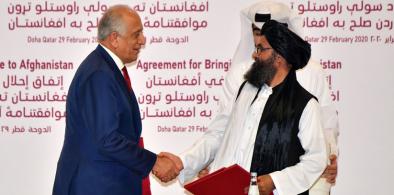
US, Taliban and the Doha Agreement: Afghan government short-shrifted

It is the agenda going forward that effectively puts a stamp over what the US assumes would be a Taliban-led, if not outright, Taliban government in Afghanistan, writes Shakti Sinha for South Asia Monitor

South Asia needs to reclaim its cultural ethos, revive SAARC

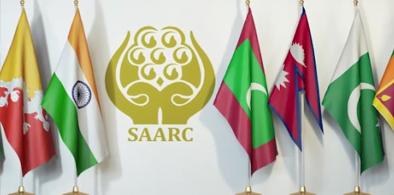
Although BIMSTEC has been gaining momentum in the recent past, it cannot be an alternative to SAARC, as it involves all the players in the region, including Pakistan, writes Samudrala VK for South Asia Monitor

Russia, India, China should cooperate to lead the Asian century

RIC, a troika of the three Eurasian powers, can work extensively on issues like counter-terrorism, transnational organised crime, illicit drug trafficking and climate change, writes Samudrala VK for South Asia Monitor

The Taliban, and Pakistan, have caught Trump in a duplicitous bind

What constituency Pakistan has in Capitol Hill is not known, but in putting up this deal, Pakistan has played its double game to the hilt, capitalizing on Trump’s pre-election promise of ‘bringing the boys home’, writes Lt Gen P C Katoch (retd) for South Asia Monitor

US-Taliban deal will only boost Trump’s electoral prospects and Pakistani influence

The requirement of a seven-day ‘reduction in violence’ for signing the deal was a joke that demonstrated abject surrender to the Taliban, writes Lt Gen PC Katoch (retd) for South Asia Monitor

For Trump facing re-election India was the 51st US state!

If the adulation of Trump and the rally made it seem like India was the 51st state in Trump's re-election campaign, it may be because Modi bets on the re-election of a tough, right-wing hardliner with whom he shares some characteristics, writes Arul Louis for South Asia Monitor