The UN's World Food Programme (WFP) is in talks with India for wheat donation to Taliban-controlled Afghanistan that is facing a food crisis, according to the WFP official in that country


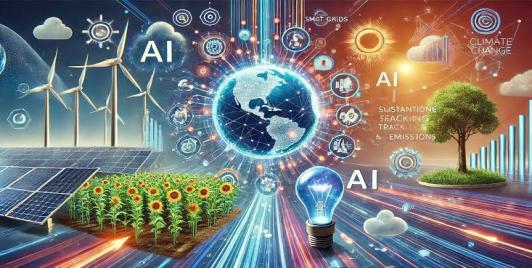
South Asia’s climate risks are shared across countries. Rivers such as the Ganga, Brahmaputra and Indus do not respect national boundaries, and torrential rains in one country can lead to floods in another. Satellite data, flood forecasts and flood warnings could, therefore, be shared to enhance disaster preparedness across the region.
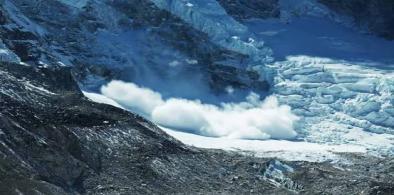
The disasters at Kedarnath and Nepal should therefore be read not simply as tragedies of the past or isolated episodes of extreme weather. They are warnings from a changing mountain system. The question before South Asia is whether we will continue to respond to each disaster after it occurs, or whether we will listen to what the mountains are telling us beforehand.
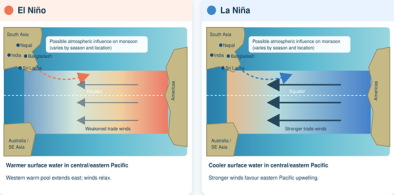
AI may genuinely extend the horizon over which seasonal climate risk can be estimated. For communities across South Asia living under the influence of the monsoon, a longer view could mean the difference between a farmer adjusting her planting in time and a family receiving a flood warning too late to act.
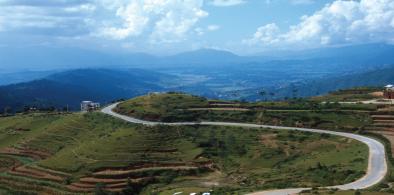
The broader lesson for South Asia is equally important. Hilly regions cannot be developed simply by transferring lowland infrastructure models into mountainous terrain. Investment has to respond to local economic systems, geography and environmental risks.
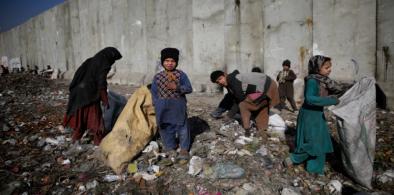
The UN's World Food Programme (WFP) is in talks with India for wheat donation to Taliban-controlled Afghanistan that is facing a food crisis, according to the WFP official in that country
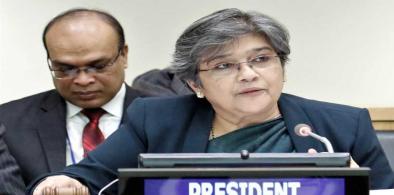
Bangladesh, a country that has faced terrorism for several years, has reaffirmed its zero-tolerance policy against the menace in all its forms and manifestations, mentioning that terrorism cannot and should not be associated with any religion, race, faith, culture, ethnicity or society
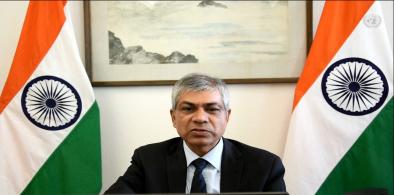
India has called on the UN committee dealing with disarmament to condemn Pakistan for its “nefarious and vicious” attempts to disrupt its work
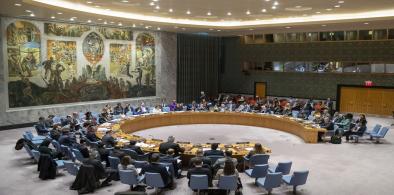
Abdulla Shahid, the Maldivian president of the UN General Assembly, has said he will appoint the leaders of the negotiating process for Security Council reforms before the Assembly debate next month on the topic to begin work early on the process
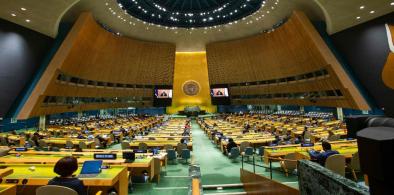
The 76th annual session of the United Nations General Assembly ended on Monday without a speech by the representative of Afghanistan as Ghulam Isaczai, the UN-recognized Afghan envoy, decided not to speak
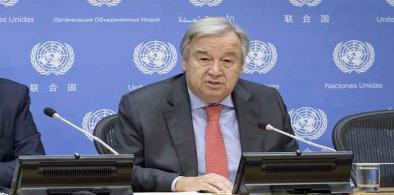
Despite the strong exchanges between India and Pakistan at the high-level General Assembly session last week, UN Secretary-General Antonio Guterres is hopeful that a dialogue between them is possible
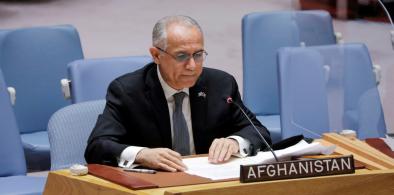
Ghulam Isaczai, the permanent representative of the elected government of Afghanistan, has withdrawn from speaking at the high-level General Assembly meeting, Secretary-General Antonio Guterres's Spokesperson Stephane Dujarric confirmed on Monday. No reason was given
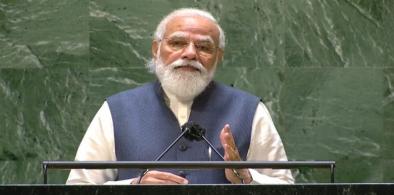
Prime Minister Narendra Modi on Saturday described India as the “mother of democracy”, and said “democracy can deliver” and “has delivered”
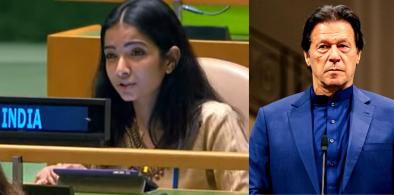
India has denounced Pakistan as a patron of terrorism and a suppressor of minorities in reply to Pakistan Prime Minister Imran Khan's tirade against the country
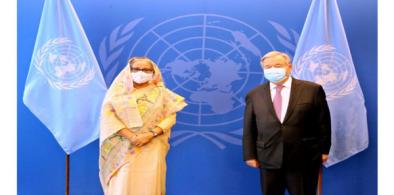
United Nations Secretary-General António Guterres has lauded Bangladesh for the way it has come up in overall development, calling it a “miracle”
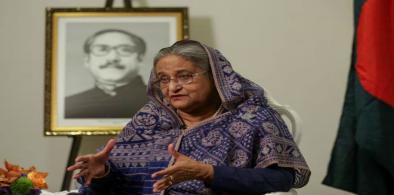
The world community needs to turn its “words and rhetoric” into “actions” for a sustainable solution, Bangladesh Prime Minister Sheikh Hasina said underlining the urgency to resolve the Rohingya refugees issue at the same time warning that the delay would have “consequences” beyond her country’s borders and could “jeopardize” the collective security as refugees remain “prone” to extremists ideologies
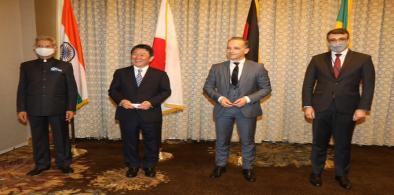
India and its three allies in the quest for Security Council reform - Brazil, Germany and Japan - have called for a determined push for the adoption of a text for conducting the negotiations and to set a time-frame for the changes
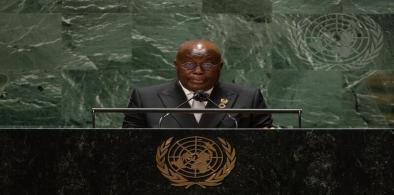
Ghana President Nana Addo Dankwa Akufo-Addo has criticised European countries for not recognising the Indian-made Covishield vaccine, calling it a “retrogressive” step
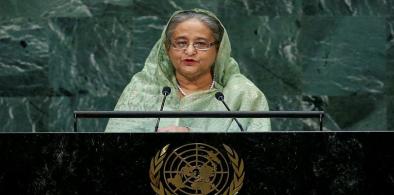
Bangladesh – a country where the prime minister’s chair has alternated between two women over the past 30 years – has called upon the United Nations to lay special emphasis on forming a Women Leaders’ Network to act as a force to ensure gender equality
The Taliban has written a letter to the United Nations (UN), seeking a chance to address the ongoing UNGA session, and nominated its Doha-based leader, Suhail Shaheen, as their representative, the UN Secretary-General Office confirmed