

Representational Photo

He Taught India How to Laugh at Itself: Reflections on Johnny Walker's Birth Centenary

Impressed by Kazi’s mimicry and raw acting skills, Dutt took a gamble on the bus conductor, cast him, and renamed him after his favourite Scotch — Johnny Walker.

Empowering Grandmothers in India and Africa: Sanjit 'Bunker' Roy, a Life of Relentless Rural Empowerment

Between 2005 and 2011, 140 African women, most of them grandmothers, traveled to Tilonia from villages in Africa to be trained as solar engineers. None of the women could read or write, nor could speak Hindi. So, they were taught using sign language and colour codes during their six-month-long training. By the time they finished the course and returned to their African villages they were qualified to install, maintain, and operate household, solar-powered lighting systems

Monetizing Folklore in Bangladesh's Modern Cultural Economy

Today, Bangladesh's young game designers and animators are going back to their roots. They are creating immersive gaming worlds that are based upon the mud, magic and monsoon of the Bengal Delta. By transforming their oral storytelling traditions into structured digital intellectual property rights, these studios are developing cross-media franchises. 

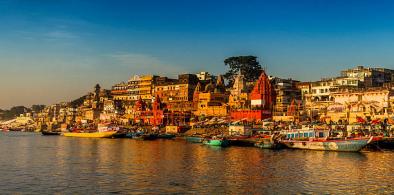
Revisiting a Bend in the Ganges: Ancient Indian City Offers an Eternal Lesson

Eventually, Kashi became a civilisational capital of India. Poets, saints, scholars, musicians, artisans, and even ordinary citizens helped shape the city. For millennia, seekers and scholars travelled from far and wide in search of knowledge, learning, and even emancipation. Its modern institutions carry that legacy forward. 

More on Culture, Literature, Society and Gender

A World Cup without boundaries? Musings of a South Asian cricket fan

I am thrilled that Pakistan will be playing in India. I’m thrilled that this format allows an India-Pakistan encounter. Obviously, it’s something any cricket fan would look forward to. This is the World Cup and not a bilateral series, so it’s extra special.


How a South Asian film festival grew to an Oscar-qualifying cinema platform

And now Rita’s idea for a Tasveer Art Center, a progressive, secular, and inclusive safe place that would house a state-of-the-art auditorium, filmmaker's studio, art gallery, and a hall to hold up to 300 people among other cutting-edge facilities, is her latest dream project.

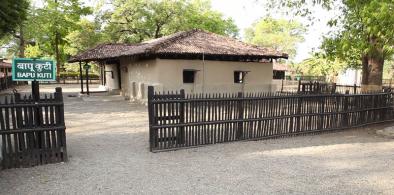
Ashrams for education: Remembering Gandhi, Tagore and their holistic approach to learning

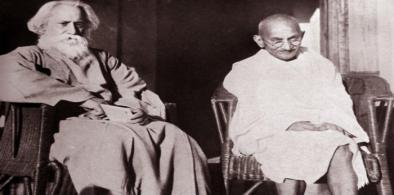
As we think of the relevance of ashram ideals in the thought of both Tagore and Gandhi, we realise that they were ecologically inspired. Gandhi Jayanti 2023 may help us consider the importance of an education engaging with our natural environment.

King Khan opens up a bold new space for Bollywood

The industry prefers a winning formula to creative exploration, particularly in big-budget films populated by rocking stars with fancy fees. Will that change from hereon with the success of ‘Jawan’? We have on offer a new path for Bollywood, a path that can use its huge and unrivalled soft power to drive home some significant messages of the kind and in a way it has rarely attempted in a big-budget extravaganza.

When the music died: Afghanistan’s performing arts fall silent under Taliban rule

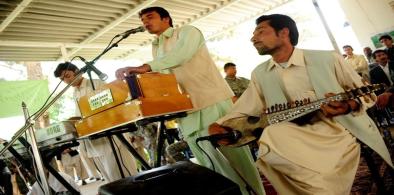
The famed Afghanistan National Institute of Music, the country’s only music school, had to shut down its campus in Kabul after the Taliban's crackdown. It has temporarily relocated to Lisbon, Portugal, where 273 students, faculty members and staff have been granted asylum.

Audacity to play: The remarkable story of women’s cricket in Pakistan

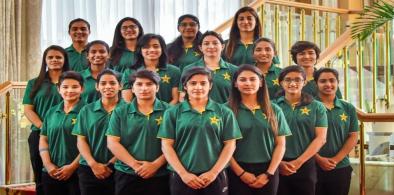
That the writer is Indian and male makes this book all the more remarkable. Puthran has captured not just the state of the sport in Pakistan but also the social, political, religious and administrative challenges women cricketers here face at every step. 

Empowering youth for carbon neutrality: Making campuses living laboratories for Net Zero

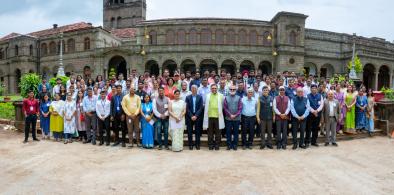
India's pledge to attain Net-Zero carbon emissions by 2070, articulated by PM Modi at COP26 in Glasgow, UK  underscores the nation's determination to combat climate change. In this context, higher education institutions take center stage for moulding future-ready policymakers.

A Bollywood film and a tragic tale: Poor road safety awareness remains region's blight

In India alone, some 150,000 people lose their lives to road crashes every year, with more than five times that number injured or maimed for life. Pakistan, Bangladesh, Nepal and Sri Lanka have equally dismal or worse statistics in the matter of road safety.

Mantra of happiness: Live in the moment

Too much planning brings misery because we cannot predict the forces of the future and hence have no control over them. This obviously leads us to worry about the outcome. We should therefore follow the American maxim; “We will cross the bridge when we come to it”.

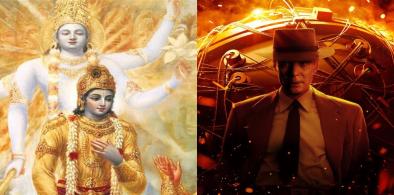
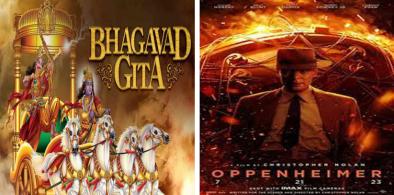
“Oppenheimer” and the Bhagavad Gita: How the Hindu scripture became the American physicist's moral compass

There was something profoundly moving to note that a deep philosophical insight given by Krishna Dvaipayana better known as Ved-Vyasa, the creator of the Gita and the Mahabharat, many millennia ago, should come to underpin the most defining event of the 20th century and beyond.

When folk culture gets commercialised, the visual language of nature gets lost

What we see in the problematic use of folk culture in Modern Indian art is the way the celebration of nature has been privatised and turned into a consumer item that becomes a part of the art industry. 

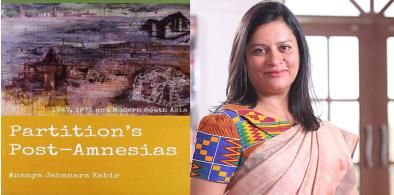
Partition stories and intertwined histories: Beyond religious hatred and political rivalries

The nation-states of Pakistan, India and Bangladesh categorise their citizens by nationality alone, with no room for emotion or relationship. People are separated from each other through violent narratives and intractable borders.

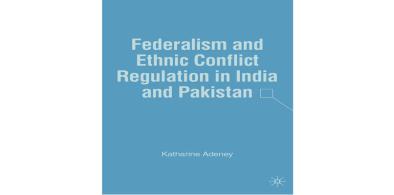
Why India's federal system holds over Pakistan's

The elite in Pakistan was not committed to pre-independence reorganization, and the lack of this linguistic federal adjustment created tensions that India survived.

Was Oppenheimer's Gita quote accurate?

In Gita (Chapter 11, Verse 32) Lord Krishna says that “I am the "Kal" (Mighty Time) – destroyer of the world”.  Oppenheimer said “I am become Death, the destroyer of worlds”, and this is extensively quoted.

Is reading your mind now going to be a reality? Breakthrough device by Indian American student

The creation of the device has opened exciting possibilities in the field of brain-computer interface technology.

Newsletter Subscription

The subscriber's email address.
Stay informed - subscribe to our newsletter.