
Representational Photo

Unity Without Uniformity: Why Diversity Is the Foundation of Peace

If diversity and unity are to guide the future, education must change.Most schools and universities today serve industrial monoculture and economic growth. They train the intellect — the “left brain” — to produce administrators and managers. Rational analysis is important, but it is only half of human potential. We also have a “right brain”: intuitive, holistic, relational. An education that neglects creativity, empathy and ecological awareness produces imbalance. It strengthens uniformity and weakens diversity.

To Become Better AI Designers, Engineers Should Learn Biology

At present all our robots and AI machines, etc. are being designed based upon the human body design.  We are still struggling to design our computers and processors more efficiently, but they can never come any closer to the brain and human thought. The AI priests feel otherwise

Is Cricket and Nepal Premier League Powering a New Sports Economy?

The Nepal Premier League has undeniably changed the atmosphere in this Himalayan nation. It has brought light to Kirtipur nightlife, sponsors to scoreboards, and pride to fans starved of large-scale sporting events. It has also created pockets of income, moments of possibility, and glimpses of what a sports economy could look like.

Romance of Innovation: How to Live a Meaningful Life in Rural India

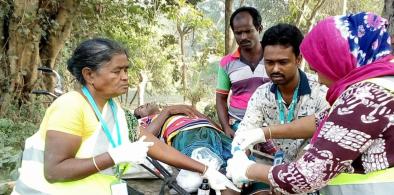
It is a matter of shame for all of us that 78 years after independence we still have a major portion of our rural population living in primitive conditions. They lack electricity, clean cooking fuel, potable water and toilets in their homes. Somehow modern technology has not touched their lives.

More on Medley

Banu Mushtaq: Exceptional Tale Of A Spirited Human Journey

To appreciate Mushtaq and her work is to celebrate the diversity of South Asian languages, culture and many minorities. Over a century ago, the iconic poet Rabindranath Tagore won the Nobel for translating his own work from Bengali to English. However, seldom do we take time to explore works in other regional languages, for example, Tamil, Telugu, Assamese or Balochi. Kannada is estimated to be spoken by 65 million in a region of nearly two billion people.

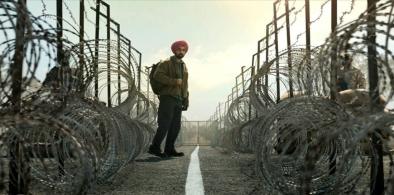
Walking For Peace And Harmony In Times of Conflict And Violence

The fear of the police and trolls makes our hearts beat faster each time there is a phone call from an unknown number. What will it be -- a First Information Report? Lock up? Or some other horrible punishment for what we believe is the right and the only way for human beings to live with each other -- in peace, with love, harmony and unity. No amount of trolls or state repression can change our minds.

Reimagining South Asian womanhood through art and activism

Through this powerful convergence of artistic voices and institutional support, "Feminist Futures" not only documents the present state of feminist discourse in South Asia but actively participates in shaping its future. It stands as testament to art's capacity to challenge, transform, and reimagine social realities, creating spaces for dialogue and change in a region grappling with questions of gender justice and equality.

Never too old: Two Indian veterans on a 7800-mile sailing expedition to boost maritime adventure

The arduous voyage of the Tystie across the Pacific and Indian oceans to Visakhapatnam will instil a sense of pride for Andhra Pradesh, home state for the two intrepid sailors. The Andhra coast has a hoary tradition of maritime connectivity with South-East Asia since the BC period during the reign of  the Satavahana dynasty

Save trees to protect the economy, culture and human lives

Hyderabad will be lifeless without its tree cover. The city needs its green cover, oxygen, and natural look to sustain economic activities. According to the World Economic Forum's recent Nature Risk Rising Report, more than half of the world’s GDP ($44 trillion) is highly or moderately dependent on nature. 

Race for AI Solutions: Need to Temper With Responsible and Ethical Approach

There is significant pressure to implement AI solutions fast in response to market demand, but there are also hazards associated with using the incorrect technology or doing so carelessly. Due diligence on AI is a strategic precaution, not a delay tactic.

George Keyt: Icon of cultural modernism in South Asia

The latest study of Sri Lanka’s most internationally acclaimed painter offers a detailed portrait of the artist, shedding light on previously overlooked aspects of his life and work. What emerges is a vision of George Keyt who continues to be celebrated for his bold fusion of Eastern themes and Western techniques

The bite that shouldn’t kill: Need to eliminate dog-mediated human rabies deaths by 2030

So what should you do if you get bitten, even by a vaccinated dog? The answer is simple: treat every bite seriously. Wash the wound thoroughly with soap and water for at least 15 minutes. Apply an antiseptic, and seek medical attention immediately. Do not rely solely on the dog’s vaccination status. Rabies is unforgiving. Once symptoms appear, there is no cure

Reawakening Our Humanity: Celebrated in Words, Abandoned in Deeds

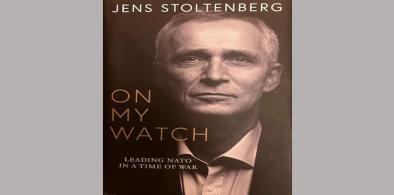
In an age of rising division and dwindling empathy, Debasish Bhattacharyya's stirring reflection challenges us to reawaken our shared humanity—not in grand speeches, but in everyday actions. Through the extraordinary journey of Thor Pedersen and a sobering critique of global indifference, this piece is both a wake-up call and a call to care.

How a national art gallery was born in Islamabad: A lesson in perseverance and tenacity

A recently published coffee table book by architect Naeem Pasha documents the social and cultural forces behind the nearly-30 year long process that culminated with the inauguration of Pakistan’s monumental National Art Gallery in Islamabad

Madhur Bajaj: The lesser known Bajaj who raised Aurangabad’s profile

His tenure at SIAM was characterized by a commitment to excellence and innovation. Notably, he played a pivotal role in developing India’s first Automotive Mission Plan (2006–16), which laid the foundation for the country’s robust automotive industry

The house on Faiz Road: Once home, now history

For me, a Pakistani, this road in Delhi holds special significance, because my father lived here, growing up in a house on this road before Partition, when Karol Bagh was a predominantly Muslim area. In fact, most of the houses here once belonged to his extended family. Even the masjid on the road, I believe, was built by my father’s Bare Abba — Agha Abdul Aziz, his father’s elder brother.

Motivating India's youth: Why students remain largely disconnected from the India story

Our present Indian society has very little respect for teachers. Today in India teaching as a profession is generally looked down upon. Unless that changes, we will not get great people to teach.   Today in India the situation is such that when people do not get good jobs in industry or other trades, they go into teaching.  For most people it is just another job for making money.

'A chorus of voices poised to ignite transformation' through art

How does a Mumbai-based curator create an act of peaceful yet powerful protest in New York? By taking a space long dominated by the patriarchal system and filling it with artists and poets whose work goes beyond traditional feminism. Most of the artists in the show were born in other countries. Including the South Asian diaspora of Pakistan and India

Selective historiography of communal historians fueling divisive politics

Was Aurangzeb anti Hindu? One can say that Aurangzeb was neither Akbar nor Dara Shikoh. He was orthodox and did not welcome Hindus and non Sunni sects of Islam at one level. At another level he was master of alliances as he had a number Hindu officers in his administration. As medieval historian, Prof Ali Athar, points out Aurangzeb had the highest number of Hindu officers in his administration (33%).