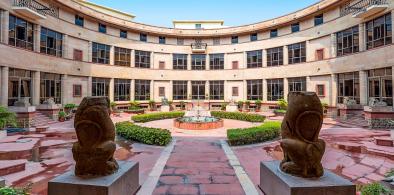
A recently published coffee table book by architect Naeem Pasha documents the social and cultural forces behind the nearly-30 year long process that culminated with the inauguration of Pakistan’s monumental National Art Gallery in Islamabad
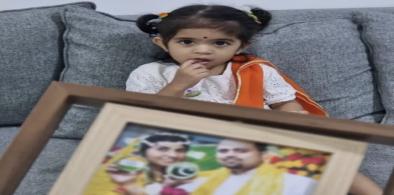
Asha leaves behind a legacy that is as much ours as it is India’s. The phrase “Nightingale of Asia” was coined for Lata, In Pakistan, we always had a prefix for Asha: “Hamari Nightingale.” Our nightingale. In her passing, Pakistan has lost a friend, a teacher, and a voice that made the world feel a little less divided.
The global music industry, where millions of songs are sung, and billions are spent and earned, is a larger story. But the duo’s role as singers remains iconic in India, and perhaps South Asia, where numerous others have come, stayed to make music, and gone.
The Korean noodle story is not really about noodles. It is about what happens when cultural influence travels faster than commercial infrastructure and faster than regulatory awareness. India's Gen Z - and possibly that of other South Asian countries - did not wait for brands to tell them what to eat. They watched K-dramas, did spice challenges, and built market demand that brands, regulators, and consumer education campaigns have simply not kept up with.
The Sufi Storyteller speaks to a wider South Asian moment, where Sufi traditions are increasingly invoked as counterpoints to narrowing religious and cultural orthodoxies. By foregrounding storytelling as both a spiritual and political act, Mansab gestures toward the enduring power of narrative to sustain pluralism, recover marginalized voices, and imagine more expansive forms of belonging.
A recently published coffee table book by architect Naeem Pasha documents the social and cultural forces behind the nearly-30 year long process that culminated with the inauguration of Pakistan’s monumental National Art Gallery in Islamabad
His tenure at SIAM was characterized by a commitment to excellence and innovation. Notably, he played a pivotal role in developing India’s first Automotive Mission Plan (2006–16), which laid the foundation for the country’s robust automotive industry
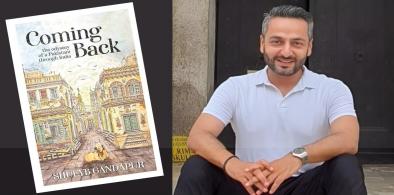
For me, a Pakistani, this road in Delhi holds special significance, because my father lived here, growing up in a house on this road before Partition, when Karol Bagh was a predominantly Muslim area. In fact, most of the houses here once belonged to his extended family. Even the masjid on the road, I believe, was built by my father’s Bare Abba — Agha Abdul Aziz, his father’s elder brother.
Our present Indian society has very little respect for teachers. Today in India teaching as a profession is generally looked down upon. Unless that changes, we will not get great people to teach. Today in India the situation is such that when people do not get good jobs in industry or other trades, they go into teaching. For most people it is just another job for making money.
How does a Mumbai-based curator create an act of peaceful yet powerful protest in New York? By taking a space long dominated by the patriarchal system and filling it with artists and poets whose work goes beyond traditional feminism. Most of the artists in the show were born in other countries. Including the South Asian diaspora of Pakistan and India
Was Aurangzeb anti Hindu? One can say that Aurangzeb was neither Akbar nor Dara Shikoh. He was orthodox and did not welcome Hindus and non Sunni sects of Islam at one level. At another level he was master of alliances as he had a number Hindu officers in his administration. As medieval historian, Prof Ali Athar, points out Aurangzeb had the highest number of Hindu officers in his administration (33%).
It is axiomatic that whatever greatness he accomplished would have been highly unlikely if he stayed in the local university system in Sri Lanka, which reached a state of mediocracy after 1956. Gananath Obeyesekere enters the pantheon of Global Sri Lankans such as CG Weeramantry, CF Amerasinghe and Stanly Tambiah whose greatness is still revered by the world
With limited data on women journalists pursuing legal action in both India and Pakistan, predatory behaviour continues to escalate. Regional governments must stop using online harassment as a political tool as it not only takes a psychological toll but also makes it difficult for journalists to do their jobs effectively. Taking serious steps to protect them must be treated as an urgent priority.
The 8th Global Conference on Creating Value will be held in London, UK at the Imperial College in October 2025. The 7th was held in Sao Paulo, Brazil on October 2-4, 2024. The first was in the UK, the second in New York, the third in Paris and the fourth (virtual) from Florida, the fifth in Japan, the sixth in Washington DC.
Adolescence is a stark reminder that fostering emotional resilience, rather than repression, is vital for a healthier society. Schools and parents must prioritize social-emotional learning, equipping adolescents with emotional regulation, empathy, and communication skills. Trained teachers and counselors should offer early intervention for emotional distress.
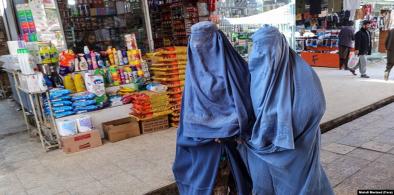
When many worlds fell apart on September 11, 2001, Mansoora Hassan the artist embraced the pain and ensuing horror across the globe. Like a penitent for all, she donned a burqa (itself a valiant and conspicuous act) and stood in front of emblematic American monuments like the White House, the Lincoln Memorial and Ground Zero, her hand outstretched - as though begging for alms.
To alleviate drinking water woes for rural schools, a unique clean drinking water technology (CDWT) has been developed by the Nimbkar Agricultural Research Institute (NARI), an NGO, in Phaltan, Maharashtra, India. The clean drinking water technology (CDWT) can provide 100-200 liters of clean water per day to about 200 children in rural schools.
e-rickshaws are a very common sight in Indian cities. They clog the roads and in most places create a nuisance. AI can help them to become Uber e-rickshaws. They provide last mile connectivity and Uber or Ola model for these rickshaws can help everybody. However to develop this model good and hard data on their numbers, their characteristics, road topography and conditions are needed.
Despite earnest rhetoric about safeguarding women’s rights, the world’s oldest democracy India remains indifferent to the safety and welfare of half its population – women and girls. Sexual violence and the incidence of rape is on the increase and what is cause for deep despondency is the manner in which state and society in India are accepting this as a kind of new normal.
While there are rumours of back-channel dialogue taking place currently, when one of these two nuclear-armed neighbours behaves reasonably, the other one throws a tantrum and vice versa. What will it take to bring them on the same page? What can we, the people, do to move the needle?