Representational Photo

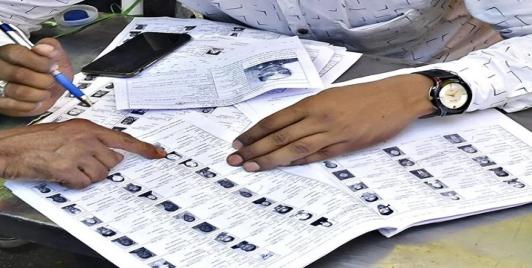
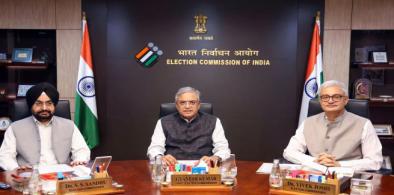
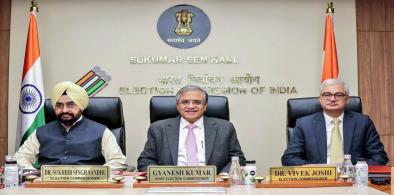
Voter Name Deletions, Denial of Voting Rights Blot on India's Elections

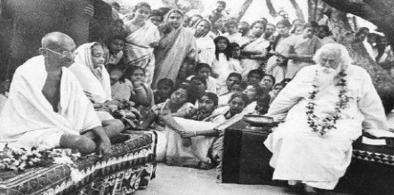
Only a peaceful, Gandhian ‘feet on the ground’ movement can save our 1950 compact. The values embedded in that 1950 compact: Liberty, Equality, Fraternity, Justice, Secularism, can be defended only by that. Each one of us must decide and work for rescuing the republic and the Idea of India. Keep in mind that everyone who lives in this land owns this country. It’s not owned by any one denomination, religion, caste, creed, region, colour, eating and dressing habits and traditions. It’s owned by everyone.

Why India Has Modest Presence in Global Citrus Trade: Agricultural Export Policy Must Move Closer to Ground Realities

This is why citrus should not be treated as a narrow commodity issue. It reveals a larger problem in India’s agricultural development model. India wants to move from being a large producer to becoming a reliable supplier in high-value agricultural trade. But that transition cannot happen through production alone. It requires farm-to-port systems designed around perishability.

Jammu & Kashmir's Drug-Addiction Crisis is a Multidimensional Threat: Joint Civic and Institutional Campaign Against it has Generated a Sense of Shared Responsibility

A particularly noteworthy initiative has been the implementation of the Nasha Mukt Bharat Abhiyan (NMBA), the national de-addiction campaign. In Jammu and Kashmir, this national mission has gained remarkable traction. The recently conducted 100-day intensive campaign under NMBA has created widespread awareness and engagement across all districts. It has mobilized stakeholders from all sections of society, including educational institutions, law enforcement agencies, civil society groups, and community leaders.

Indian Elections: Big Changes and Some Bigger Questions

At the end of the day, this is a political battle that shows the BJP to be an unstoppable steamroller, now controlling power across the North, the West and the East. The Opposition parties, which have been unable to come together with a cogent way to stand up and fight the political fight for the long haul, will have to once again think of the road ahead. It is clear that the BJP of today will stop at nothing in doing the deals it needs to take power

More on Public Policy and Governance

Sri Lanka’s Delicate Tightrope Walk Between Asian Powers

The island-nation’s strategic location in the Indian Ocean has placed it at the centre of intensifying geopolitical competition and rivalry between China and India. Sri Lanka’s experience in balancing its own priorities and needs with the competing interests and concerns of India and China through the lens of project financing has largely succeeded despite occasional hiccups

Theatreisation Of Military In India: No Need To Copy Foreign Models

Theatreisation of military, while conceptually appealing, is not a one-size-fits-all solution. India’s strategic geography — with two contiguous adversaries, interlinked land-sea challenges, hybrid threats, and extraordinarily diverse terrain — does not lend itself to neat theatre divisions.

India’s AI Journey: Transforming Fiscal Management For A Developed India

AI is proving to be more than just a digital tool; it is becoming a fiscal multiplier. By tightening compliance, improving revenue forecasts, preventing leakages, and guiding expenditure, AI is reshaping India’s fiscal landscape. Recent tax reforms under the GST regime adjusting slabs to reduce rates on essentials while taxing luxury goods higher were made possible through AI-driven fiscal analytics.

Can India Defend Its Vast Maritime and Underwater Domain Against Regional Rivals?

India’s underwater defence remains a top priority. The Navy currently operates 19 submarines—16 conventional and three nuclear-powered (including two ballistic missile submarines and one leased nuclear attack submarine). China, by contrast, possesses 60–70 submarines, including 12 nuclear-powered platforms, and aims to grow to 80 submarines within the decade

Can India's Growth Story Be Built On The Backs of Exploited Labour?

When companies see they can get away with violation of labour laws or erode the dignity of workers or do worse with regard to their workforce, more violations of the kind will follow. The only antidote is to put down illegality with an iron hand, to impose exemplary costs on businesses that have little regard for people and to send the message that violations will be met with firm and swift action. 

Israel’s Shadows behind Settlers Policy in Sri Lanka

This controversial project of the mid-1980s, inspired by Israeli models, ultimately failed to achieve its intended outcomes. Nevertheless, Israeli involvement left a lasting imprint on the Mahaweli Development Project and agricultural settlements in Sri Lanka. The continuing association between the military and the Mahaweli Development Project may, in part, be attributed to practices introduced by Israeli advisers during the 1980s.

India’s Economic Self-Reliance Is A Strategic Necessity

India’s economic self-reliance is not about shutting the doors to the world. It is about standing firm during crises, reducing vulnerabilities, and becoming globally competitive. The philosophy of Atmanirbhar Bharat represents a pragmatic approach: be self-reliant in areas where dependence is dangerous, and globally integrated in sectors where India can lead.

When An Opportunity Became A Trap: Exploitative With Little Innovation, Indian IT Sector Caught In A Bind

The Indian software and IT services giants have for long been accused of running body shops, a business fashioned out of what essentially is labour arbitrage turned into a fine art. The sector has consistently denied this, arguing that they have moved up the value chain and that they compete on quality, not price.

Imagining A New South Asia - and Its Unrealised Freedoms

When I think back to Wagah, what stays with me is not the barbed wire, but the wind -- the same wind moving across the border without asking permission. I think of rivers that carry stories of children whose laughter sounds the same in Lahore, Delhi, Dhaka, and Kathmandu.

Pillorying Those Who Visited Israel: Sri Lankans Should Not Be Denied Alternative Perspectives

On the face of it, the misplaced hysteria surrounding the visit made by Sri Lankan journalists to Israel is fuelled by shadowy factors intending to promote a one-sided narrative in which the State of Israel stands as the perennial villain. The beguiling picture planted in Sri Lankan society is portrayed through the moral binaries: good vs evil, victim vs oppressor, and Palestine Vs Israel. 

Accelerating Gun Production in India: ATGS Can Become The Mainstay of Indian Artillery

India has moved from being a buyer to a designer of world-class artillery. ATAGS exemplifies that shift. To convert design success into strategic mass production, India needs synchronized demand signals, targeted metallurgy R&D, modular manufacturing lines, automation, and rapid validation corridors — all underpinned by ACCCS-style digital integration. With these measures, ATAGS can transition from a technological showcase into the backbone of an Indian artillery corps

Feminism and the Global South: Beyond borrowed narratives of Western feminism

Western feminism often sees the family as an oppressive or repressive structure. But in South Asian or African societies, the family is the main place of social security. Therefore, feminism here does not want to break up the family, but to build a new family and create a partnership between men and women.

Is There A Hidden Hand of Anti-Semitism in Sri Lankan Politics?

However, in Sri Lanka, discussions about Gaza rarely consider this perspective. Instead, they consistently reflect an anti-Israeli sentiment. If we examine the situation closely, it becomes clear that the pro-Palestinian narrative, along with its discourse, works to weaken the relationship between Israel and Sri Lanka

An Emerging Tool for Terror: The lurking danger in the explosive growth of DeFis

In its 2023 Mutual Evaluation Report on India, FATF recommended that India should broaden access to its National Risk Assessment and consider releasing a public version. Considering that the cross-border risks from DeFi are real and affect every citizen, an updated assessment of the DeFi sector would help flesh out a strategy in collaboration with the industry participants. It is time to prevent DeFi from becoming a weapon of mass destruction

Bengaluru Antenna: A New India-UAE Bilateral Initiative in Joint AI Innovation and Development Technology Agenda

The Bengaluru Antenna™, coined by me to define this strategic engagement, is both a metaphor and a practical roadmap. By leveraging Bengaluru’s deep-tech ecosystem and the UAE’s AI ambition, it transforms opportunity into action. The Bengaluru Tech Summit 2025 provides the perfect platform to bring this vision to life