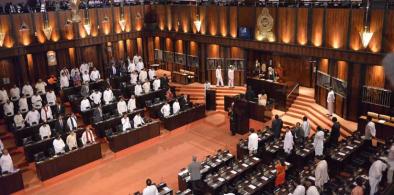
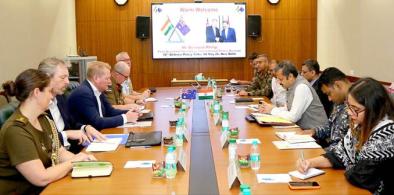
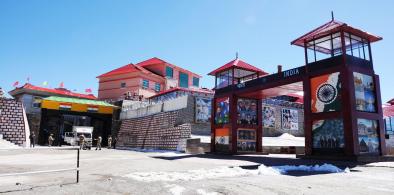

US Assistant Secretary of State S Paul Kapur meeting Sri Lanka President and Chinese officials meeting Sri Lanka party leadership

Colombo to Kathmandu, China Seeks to Counteract US Moves Across South Asia

While Washington and New Delhi seek to strengthen bilateral ties with Colombo, Beijing has strategically engaged with the political forces that control the government. By engaging directly with actors at the core of Sri Lanka’s governance, Beijing appears to be signalling its strategic intent—projecting influence and reinforcing ideological ties. 

A Divided EU Faces Growing Scrutiny Over Taliban Contacts

Some analysts accuse the EU of double-standards arguing  that the EU has been condemning Taliban policies since they assumed power, but were now holding direct discussions with them. Such meetings undermine the EU's credibility as a defender of human rights and democratic values.

Sentenced to Silence? Mahrang Baloch’s Life Imprisonment Raises Uncomfortable Questions for Pakistan

Despite the narrative of the Pakistani state, Mahrang Baloch’s international recognition grew  through 2024.  Time magazine included her in its TIME100 Next list of emerging influential figures, citing her advocacy against enforced disappearances while the BBC named her to its 100 Women list. 

Seychelles' Importance to India: Modi Visit and Quest for Maritime Security and Stable Indian Ocean

Great powers realise the strategic value of small island states - refuelling facilities, logistics hubs, electronic listening posts, maritime surveillance nodes, diplomatic partnerships and access to vast EEZs. Their influence derives more from geographic position and political choice than from demographic size. Seychelles exemplifies this reality.

More on Geopolitics and Strategic Affairs

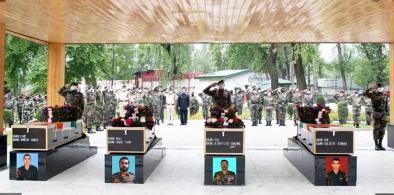
India needs to brace for another lockdown

While the South Korean model of aggressive and maximum testing has proved successful; the world is also studying and appreciating the Indian model wherein a densely and an overpopulated nation with limited resources and a not very advanced health infrastructure has been able to control the exponential spread of the pandemic, writes Brig Anil Gupta for the South Asia Monitor

SAARC is back, but only to fight COVID-19

The question whether India’s initiative will develop into a SAARC minus Pakistan or lead to a revival of SAARC itself remains open,  writes Amb T P Sreenivasan (retd) for South Asia Monitor

Only a Biden presidency can strengthen Indo-US ties

This inability to get any meaningful trade agreement in place speaks volumes about India’s potential future relations with the US with Trump as president, writes Frank F Islam for South Asia Monitor

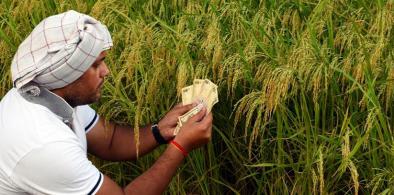
Time to review lockdown to stop economic shutdown

Lockdown cannot be an option to exercise indefinitely. We need to progressively lift it so that the economic costs will not overwhelm us, writes Mohan Guruswamy for the South Asia Monitor

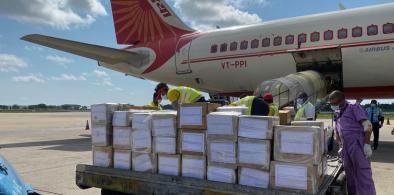
55 years later, India returns favour to US, emerges as humanitarian force

It wasn't only a favour to the US, Brazil or Israel. India also decided to send HCQ  “to all our neighbouring countries who are dependent on our capabilities” and “some nations who have been particularly badly affected" by the pandemic, writes Arul Louis for South Asia Monitor

Is 'temporary' release of prisoners enough to halt spread of COVID-19?

In South Asia, India has, on the directives of its Supreme Court, constituted High Powered Committees in each state to define criteria for release of both sentenced and unsentenced prisoners, writes Madhurima Dhanuka for the South Asia Monitor

India could be staring at a human security catastrophe

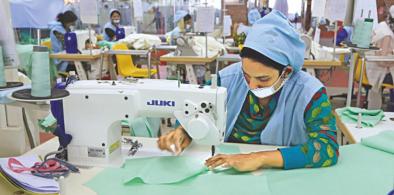
India has about 450 million workers in the informal sector and about a third of them are in the migrant cluster. Even if it is estimated that half of this workforce is grappling with hunger, the numbers are mind-boggling, writes C Uday Bhaskar for South Asia Monitor

Pakistan's fate in FATF once again hangs in balance

In order to save itself from being put under a blacklist, Pakistan has to work at least on papers with respect to various terror organisations to address ‘strategic deficiencies', writes Dr. Sanchita Bhattacharya for South Asia Monitor

Kashmiri youth being misled: Myth about 'demographic changes'

Who will benefit from the new rule? It would be the wards of West Pakistan refugees, Balmikis, Gorkhas, Punjabis and migrant labour in the newly created union territory, writes Brig Anil Gupta (retd) for South Asia Monitor

South Asian countries cannot make the same choices as developed nations

The biggest challenge for governments in South Asia is to fight this pandemic like a first-world country but with the limited resources of a third-world country, writes Dr. Jitender Bhandari for the South Asia Monitor

Post-COVID 19: Needed a brave new world, not chasing shadows

The world community reacted tardily and instead of shoring up the defenses, it is now dousing the fires. The world in the future would warrant systems that are more alert to impending pandemics and crises, better prepared and strong leadership writes R Adm Vineet Bakhshi (retd) for South Asia Monitor

Unorganised workers in India: The COVID-19 crisis has highlighted their utter neglect

The legislation enacted way back in 2008, known as The Unorganised Workers'Social Security Act (mentioned as the Act hereafter) which entered the statute book on December 31, 2008, if implemented seriously, could have come to the rescue of the unorganised workers, which stand to lose enormously both in terms of livelihood opportunities and social security at the present juncture due to the health pandemic, writes Partha Mitra for South Asia Monitor

Leaving Afghanistan's fate to the Taliban

It would not be surprising if American troops are also attacked after part withdrawal has taken place, with blame, apportioned to Islamic State, as was done in the case of the recent attack on Kabul gurdwara, while China and Pakistan laughed all the way home, writes  Lt Gen P. C. Katoch (retd) for South Asia Monitor

India needs to be fair to its own migrants, the city builders and sustainers

The census data of 2011 reflects that the four states - Uttar Pradesh (UP), Bihar, Rajasthan, and Madhya Pradesh -account for 50 percent of India's total inter-state migrants, write Suresh Kumar Patel, Abhishek Kumar & Noorul Quamer for South Asia Monitor

The Wuhan virus and China's biological warfare: Warnings the world ignored

Launch of China Virus/COVID-19  - which only India had guts to name biological weapon - had decades of preparation to deny/mitigate global response, writes  Lt Gen P. C. Katoch (retd) for South Asia Monitor