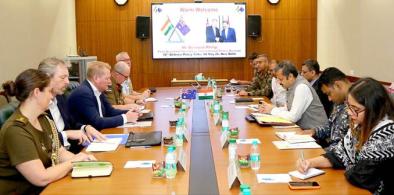
US Assistant Secretary of State S Paul Kapur meeting Sri Lanka President and Chinese officials meeting Sri Lanka party leadership

Colombo to Kathmandu, China Seeks to Counteract US Moves Across South Asia

While Washington and New Delhi seek to strengthen bilateral ties with Colombo, Beijing has strategically engaged with the political forces that control the government. By engaging directly with actors at the core of Sri Lanka’s governance, Beijing appears to be signalling its strategic intent—projecting influence and reinforcing ideological ties. 

A Divided EU Faces Growing Scrutiny Over Taliban Contacts

Some analysts accuse the EU of double-standards arguing  that the EU has been condemning Taliban policies since they assumed power, but were now holding direct discussions with them. Such meetings undermine the EU's credibility as a defender of human rights and democratic values.

Sentenced to Silence? Mahrang Baloch’s Life Imprisonment Raises Uncomfortable Questions for Pakistan

Despite the narrative of the Pakistani state, Mahrang Baloch’s international recognition grew  through 2024.  Time magazine included her in its TIME100 Next list of emerging influential figures, citing her advocacy against enforced disappearances while the BBC named her to its 100 Women list. 

Seychelles' Importance to India: Modi Visit and Quest for Maritime Security and Stable Indian Ocean

Great powers realise the strategic value of small island states - refuelling facilities, logistics hubs, electronic listening posts, maritime surveillance nodes, diplomatic partnerships and access to vast EEZs. Their influence derives more from geographic position and political choice than from demographic size. Seychelles exemplifies this reality.

More on Geopolitics and Strategic Affairs

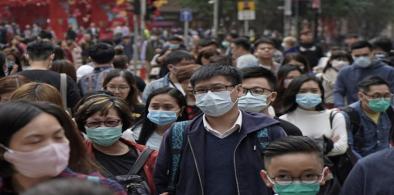
COVID 19: South Asian nations must take care of refugees, or we all are vulnerable

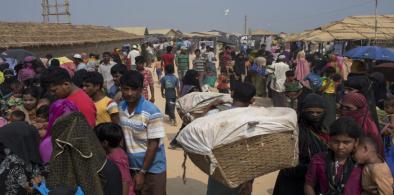
The Rohingya refugees staying inside and outside camps in Bangladesh and India are worth mentioning in the South Asian context. Their already slum-like dwellings, lack of fresh water and sanitation, densely-crowded living conditions and hunger puts them in a more perilous situation, writes Sariful Islam for South Asia Monitor

The final frontier: Women in combat roles must become the new normal

In the Indian context, the Indian Air Force and the Indian Navy have granted a permanent commission to women officers even as both have opened up some combat roles for women, write Subhranil Ghosh & Sayantan Bandyopadhyay for South Asia Monitor

Why Modi broke ranks from his nationalist 'friends' abroad

While Trump and Bolsonaro are worried about the virus' impact on their nation's markets, economies and, by extension, their political future, Modi was open enough to admit that the pandemic would have economic costs, but saving lives was more important for him and his government, writes Tarun Basu for South Asia Monitor

Rajapaksa’s Redux: Jingoism 1, Justice 0

The return of a Rajapaksa to the island’s highest office coincides with a potent form of majoritarianism in Sri Lanka, driven simultaneously by jingoism and fear among the electorate, writes Arman Sidhu for South Asia Monitor

The lockdown is India’s only hope

After independence, this is perhaps the first time India is being put to such a test, with every part of the country affected. Not confined to India alone, but the entire neighbourhood of South Asia is being engulfed by this pandemic, writes Brig Anil Gupta (retd) for South Asia Monitor 

Afghanistan a dangerous place for religious minorities, particularly Sikhs

Afghanistan has become an extremely dangerous country for its residents, especially religious minorities. After surviving there for hundreds of years, the Sikhs virtually don’t even have a right to exist anymore, writes Sanchita Bhattacharya for South Asia Monitor

Coronavirus pandemic should promote globalization, not reverse it

The disruption of supply chains coupled with an unprecedented economic disaster waiting for the world due to the pandemic, the pertinent question is - has the time come for the world to have a rethink for globalization, asks Pranay Kumar Shome for South Asia Monitor

Bangladesh: The corona pandemic has eclipsed Khaleda’s release from jail

Despite Khaleda Zia’s suspended sentence and release from jail, no news except about the coronavirus is attracting the people’s attention in Bangladesh, writes Swadesh Roy for South Asia Monitor

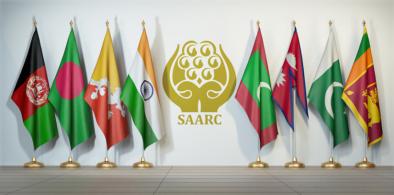
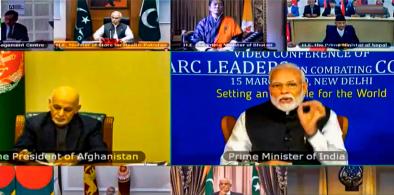
Modi’s outreach: SAARC can regain lost pedestal if its leaders fight Covid-19 together

If the habits of cooperation and mutual understanding developed while fighting together against COVID-19 allow the member countries to regain the lost pedestal of SAARC, it will augur well for peace and prosperity of the region, writes Monish Tourangbam for South Asia Monitor

COVID-19 fear grips densely populated South Asia

In the South Asian region, only Maldives and Sri Lanka fare relatively better in global rankings of quality of healthcare system. Pakistan, which spends the least on health, has only 0.6 beds per 1000 people compared to 8.5 beds per 1000 people in Germany, writes Kavita Bajeli Datt for South Asia Monitor

Coronavirus hits prospects for a revival in Kashmir this summer

For Kashmiris, who were hoping to come out of a long period of isolation after August 5, 2019 and subsequent government clampdown to ensure peace, the deadly virus has been a huge setback at a time when the thaw was beginning and restrictions easing, writes Brig Anil Gupta (retd) for South Asia Monitor

COVID-19 will redefine global governance

The government's role has to transition from that of an arrogant extortionist to a responsible shareholder: The reality is that governments across the world generally collect between 25-40% of income as taxes, writes Prof Rajendra Pratap Gupta for South Asia Monitor 

Myanmar’s Rakhine conflict threatens regional peace

It would be in the interest of all stakeholders, including India, to drive the agenda for peace to ensure the insurgency does not spiral into an uncontrollable cycle of violence which engulfs the region, writes Jaideep Chanda for South Asia Monitor

‘Aurat March’: A groundbreaking rally against patriarchy in Pakistan

The term ‘Aurat’ itself signifies the negative connotation, vernacularly, with which South Asian women have to contend. The significant rally cry, “Mera Jism, Meri Marzi” highlighted women’s body rights and gender equality, writes Azeemah Saleem for South Asia Monitor

With laws, more social awareness needed to curb child pornography in South Asia

We have strict laws but it is quite difficult to control child pornography based on only laws. We must create social awareness to stop this horrific crime, writes Monira Nazmi Jahan for South Asia Monitor