The domestic turmoil at the moment is not only reshaping the country’s foreign policy but also causing an inordinate impact on the trajectory of India’s international affairs, write Muhsin & Mufsin Puthan Purayil for South Asia Monitor
While Washington and New Delhi seek to strengthen bilateral ties with Colombo, Beijing has strategically engaged with the political forces that control the government. By engaging directly with actors at the core of Sri Lanka’s governance, Beijing appears to be signalling its strategic intent—projecting influence and reinforcing ideological ties.
Some analysts accuse the EU of double-standards arguing that the EU has been condemning Taliban policies since they assumed power, but were now holding direct discussions with them. Such meetings undermine the EU's credibility as a defender of human rights and democratic values.
Despite the narrative of the Pakistani state, Mahrang Baloch’s international recognition grew through 2024. Time magazine included her in its TIME100 Next list of emerging influential figures, citing her advocacy against enforced disappearances while the BBC named her to its 100 Women list.
Great powers realise the strategic value of small island states - refuelling facilities, logistics hubs, electronic listening posts, maritime surveillance nodes, diplomatic partnerships and access to vast EEZs. Their influence derives more from geographic position and political choice than from demographic size. Seychelles exemplifies this reality.
The domestic turmoil at the moment is not only reshaping the country’s foreign policy but also causing an inordinate impact on the trajectory of India’s international affairs, write Muhsin & Mufsin Puthan Purayil for South Asia Monitor
Now with the world increasingly getting caught in a spreading viral infection, and the US political theatre getting embroiled in approaching elections, the India-US agreement on trade doesn’t seem likely to happen before 2021, writes Kumardeep Banerjee for South Asia Monitor
The current pattern of law enforcement in India dilutes the claim to be a robust and equitable democracy and the hapless citizen pays a heavy price, writes C Uday Bhaskar for South Asia Monitor
The moment of relief for both sides, as it were, stems from the unstated, but nevertheless evident situation whereby Modi could have faced hostile protests in Dhaka that the Hasina regime was preparing meticulously to avoid, writes Mahendra Ved for South Asia Monitor
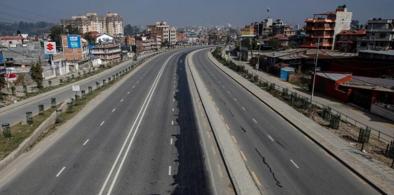
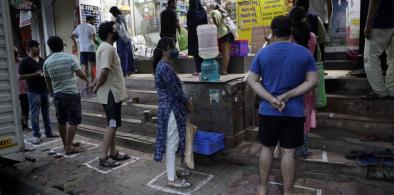
While China may re-emerge from the crisis slightly weakened, the consequences can be devastating for countries like India, which missed out on most of the benefits of rapid globalisation and do not have the capital accumulation, unless they can reinvent themselves, writes Arul Louis for South Asia Monitor
In the face of such sustained criticism, to which its foreign office is very unaccustomed, it is clear that India’s domestic politics are now placing India’s global ambitions at grave risk, writes Nilova Roy Chaudhury for South Asia Monitor
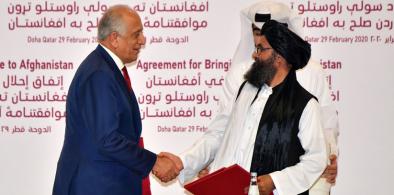
It is the agenda going forward that effectively puts a stamp over what the US assumes would be a Taliban-led, if not outright, Taliban government in Afghanistan, writes Shakti Sinha for South Asia Monitor
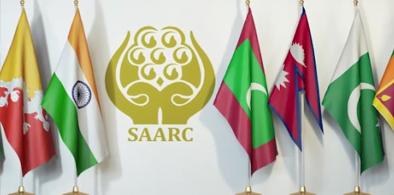
Although BIMSTEC has been gaining momentum in the recent past, it cannot be an alternative to SAARC, as it involves all the players in the region, including Pakistan, writes Samudrala VK for South Asia Monitor
RIC, a troika of the three Eurasian powers, can work extensively on issues like counter-terrorism, transnational organised crime, illicit drug trafficking and climate change, writes Samudrala VK for South Asia Monitor
What constituency Pakistan has in Capitol Hill is not known, but in putting up this deal, Pakistan has played its double game to the hilt, capitalizing on Trump’s pre-election promise of ‘bringing the boys home’, writes Lt Gen P C Katoch (retd) for South Asia Monitor
The requirement of a seven-day ‘reduction in violence’ for signing the deal was a joke that demonstrated abject surrender to the Taliban, writes Lt Gen PC Katoch (retd) for South Asia Monitor
If the adulation of Trump and the rally made it seem like India was the 51st state in Trump's re-election campaign, it may be because Modi bets on the re-election of a tough, right-wing hardliner with whom he shares some characteristics, writes Arul Louis for South Asia Monitor
In order to effectively “Act East” we must first try to “Learn East” once again to rediscover the opportunities for prosperity that lie therein, writes By Amb Sarva Chakravarti (retd) for South Asia Monitor
The LGBT issue is far from gaining social acceptability in a diverse and conservative society that India and much of South Asia is. But things are changing, writes Mahendra Ved for South Asia Monitor
Today’s dispute (between India and Pakistan) is now less about Kashmir and Kashmiris and more about a river system with its headwaters in Kashmir writes Anuttama Banerji for South Asia Monitor