

Air Pollution Knows No Borders: Smog Over Kathmandu Is A Regional Failure
As the World Bank notes, isolated national actions are insufficient when pollution itself ignores borders. India, Nepal, Bangladesh, and Pakistan share the same airshed. Without cooperation, each country keeps breathing its neighbour’s mistakes. “As the government representing the largest population affected by air pollution, India should lead this effort. Instead, the region has drifted away from cooperation, and the cost has been catastrophic,” Dr Subedee said.
 Jan 31, 2026

When I landed in Kathmandu last November, I arrived with a Diwali hangover. Not the festive kind, but the coughing, dust-coated, throat-scratching kind gifted by North India’s winter air. After a decade of breathing Delhi’s seasonal gas chamber, my lungs were in an open revolt.
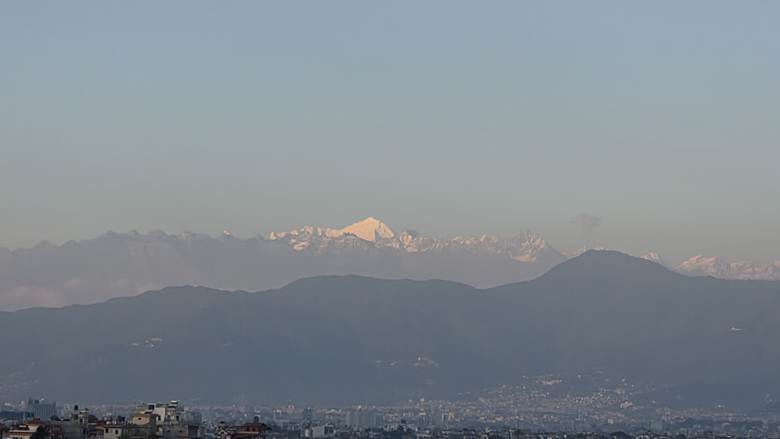
So when my cough vanished within days of arriving in Kathmandu, it felt almost miraculous. The air was crisper. The Air Quality Index was kinder. And on the horizon, the Himalayas rose like a quiet apology for everything the plains had put my body through.
For about two weeks, the mountains held their ground.
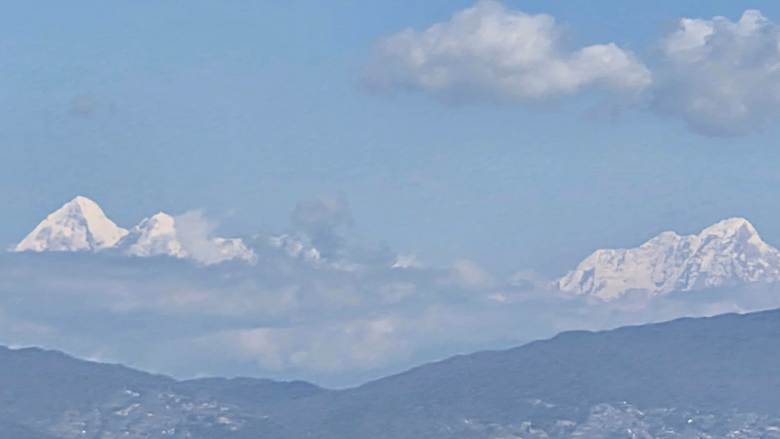
By the third week, the familiar grey veil returned. First as a faint blur, then as a steady erasure. Peak by peak, the Himalayas began to disappear. Locals told me it had been getting worse every year. I did not expect to watch the mountains vanish in real time.
Toxic Spillover
Much of this haze is not Kathmandu’s doing.
What drifts into Nepal each winter is a toxic spillover from the plains of North India and Pakistan: black carbon, brown clouds, and fine particulate matter carried across borders by seasonal winds. Kathmandu’s bowl-shaped valley simply traps what the region exhales.
Abid Omar, founder of the Pakistan Air Quality Initiative, puts it bluntly: “We often view air pollution and climate change as separate silos, but in the Himalayas, they are one and the same.”
Black carbon, he explains, is essentially soot from diesel emissions, brick kilns, and crop burning. It may be short-lived in the atmosphere, but its consequences are anything but.
“When this soot settles on snow and ice, it reduces reflectivity and accelerates melting,” Omar says. “Black carbon is a threat to the water security of the entire Indus and Ganges basins.”
In other words, what burns in Punjab does not stay in Punjab. It ends up on glaciers that feed rivers, sustaining hundreds of millions of people downstream.
Number Are Not Abstract
Every winter, Delhi's National Capital Region (NCR) turns into a public health warning label. In November 2024, AQI levels hovered near 500 in several neighbourhoods, according to India’s Central Pollution Control Board (CPCB). Around the same time, Lahore briefly became the world’s most polluted city, with AQI levels crossing 1,100, far beyond hazardous thresholds, according to a Reuters report based on data from Swiss air quality monitoring networks.
These numbers are not abstract. According to the State of Global Air 2024 report, India recorded more than 2 million deaths attributable to air pollution in 2023. Bangladesh and Pakistan each saw over 200,000 deaths. Air pollution is now one of the leading causes of premature death across South Asia.
Nepal, often imagined as cleaner by default, tells a sobering story of its own. Air pollution in Nepal led to an estimated 48,500 premature deaths, alongside the loss of more than 1.4 million disability-adjusted life years, according to the World Bank. The University of Chicago’s Air Quality Life Index estimates that particulate pollution cuts 3.4 years off the life of the average Nepali. In the southern Terai region, life expectancy drops by nearly five years. In Kathmandu, residents lose 2.6 years.
Dr Anup Subedee, an infectious disease specialist from Nepal, calls air pollution the region’s most under-acknowledged emergency.
“Air pollution is killing at a far higher rate than COVID-19 did during its worst years in Nepal,” he tells Sapan News. “People are dying in their twenties of cancer, or having heart attacks and strokes in their thirties and forties.”
Perhaps most damning is his reminder that nearly two-thirds of Nepal’s air pollution is transboundary in origin. “The same applies to many major cities in South Asia,” says Dr. Subedee. “The pollutants travel across borders within shared airsheds, creating one gigantic plume of polluted air over India, Nepal, Bangladesh, and Pakistan several times a year.”
The Airshed Reality
Scientific evidence backs what lungs across South Asia already know. Data from the International Centre for Integrated Mountain Development shows that nearly 40 per cent of winter particulate pollution in the Kathmandu valley originates outside Nepal. Black carbon carried from Punjab, Haryana, and Uttar Pradesh in India, besides parts of Pakistan, rides the winds north, settles on Himalayan snow, and accelerates glacier melt by absorbing heat.
In some Himalayan regions, scientists estimate that black carbon can increase localised melt rates by up to 30%. Yet global climate negotiations continue to treat glacier loss primarily as a carbon dioxide problem. The South Asian story is more immediate and more preventable. This is not only about emissions. It is about coordination.
Regional Airshed Approach
China offers an instructive contrast. Since 2013, China has dramatically improved its air quality by declaring a “war on pollution.” A major air pollutant, PM2.5 levels fell sharply through strict controls on coal, vehicles, and industry, massive investment in renewables, and legally binding national action plans.
Crucially, China shifted from city-by-city firefighting to a regional airshed approach. Provinces shared data, coordinated emergency responses, enforced unified standards, and tied environmental performance to political accountability.
South Asia has done none of this. As the World Bank notes, isolated national actions are insufficient when pollution itself ignores borders. India, Nepal, Bangladesh, and Pakistan share the same airshed. Without cooperation, each country keeps breathing its neighbour’s mistakes. “As the government representing the largest population affected by air pollution, India should lead this effort. Instead, the region has drifted away from cooperation, and the cost has been catastrophic,” Dr Subedee said.
The haze over Kathmandu is not only Nepal’s burden. It is a regional failure. The melting of South Asia’s glaciers is not just a global warming story. It is also a local one, written in the smoke rising from our own fields, factories, and highways.
If we keep ignoring black carbon, the Himalayas will keep losing time, snow, and stability. The disappearing peaks of Kathmandu are not a metaphor. They are a warning. And like the air itself, that warning is already crossing borders.
(The writer is a journalist from Lucknow and a recent Fulbright-Nehru Master’s scholar at Rutgers University. She can be reached at pragyan@sapannews.com. By special arrangement with Sapan)





Post a Comment