

Gorkhas are Not Nepalese: Ending the Migrant Myth and the Indian Gorkha Identity Crisis
The valour of Gorkha regiments in the Indian Army is often used by the community as the ultimate proof of their Indianness. Since 1947, Gorkha soldiers have participated in every major conflict, be it Indo- Pakistan wars of 1947,1971,1999 or the Indo-China war of 1962. However, this valor is frequently undermined by the very state they defend, as civil and administrative bodies often treat them as "foreigners" even as they receive gallantry awards.
 Mar 08, 2026
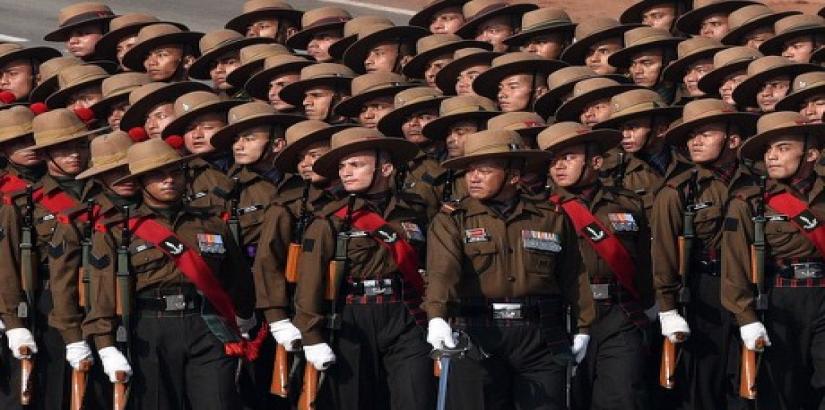
Socio-political life of 'New India' is characterized by a woven web of ethnic demands, but not many communities can find their way through conditions of such contradiction as the Gorkhas of India. In the Indian imaginary, the Gorkhas are placed in a paradoxical position of the “Bravest of Brave” in the war front to defend the nation, yet viewed as a "perpetual migrant" or a "foreigner" in the civil and administrative spheres.
The dehumanizing racist slurs that tend to mark Gorkhas in India tend to cast their right to exist in their own Pritibhumi and Punyabhumi of India. Racist epithets like Chinky, Nepali, Chinese, Momo, etc. are not just offensive words but are used to signal that the Gorkha is an "Other" or an "Alien". This verbal violence often escalates into aggressive questioning of their identity as an Indian and regarding them perpetual migrants.
In this regard, the purpose of this article is to dispel the suspicions raised in certain uninformed circles that Gorkhas are immigrants by presenting a history that indicates they have been living in India since time immemorial and claims, that due to their past record of unswerving military sacrifice, they are even, “more Indian” than the voices which ask of them the question of their belonging.
Historical Belonging of Gorkhas
Long before formal recruitment into the British Indian Army, Gorkhas existed in Northern India from times immemorial. The Gorkhas were historically known as the Khas people who resided in present territories of India as farmers, traders, and mercenaries.
Ancient records of the Khas are mentioned in the "Itihasa", including the Mahabharata (Khasas are an ancient Indo-Aryan warrior tribe predominantly living in the Northwestern Himalayan regions like Kashmir, Trigarta – Kangra of Himachal Pradesh, and Mandra. They were known as a formidable, mountain-dwelling, and violent people, with their warriors supporting the Kauravas during the Kurukshetra War.), the Puranas (Markandeya Purana, Vishnu Purana, Skanda Purana, etc.) and the Manusmriti (Khas community as Vratya Kshatriyas).
This ancient group occupied the foothills of the Himalayas centuries before and were often referred to as "Go-rakkha" (protectors of cows), which also derive their name from the saint-yogi Gorakhnath, who meditated in the Gorkha region and is said to have blessed the founders of the Gorkha Kingdom.
In 1559, Dravya Shah established the Gorkha kingdom, formerly under the Magar people. By the middle of the 18th century, i.e. between 1743–1768, Prithvi Narayan Shah ascended the throne and began a rapid expansion, annealed other neighbouring kingdoms and formed the basis for a new country. Further 1790-1804, expansion extended into the Kumaon and Garhwal regions. In 1803, Gorkhas invaded Dehradun by Battle of Khurbura. In 1805, they crossed Yamuna and were heading to Sutlej River to enter the Kangra region. In 1806 the Gorkhas had control of the kingdom of Sirmaur finally. In 1809, he Gorkhas besieged the Kangra Fort and held it in four years. However, Maharaja Ranjit Singh (of Sikh Empire) came in and the Gorkhas were driven off to Sutlej.
Decolonizing Gorkha History: Residents, Not Migrants
Much of the Himachal hills (Shimla region) was occupied by the army of Gorkhas led by Amar Singh Thapa and his son Ranjor Singh in 1814 but they had to fight with the British East India Company which declared war on November 1, 1814, and overpowered the Gorkhas.
This conflict between the two expansionist empires subsequently became the cause of the contemporary crisis of identity for Gorkhas, i.e. Anglo-Gorkha War (1814-1816) and the following treaty of Sugauli which was signed on the 2nd of December, 1815 (ratified on the 4th of March, 1816), compelled the Gorkhas to forego claims to nearly one-third of their territory.
These lands, ceded in perpetuity to the British East India Company, was already inhabited by the Gorkha Kingdom, so when the borders were redrawn, the Gorkha inhabitants did not migrate; they were "territorialized" into British India, transitioning from subjects of the Gorkhali monarch to subjects of the British Crown and eventually citizens of the Republic of India.
Valor on the Frontlines, Alienation at Home
The first national martyr of the Azad Hind Fauj was a Gorkha. Major Durga Malla was sentenced to death by the British. Born in Dehradun, he was inspired by Netaji Subhas Chandra Bose and joined the 2/1 Gorkha Rifles in 1931. He is the first Gorkha soldier of the Indian National Army (INA) to lose his life in the cause of Indian independence which is a testament of the Gorkha allegiance and revolution for India.
Field Marshal Sam Manekshaw, associated with the 8th Gorkha Rifles after 1947, famously quoted, "If a man says he is not afraid of dying, he is either lying or he is a Gorkha". He envied their fearlessness, devotion, and fighting-power, and used to speak of them as brave.
The valour of Gorkha regiments in the Indian Army is often used by the community as the ultimate proof of their Indianness. Since 1947, Gorkha soldiers have participated in every major conflict, be it Indo- Pakistan wars of 1947,1971,1999 or the Indo-China war of 1962. However, this valor is frequently undermined by the very state they defend, as civil and administrative bodies often treat them as "foreigners" even as they receive gallantry awards.
Three personnel in Gorkha regiments have received the Param Vir Chakra; the highest wartime award in India, awarded in recognition of their efforts in securing the nation-
1. Captain Gurbachan Singh Salaria (1st Gorkha Rifles, Congo Crisis, 1961).
2. Major Dhan Singh Thapa (8th Gorkha Rifles, Sino-Indian War, 1962)
3. Lieutenant Manoj Kumar Pandey (11th -Gorkha Rifles Kargil War, 1999).
The Gorkha regiments, also disproportionately hold Maha Vir Chakras and Vir Chakras. Yet, even despite their sacrifices the community of these servicemen face problems with claiming their Indian identity.
Greater Public Awareness Needed
The Gorkha identity crisis is, finally, a challenge of how democratic and pluralistic India is to itself, and in this case, the Gorkha people have not yet achieved any resolution for more than two centuries. The Gorkhas have a long history, which can be traced back to the existence of an even older settlement in the Himalayan belt. As part of the Khas community, this historical continuity defies the usual stereotype that Gorkhas are just “outsiders or Nepalese” but the reality is that they have strong cultural and historical connections to the Indian Himalayan region. Recognizing this past is essential in the present, especially when Gorkhas continue to serve and sacrifice for the nation through the armed forces. Greater public awareness is needed in order to be not narrowed down on false notions regarding their nationality. Their long history of existence and their remarkable military prowess ought to make people remember Gorkhas as a component part of social and national life of India, especially when ignorant and racist slurs make them doubt their place.
(The author is a third year Political Science student, a dedicated researcher specializing in international relations and foreign diplomacy, with a core focus on minority rights for equitable global and national systems, endeavoring to bridge the gap between grassroots activism and public policy. Views expressed are personal. He can be reached at rishigurung1714@gmail.com
Instagram - https://www.instagram.com/gurung_rishi?igsh=MW03bm50aTR5MW5icQ==
LinkedIn - https://www.linkedin.com/in/rishi-gurung-34548b35b/)






Post a Comment