

Shaken Shields: Turning Point for Gulf States (Part II)
The emerging framework is likely to be more complex and less centralised. It may involve a mix of external partnerships, regional cooperation, and internal capacity building. It will also require a different mindset, one that accepts uncertainty as a constant factor.
 Apr 10, 2026
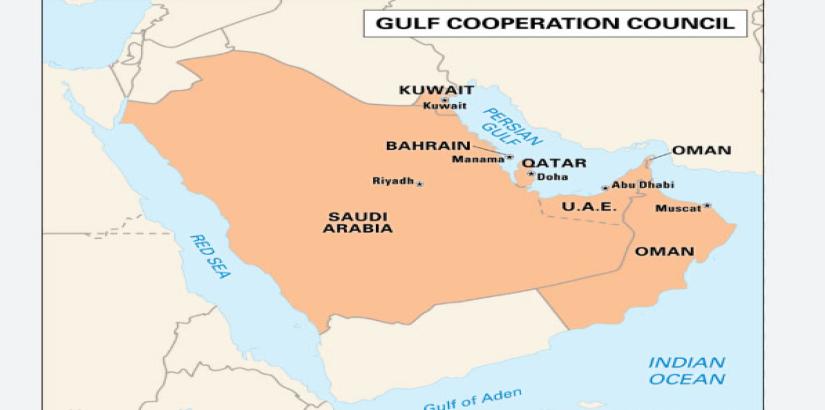
The fragile ceasefire that currently holds in the Gulf may have paused open conflict, but it has triggered a far deeper and more enduring crisis: the collapse of confidence in the region’s security architecture. For decades, the Gulf states operated under a clear assumption. Their sovereignty and stability rested on external guarantees, primarily from the United States, reinforced by strategic alignment with Western powers and, increasingly, Israel. That assumption stands shattered.
The recent conflict has exposed gaps that were once dismissed or underestimated. What has emerged is not merely a temporary vulnerability but a structural shift in how security is perceived, delivered, and sustained across the region. The consequences are both immediate and long-term, with impact upon political stability, economic planning, and strategic alignment.
Erosion of Security Umbrella
At the heart of this crisis lies a simple yet uncomfortable question: Can the United States still credibly and effectively guarantee Gulf security?
The answer, at least in the eyes of Gulf leadership, is no longer straightforward. The expectation was clear. In the event of escalation, US military power would act decisively to neutralise threats and restore deterrence. Instead, the response was more limited and constrained. While capabilities were demonstrated, they were not decisive enough to prevent damage or quickly reshape the battlefield.
This gap between expectation and outcome going forward will have profound psychological impact. Security guarantees are as much about perception as capability. Once doubts enters the equation, the entire framework weakens.
Compounding this is the visible deterioration of US military infrastructure in the region. Several bases have been damaged or rendered less effective. These are not merely operational setbacks; they are symbolic losses that signal vulnerability where strength was assumed.
For Gulf states, this changes the calculus. Dependence on a single external protector now appears risky.
Israel Factor in US Policy
Another source of unease is the growing perception that Israeli priorities increasingly influence US policy in the region. While Gulf states have, in recent years, moved towards cautious normalisation with Israel, this alignment was based on shared interests, not subordination.
The Iran conflict has created the impression that decisions affecting Gulf security are being shaped without adequate consultation, resulting in frustration and, in some cases, quiet resentment. Arab states expect to have a voice in matters that directly affect their survival.
This dynamic complicates regional diplomacy. It introduces mistrust into partnerships once considered stable. It also raises questions about the future trajectory of Gulf-Israel relations. Cooperation may continue, but it will be more cautious and conditional.
Internal Vulnerabilities, Regime Stability
The external security crisis has quickly translated into internal concerns. Gulf monarchies have long relied on a combination of economic prosperity, social contracts, and external protection to maintain both control and regime stability. If one pillar weakens, the others come under pressure.
The perception of reduced external protection creates uncertainty within ruling structures and raises questions about resilience in the face of prolonged instability. Although these regimes remain firmly in control, the margin of comfort has narrowed.
Public sentiment also plays a role. Populations accustomed to stability may begin to question the effectiveness of existing arrangements. Even if such concerns are not openly expressed, they influence the broader political environment.
This does not mean immediate instability, but does suggest a shift in how risk is to be assessed and managed.
Fragility of Gulf Model
Beyond security, the Gulf’s economic model is under strain. Over the past two decades, Gulf states have invested heavily to transform themselves into global hubs for finance, technology, and logistics. Stability and development has underpinned this transformation.
Major multinational corporations have established regional headquarters, data centres, and operational bases in Gulf cities. These include technology giants, financial institutions, and industrial players. Their presence is not merely symbolic; it is a critical component of economic diversification.
Conflict alters this equation. Even the perception of instability can influence investment decisions. Companies base decisions on risk assessments, and prolonged uncertainty can prompt relocation or reduced exposure.
Insurance costs rise. Supply chains become more complex. Long-term planning becomes difficult. Yet another element is the future of diaspora, who are crucial to their economies. Large scale disocation will have grave impact.
For Gulf states, this is a serious concern. Economic diversification is not optional; it is essential for post-oil sustainability. Any disruption to this trajectory has far-reaching consequences.
Region in Search of Alternatives
Faced with these challenges, Gulf states are reassessing their strategic options. This does not signal an immediate break with existing alliances, but it does indicate a desire to diversify,
One possible direction is greater regional cooperation. Collective security arrangements among Gulf states have been discussed before, but with limited success. The current environment may lend renewed urgency to such initiatives.
Another avenue is engagement with alternative global powers. Countries such as China and Russia have shown growing interest in the region. While they may not replace the United States as security providers, they can offer complementary partnerships, particularly in economic and technological domains.
There is also the possibility of cautious engagement with Iran. This is perhaps the most complex option, given historical tensions and competing interests. However, the logic is hard to ignore. If confrontation cannot guarantee security, managed coexistence may become a necessity.
Question of US Strategy
Underlying these shifts is a broader question about US strategy in the region. Has there been a fundamental change in priorities? Is the United States recalibrating its role, or are recent developments temporary deviations?
From the Gulf perspective, clarity is lacking. Mixed signals have created uncertainty. On the one hand, there is continued engagement and presence. On the other hand, there are signs of restraint and selective involvement.
This ambiguity complicates planning. Allies need predictability to make long-term decisions. Without it, they are forced to hedge, exploring multiple options simultaneously.
Security Framework in Transition
It is becoming clear that the old security framework cannot simply be restored. Too much has changed. Perceptions have shifted, and assumptions have been challenged.
The emerging framework is likely to be more complex and less centralised. It may involve a mix of external partnerships, regional cooperation, and internal capacity building. It will also require a different mindset, one that accepts uncertainty as a constant factor.
For Gulf states, this transition will not be easy. It involves balancing competing interests, managing internal expectations, and navigating a fluid geopolitical environment.
Conclusion: From Dependence to Uncertainty
The ceasefire has revealed more than it has resolved. It has exposed the fragility of a system that once seemed stable and reliable. For the Gulf states, the challenge is not only to respond to immediate threats but also to rethink the foundations of their security.
The erosion of US guarantees, the complications introduced by external influences, and internal pressures to maintain economic and political stability all point to a region in introspection. There is no clear blueprint for what comes next.
What is certain, however, is that dependence on a single security provider is no longer primary option. The future will require diversification, adaptability, and a willingness to engage with new realities.
This is not merely a moment of crisis. It is a turning point. How Gulf states respond will shape not only their own futures but also the broader balance of power in the region.
(Lt Col Manoj K Channan, an Indian Army veteran, is a strategic analyst. Views expressed are personal. He can be reached at manojchannan@gmail.com; linkedIn www.linkedin.com/in/manoj-channan-3412635; X @manojchannan.
Brig Arun Sahgal, PhD, an Indian Army veteran, is the Director Forum for Strategic Initiatives. He was previously the founding Director of the Office of Net Assessment, Indian Integrated Defence Staff (IDS), Ministry of Defence and Centre for Strategic Studies and Simulation, United Service Institution of India)







Post a Comment