US and India have asked the Security Council committee dealing with sanctions on the Islamic State and al-Qaeda along with affiliated groups like the L-e-T to impose sanctions on Mahmood, who runs its international operations.


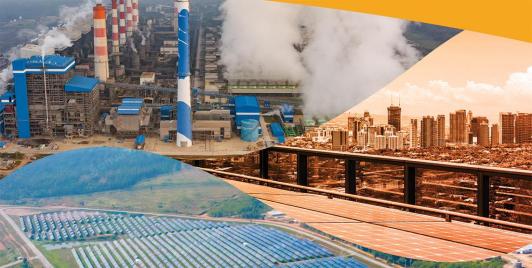
The larger economic choice for South Asia is therefore broader than whether to participate in carbon trading. The region can remain primarily a supplier of relatively inexpensive mitigation outcomes, or it can also develop the technology, professional capacity, financial products and verification systems that determine what those outcomes are worth.
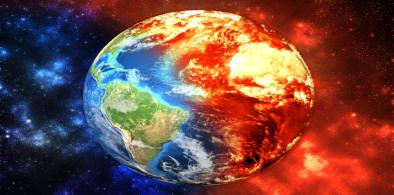
On top of that is our own unsustainable living that is creating large-scale havoc on the planet. They include construction of large dams, roads, and tunnels in the fragile Himalayan region. These activities together with the melting of glaciers due to global warming are bound to create worse natural disasters in the coming years.
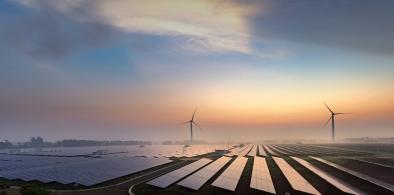
The regional opportunity is particularly significant in electricity. Nepal and Bhutan can potentially export hydropower; India can provide the scale of demand and investment required to create a regional electricity market; Bangladesh can become an important electricity consumer; and Sri Lanka and Pakistan can expand solar and wind. Greater cross-border electricity trade could allow countries to exploit complementary renewable resources and reduce the need for expensive domestic backup capacity.
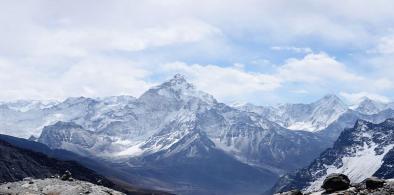
A genuinely regional approach could eventually include - besides Nepal, China and India - Bhutan and, where relevant, downstream institutions in Bangladesh. Organisations with established Himalayan expertise, particularly the International Centre for Integrated Mountain Development in Kathmandu, could offer scientific and institutional support.
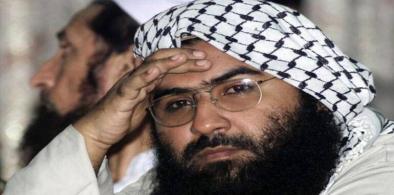
US and India have asked the Security Council committee dealing with sanctions on the Islamic State and al-Qaeda along with affiliated groups like the L-e-T to impose sanctions on Mahmood, who runs its international operations.
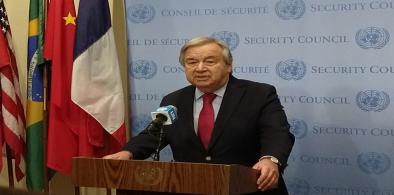
At the Ekta Nagar in Gujarat's Kevadia, Gutteres is to join Modi to launch the Mission LiFE (Lifestyle for Environment), the MEA said. Gujarat is Modi’s home state.
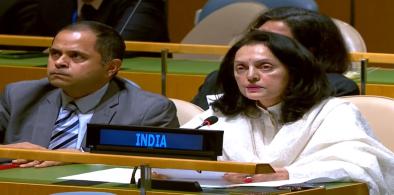
The Assembly session also witnessed a sideshow by Pakistan, which stuck to its gimmick of bringing up Kashmir regardless of the topic on the agenda. Kamboj dismissed it as an attempt to misuse the UN forum with “frivolous and pointless remarks”.
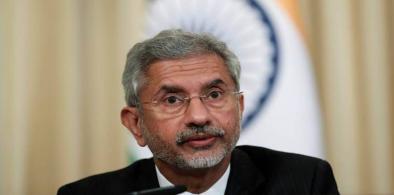
India joining the West against Russia on procedural matters is not necessarily a precursor to a change in New Delhi’s neutrality in voting on substantive matters involving Russia’s invasion of Ukraine.
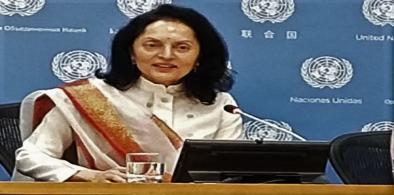
Holding the meeting in India is a special effort by New Delhi to draw world attention to the terrorist attacks and the threats it faces and to prepare the international community to deal with the emerging technologies that could be force multipliers for terrorists.
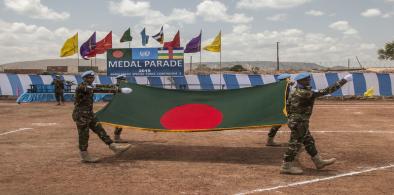
Over 431 peacekeepers have died in the operations in the DRC, of them 31 were Pakistanis.
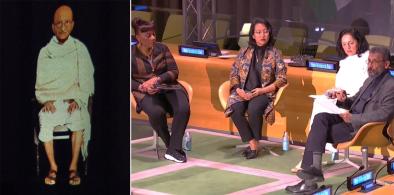
A lifesize, speaking, gesticulating presence on the stage, the Gandhi avatar provoked, prodded and challenged a panel made up of an activist, a diplomat, a youth and an economist to delve into the meaning of education for humanity.
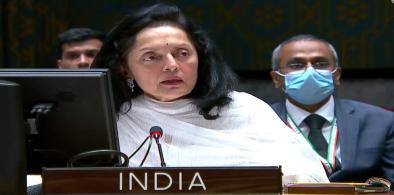
Kamboj said, “India’s position has been clear and consistent from the very beginning of this conflict: The global order is anchored on the principles of the UN Charter, international law and respect for sovereignty and the territorial integrity of all states”.
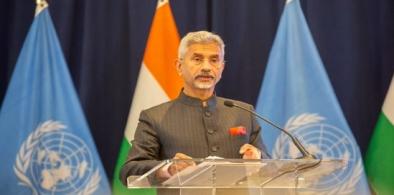
India’s “age-old outlook”, he said, “sees the world as one family. We believe that national good and global good can be entirely in harmony”.
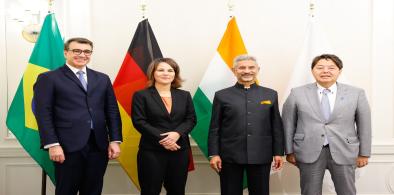
A small group of countries led by Italy and which includes Pakistan has blocked the adoption of a negotiating text which would be the bases of discussions and move the reform process.
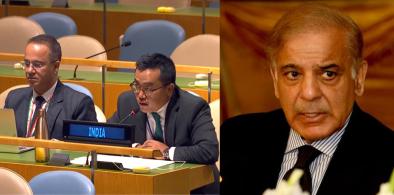
“The desire for peace, security and progress in the Indian subcontinent is real. It is also widely shared and it can be realized”, he said. “That will surely happen when cross-border terrorism ceases, when governments come clean with the international community and with their own people, when minorities are not persecuted, and not least when we recognize these realities before this Assembly”, the Indian diplomat said.
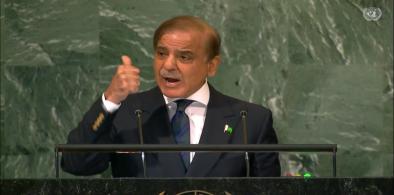
Sharif offered “to sit down then and talk to our Indian counterparts to pave the way forward for future so that our generations do not suffer, so that we spend our resources on mitigating miseries on building structures to face these floods and outburst of clouds” – but only after India gives in to his demands on Kashmir.
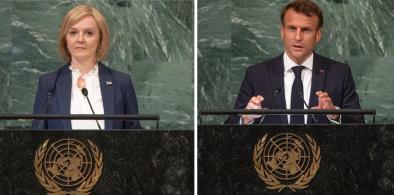
Modi's exhortation to Russian President Vladimir Putin to end the Ukraine war, saying the "time is not for war", has been widely welcomed, including by US Secretary of State Antony Blinken and other world leaders at the UN.
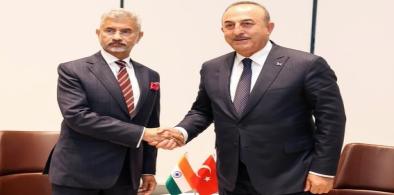
While some initial signs of the ice-breaking could be seen when Indian External Affairs Minister S. Jaishankar met his Turkish counterpart Mevlüt Çavuşoğlu at Dushanbe in Tajikistan in April 2021, this was the first time the leaders of the two countries met in person since President Erdoğan’s last visit to India in 2017.
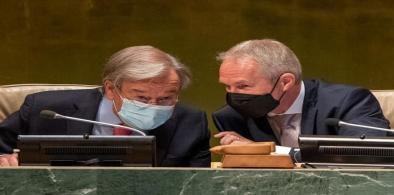
He said, “At one stage, international relations seemed to be moving toward a G-2 world; now we risk ending up with G-nothing. No cooperation. No dialogue. No collective problem-solving”.