A lifesize, speaking, gesticulating presence on the stage, the Gandhi avatar provoked, prodded and challenged a panel made up of an activist, a diplomat, a youth and an economist to delve into the meaning of education for humanity.

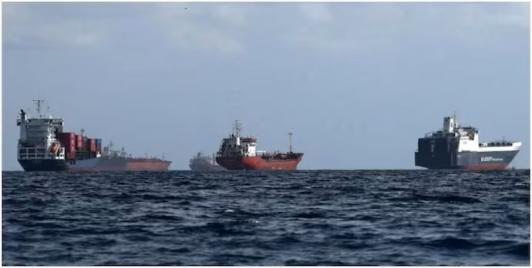
India's cultivated access to alternative energy suppliers, including Russia, the United States and producers in Africa, provided flexibility when the Gulf route became severely disrupted. The diversification was the product of sustained procurement changes over several years, rather than an achievement of the crisis period alone.
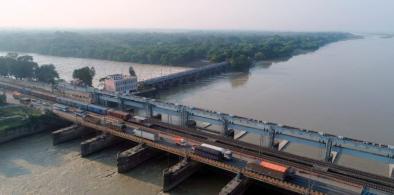
The expiration of the 1996 treaty is more than a diplomatic deadline between the two parties. It tests whether India and Bangladesh can move from sharing a scarce water supply to managing the common risks that affect its availability.
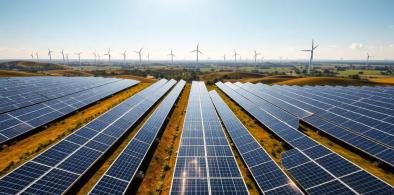
Pakistan has used imported solar technology to respond to immediate energy costs. Bhutan and Nepal can earn from renewable electricity. Bangladesh and Sri Lanka have established export-oriented manufacturing capabilities. India is attempting to develop a broader advanced manufacturing base.
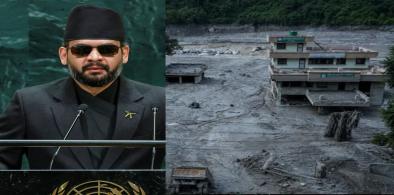
Nepal's PM proposed a "Himalayan Climate Resilience Mechanism, led by Nepal, India and China. Through this mechanism”, the countries could “share satellite data and expertise.” This could be a good initiative, as it would help predict disasters and prepare for them.
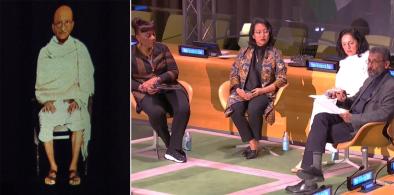
A lifesize, speaking, gesticulating presence on the stage, the Gandhi avatar provoked, prodded and challenged a panel made up of an activist, a diplomat, a youth and an economist to delve into the meaning of education for humanity.
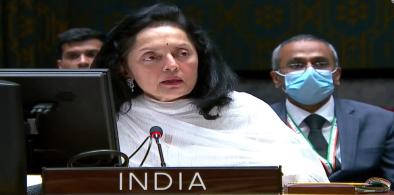
Kamboj said, “India’s position has been clear and consistent from the very beginning of this conflict: The global order is anchored on the principles of the UN Charter, international law and respect for sovereignty and the territorial integrity of all states”.
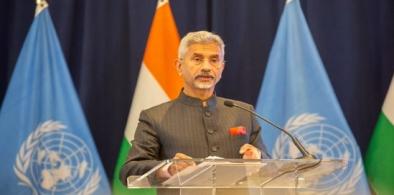
India’s “age-old outlook”, he said, “sees the world as one family. We believe that national good and global good can be entirely in harmony”.
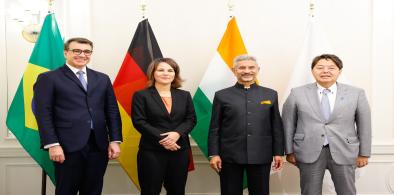
A small group of countries led by Italy and which includes Pakistan has blocked the adoption of a negotiating text which would be the bases of discussions and move the reform process.
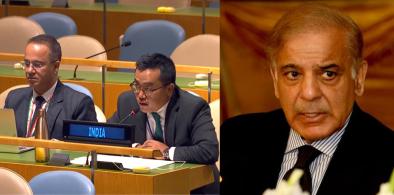
“The desire for peace, security and progress in the Indian subcontinent is real. It is also widely shared and it can be realized”, he said. “That will surely happen when cross-border terrorism ceases, when governments come clean with the international community and with their own people, when minorities are not persecuted, and not least when we recognize these realities before this Assembly”, the Indian diplomat said.
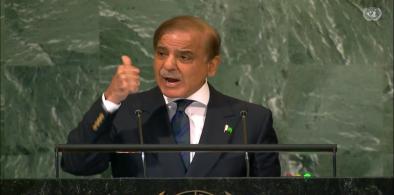
Sharif offered “to sit down then and talk to our Indian counterparts to pave the way forward for future so that our generations do not suffer, so that we spend our resources on mitigating miseries on building structures to face these floods and outburst of clouds” – but only after India gives in to his demands on Kashmir.
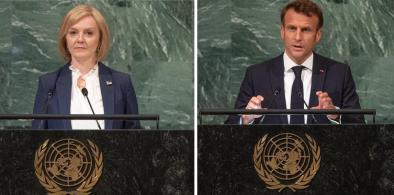
Modi's exhortation to Russian President Vladimir Putin to end the Ukraine war, saying the "time is not for war", has been widely welcomed, including by US Secretary of State Antony Blinken and other world leaders at the UN.
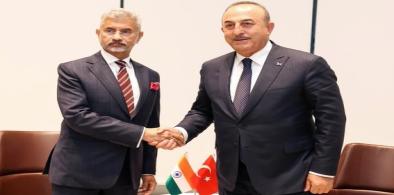
While some initial signs of the ice-breaking could be seen when Indian External Affairs Minister S. Jaishankar met his Turkish counterpart Mevlüt Çavuşoğlu at Dushanbe in Tajikistan in April 2021, this was the first time the leaders of the two countries met in person since President Erdoğan’s last visit to India in 2017.
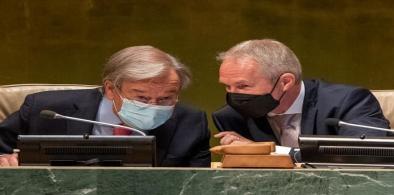
He said, “At one stage, international relations seemed to be moving toward a G-2 world; now we risk ending up with G-nothing. No cooperation. No dialogue. No collective problem-solving”.

From South Asia, the two newly elected leaders of troubled countries, Pakistan's Prime Minister Shehbaz Sharif and Sri Lanka's President Ranil Wickremesinghe, are among the scheduled participants along with Prime Ministers Sheikh Hasina of Bangladesh, Sher Bahadur Deuba of Nepal and Lotay Tshering of Bhutan. Indian Prime Minister Narendra Modi is not attending the meeting this year and Foreign Minister S Jaishankar is scheduled to speak for India on Saturday.

US President Joe Biden will present at the high-level General Assembly meeting next week ideas for moving forward the long-delayed UN Security Council reform process that includes expanding it, according to US Permanent Representative Linda Thomas-Greenfield.

“What is happening in Pakistan demonstrates the sheer inadequacy of the global response to the climate crisis, and the betrayal and injustice at the heart of it”, he said.

The reform process known formally as the Intergovernmental Negotiations (IGN) has been virtually blocked over decades from proceeding by a determined minority that has stopped it from adopting a negotiating text

“From Pakistan, I am issuing a global appeal: stop the madness; end the war with nature; invest in renewable energy now”

A small group of countries, including Pakistan and Italy, who call themselves United for Consensus (UfC), have been blocking the adoption of a formal negotiating text or procedures for the negotiations and the labelling of some discussions as “unformals” is an apparent sop to them