The main roadblock to adopting the convention proposed by India in 1996 is the definition of terrorists, with some countries like Pakistan claiming that their favoured terrorists are “freedomfighters”.


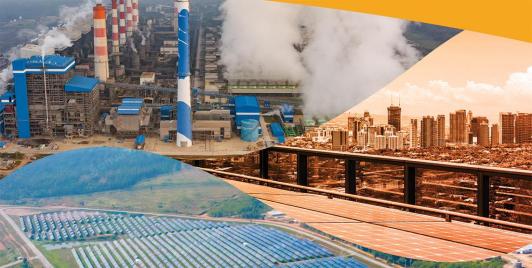
The larger economic choice for South Asia is therefore broader than whether to participate in carbon trading. The region can remain primarily a supplier of relatively inexpensive mitigation outcomes, or it can also develop the technology, professional capacity, financial products and verification systems that determine what those outcomes are worth.

On top of that is our own unsustainable living that is creating large-scale havoc on the planet. They include construction of large dams, roads, and tunnels in the fragile Himalayan region. These activities together with the melting of glaciers due to global warming are bound to create worse natural disasters in the coming years.
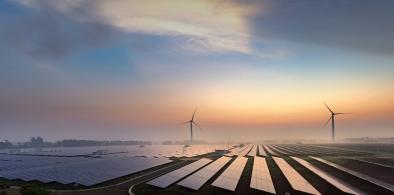
The regional opportunity is particularly significant in electricity. Nepal and Bhutan can potentially export hydropower; India can provide the scale of demand and investment required to create a regional electricity market; Bangladesh can become an important electricity consumer; and Sri Lanka and Pakistan can expand solar and wind. Greater cross-border electricity trade could allow countries to exploit complementary renewable resources and reduce the need for expensive domestic backup capacity.
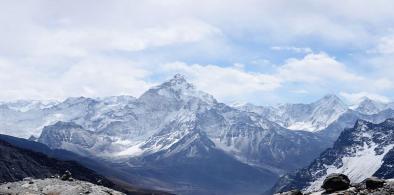
A genuinely regional approach could eventually include - besides Nepal, China and India - Bhutan and, where relevant, downstream institutions in Bangladesh. Organisations with established Himalayan expertise, particularly the International Centre for Integrated Mountain Development in Kathmandu, could offer scientific and institutional support.
The main roadblock to adopting the convention proposed by India in 1996 is the definition of terrorists, with some countries like Pakistan claiming that their favoured terrorists are “freedomfighters”.
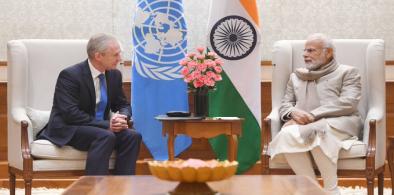
Following the UN lead, Yoga Day has become an international celebration around the world with group practices and asana demonstrations across the globe.
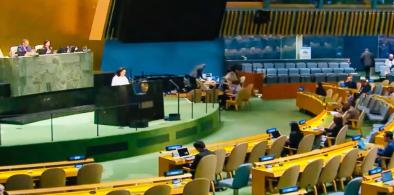
“Sarva dharma sama bhava is a unique concept of Indian secularism, which maintains that all religions are inherently good and worthy of respect”, the Indian representative said.
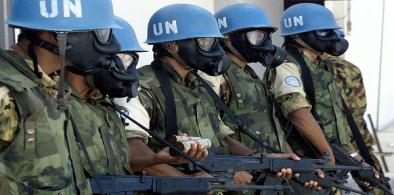
A measure of the unity around paying homage to the peacekeeping heroes was the support of Pakistan, which had moments earlier attacked India at the Assembly on a different issue, but joined in as one of the main co-sponsors of the monument resolution.
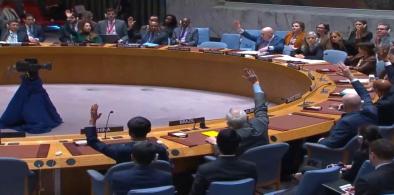
The Biden administration supports Germany and Japan in addition to India for permanent seats, and also as yet undetermined representatives of Latin American and African nations. France and Britain also support permanent seats for the three countries and for Brazil, while Russia backs India publicly but not the others.
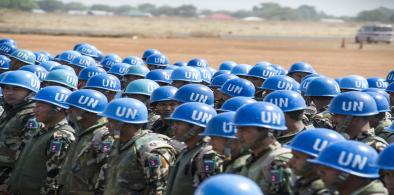
In December, India launched the Group of Friends to promote accountability for crimes against peacekeepers with Bangladesh, Egypt, France, Morocco and Nepal as co-chairs. The group advocates for bringing to justice those committing crimes against peacekeepers.
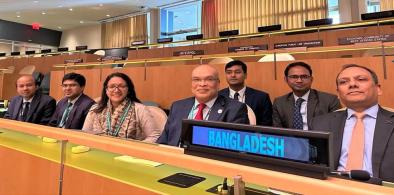
The government has so far established more than 14,000 community clinics in public-private partnerships across the country to provide basic healthcare to the people.
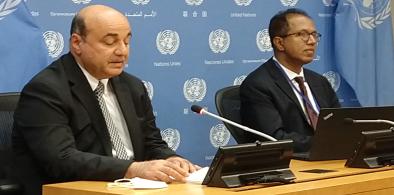
The latest UN report cut the overall growth projects by 0.1 per cent for all of South Asia to 4.7 per cent this year and 5.8 per cent next year. The inflation rates for Pakistan and Sri Lanka are expected to be in the "double digits" due to the weakening of local currencies.
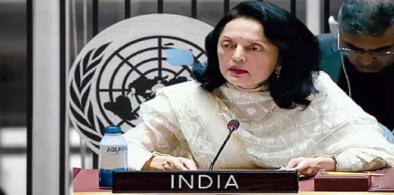
“Is the UNSC in its present form -- which denies permanent representation to entire continents of Africa, Latin America and the world’s largest democracy – can it be deemed to be ‘inclusive’”, Kamboj asked at an open debate at the Council.
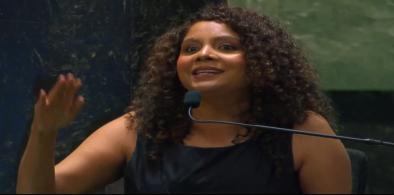
Earlier, at the 30th Anniversary of the World Press Freedom Day Global Conference, New York Times Publisher A.G. Sulzberger got the criticism of India rolling, saying that “in India, authorities have raided newsrooms and treated journalists essentially as terrorists”.
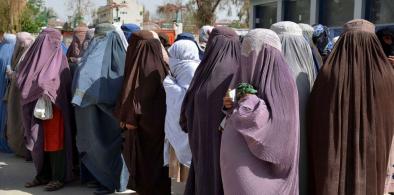
The unanimous adoption of the Council resolution proposed by the United Arab Emirates and Japan and co-sponsored by about 90 countries underlines the Taliban regime’s international isolation and signals international unity before the Doha meeting.
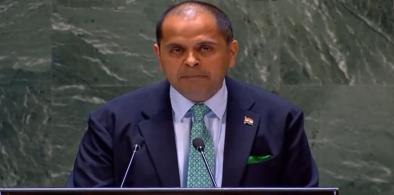
The root cause in the view of India and many countries is the architecture of the Council that reflects the post-World War II scenario and gives veto-wielding permanent seats to the five victorious allies - Britain, China, France, the United States and Russia, which hold the seat originally given to the Soviet Union.
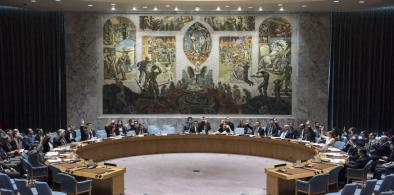
Lavrov said that the United States and the West were against a multipolar world and wanted their dominance to continue.
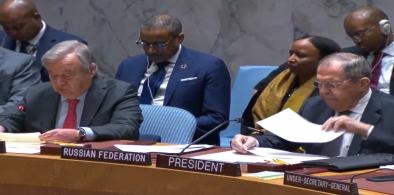
Pakistan’s Permanent Representative Munir Akram struck a discordant note by opposing the addition of permanent members to the Council. China's Permanent Representative Zhang Jun supported calls for reforming international financial institutions but was silent on the Council -- opposing it would have roiled the African nations that form the largest group at the UN.
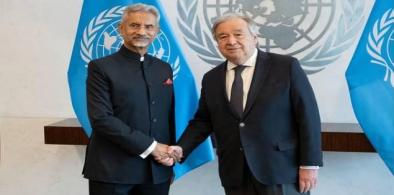
There are about 4,000 Indian citizens in Sudan, and according to the Indian embassy in Khartoum of them, about 1,500 are longtime residents. An Indian ex-serviceman. Albert Augustine, who was working in Sudan, was killed by a stray bullet as he was speaking to his son while standing at the window of his apartment.