
A vintage streetcar beside a driverless car on the Embarcadero, San Francisco / Photo by Surbhi Guha.

South Asian Talent Almost Everywhere; Missing is an AI Invention from the Region the World Depends on

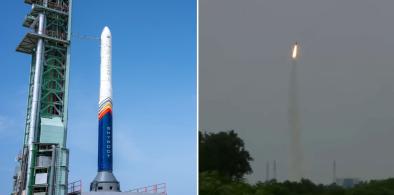
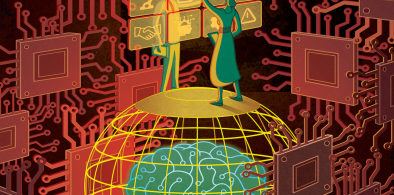
The ambition exists across the region. Young Indian companies are building rocket engines and computer chips, products India has long bought from abroad. Pakistan sent a delegation to Silicon Valley to show what its technology industry can do

Where Is India's Apple? A Nation's Strategic Independence is Directly Proportional to its Economic Independence

A country can only be as independent in its diplomacy as it is in its economy. A nation that imports its phones, its chips and much of its energy, will always have less room to manoeuvre than one that makes what the world needs.

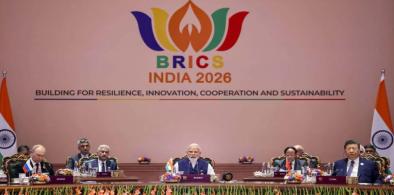
China's Open-Source AI Initiative and the Limits of BRICS Consensus

The difference between Xi's New Delhi proposal and the language of the declaration illustrates the distinction between China's ambitions for AI cooperation and the level of agreement achieved among BRICS members. The declaration did not reject China's AI diplomacy; it simply did not explicitly endorse the proposed open-source community.

AI on the Battlefield: The Mirage of Unlimited Capability

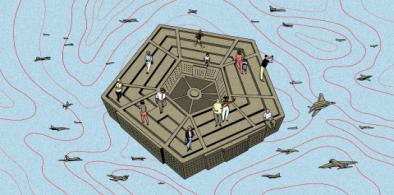
The AI revolution may indeed change warfare. But the laws of physics, engineering and economics have not been repealed. AI may be extraordinarily powerful in the data centre. The real challenge is carrying that capability to the battlefield.

More on AI, Tech and Innovation

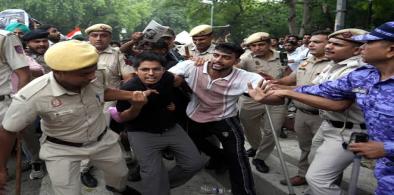
From Hashtags to Handcuffs: When Digital Democracy Becomes Digital Surveillance

India therefore needs a serious conversation on algorithmic accountability. If AI increasingly informs policing, citizens deserve clarity on its legal basis, safeguards against misuse, limits on data retention, independent oversight and effective judicial remedies. 

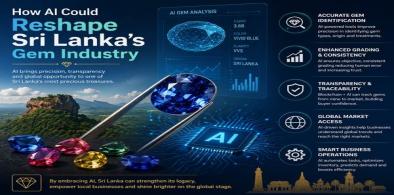
Digging Deeper: How AI Could Reshape Sri Lanka's Gem Industry

AI is already reshaping how gemstones get sold globally: visual search tools that let a buyer photograph a stone and find similar ones, AI chatbots that can answer basic buyer questions in multiple languages at 3 a.m. Colombo time, and generative tools that help small exporters produce professional product photography and listings

ISRO Needs a Rejig - Before Success Becomes its Biggest Constraint

India now has companies capable of manufacturing rockets, satellites, electronics, structures and other space hardware.  New private space companies are developing technologies at a speed that would have been difficult to imagine a decade ago.

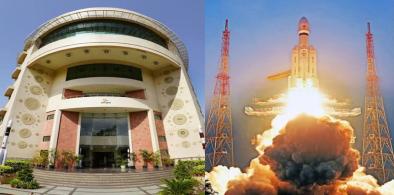
India’s First Private Orbital Satellite Launch: Need to Transform 'Private' Milestone Into Enduring Instrument of National Power

Beijing had regional dominance (e.g., the Shanghai Xingshu LEO projects). India has built a counter-weight. It now offers competitive, on-demand orbital routing through NewSpace India Limited (NSIL), the commercial arm of ISRO, and IN-SPACe, its regulator.

Closing South Asia’s Mental Health Gap With AI: It can Improve Access, Reduce Delay and Connect More People

For people with mild to moderate distress, an AI-assisted system could provide brief, structured support based on evidence-based psychological techniques. For high-risk cases such as suicidal thoughts, psychotic symptoms, or acute trauma, the system should immediately refer the person to a human professional or a trained community health worker. 

AI for Every Nepali: Jobs, Prosperity and Nepal’s Next Development Leap

Nepal does not need to become Silicon Valley. It does not need to copy India, China, Singapore or Canada. Nepal needs an AI strategy rooted in its own realities: young talent, hydropower potential, local problems, growing IT services, tourism, agriculture, small businesses and a global diaspora.

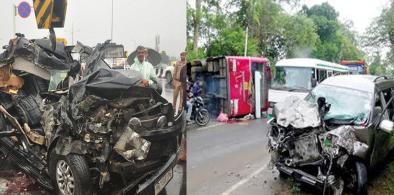
The Hidden Tax: Road Accidents Drain Over 3% of GDP From India and Sri Lanka Every Year; Generative AI Could Win it Back

The core data architecture — a national road safety data lake, AI-powered enforcement, multilingual public awareness — is replicable at any scale, in any South Asian language, in any South Asian urban or rural road environment. The technology does not need to be reinvented for Dhaka, Kathmandu or Karachi. It needs to be validated in Colombo and Delhi first.

Why the Global South Must Become AI Creators: Need to Take a More Leading Role in AI Governance and Economy

However, 118 countries, mostly developing ones, do not participate in international discussions on AI governance, according to UNCTAD. This means that billions of people may live within rules they were not involved in making.

AI's Hidden Appetite: Power, Cooling and the New Geography of Infrastructure

What we are witnessing today may only be the opening chapter. The next breakthroughs in AI may not emerge from software laboratories alone, but from nuclear reactors, cooling technologies, offshore infrastructure, advanced materials, and energy networks. The race to build intelligence has quietly become a race to master power and heat.

IT Sector Done, Is Commerce Next? Will the Future of Accounting Wither Under the Onslaught of AI?

The era of secure, routine, desk-bound clerical jobs is drawing to a close. It is urgent for the younger generation to break free from the illusion of traditional white-collar stability and pivot toward high-value skills, tech-driven entrepreneurship, modern agriculture, or practical, specialized trades. Failing to adapt to this cognitive shift means risking economic obsolescence under the relentless advance of technology

The Militarization of the Digital Commons: Need for New Regulatory Solutions

In the effort to combat this multi-dimensional challenge, democratic states are faced with deep policy constraints, many of which can be paralyzing. The fundamental paradox is how to maintain the open, democratic character of the digital commons while at the same time countering more advanced opponents who are not held back by democratic principles. Disseminating disinformation is a tactic governments use to influence public opinion that has the potential to conflict with the strong constitutional freedoms of expression that exist in liberal democracies.

Navigating the Intelligent Tide: How AI and Generative AI are Reshaping Maritime Mobility in South Asia

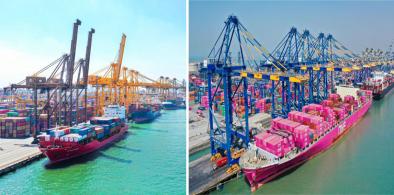
The integration of AI and Generative AI is not a distant aspiration — it is an active investment already reshaping how ports operate, how cargo moves, and how supply chains absorb shocks. For India and its neighbours, the imperative is clear: build the data foundations, governance frameworks, and human capabilities that allow intelligent mobility to reach not just the terminal gate, but every link in the maritime supply chain.

The Splinternet and Fractured Digital World: Will Sovereignty Serve People, or the State, or Whoever Owns the Server?

Companies like Google, Meta, and X constantly shape public opinion and thoughts, and store public data for commercial usage. Amazon, Microsoft, and Google host the cloud infrastructure on which states and businesses depend. These are not ordinary companies anymore; they have access to critical intelligence and data. And now AI companies like Palantir use this data for surveillance, intelligence, monitoring, and on battlefields.

Non-Material ‘Presence’ in the Age of AI: A South Asian Reclamation of the Spirit Against the Machine

While TiME FLiES travels from 18th-century Boston to 20th-century Michigan and 21st-century Provence, its soul remains anchored in South Asian philosophy. It argues that while AI may simulate the "heart and mind," the true "presence" of consciousness—the Turiya—cannot be reduced to code.

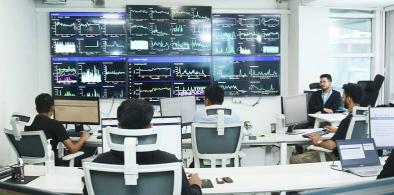
Fighting Fire With Fire: How South Asia Can Use AI to Fight Cybercrime

The same generative AI that allows criminals to craft perfect phishing emails in Sinhala (or Hindi, Bangla and Urdu) or clone a Chief Financial Officer's voice from a YouTube clip, can also detect those emails before they reach an inbox and flag that voice as synthetic before a payment is authorised. The technology exists. The question is whether South Asia's institutions will deploy it in time.