Indian and the US navies carried out a swift exercise close to the Andaman and Nicobar islands on Monday as the stand-off between India and China continues for over two months


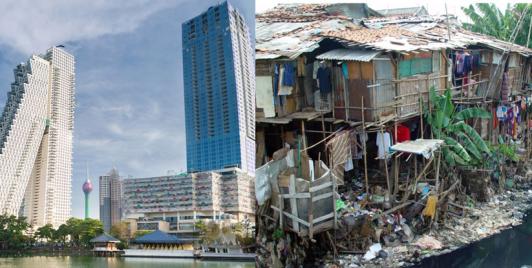
In 2025, Sri Lanka was ranked as the second most expensive housing market in the world based on rentals compared to average income. It is possible that market distortions caused by black economy and corruption have contributed to this.
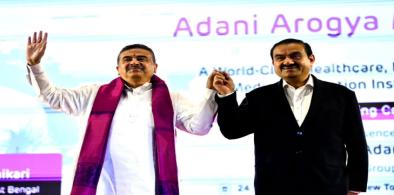
The larger opportunity before West Bengal is therefore not another round of infrastructure creation in isolation. It is the creation of an ecosystem in which infrastructure, private capital, local enterprise and skilled labour reinforce one another.
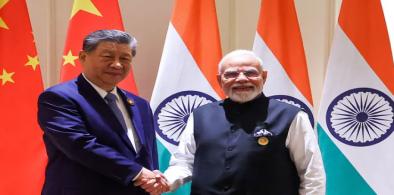
Why not begin by reopening serious discussions with Chinese conglomerate BYD about an Indian factory? BYD is now one of the world’s dominant EV manufacturers. Its Indian ambitions were caught in the post-Galwan investment freeze. Invite it back to the table—but on Indian terms
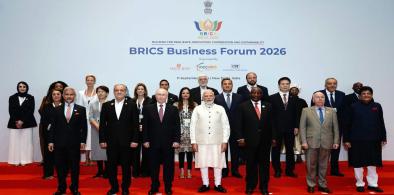
But the choice test applies to India as much as to the countries it hopes will follow its lead. If BRICS genuinely widens India's menu of markets, technology partners and financing sources without deepening its dependence on any one of them, it becomes a credible model for the rest of the Global South.

Indian and the US navies carried out a swift exercise close to the Andaman and Nicobar islands on Monday as the stand-off between India and China continues for over two months
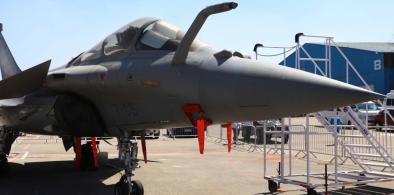
At least five out of the first batch of 36 Rafale fighter aircraft are likely to join the Indian Air Force (IAF) by July end, providing it much-needed muscle amid a depleting fighter strength

Authorities in Bangladesh have approved Stage 3 trials of a potential COVID-19 vaccine developed by Chinese firm Sinovac Biotech

Chinese troops have not moved back from the Line of Control (LAC) in eastern Ladakh in line with the consensus arrived at during the disengagement talks between India and China, sources said on Saturday

While efforts are afoot to normalise Indo-China relations, the ground reality is far from normal

Pursuant to Prime Minister Narendra Modi's 'Self-Reliant India' policy, the Dedicated Freight Corridor Corporation India Ltd will give the work of the signalling on 417 km route of the Eastern Dedicated Freight Corridor to Indian companies after it terminated the contract with the Chinese firm, officials said on Saturday

India wants peace but there is no guarantee of the final outcome of talks with China, said Defence Minister Rajnath Singh on Friday in eastern Ladakh region as he reviewed the ground situation of troops in the hostile border areas
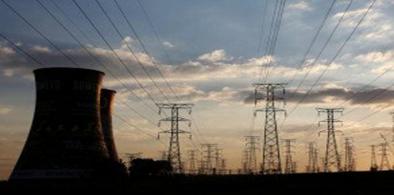
It is the government’s priority to ensure provision of uninterrupted and affordable energy to industries, remarked Minister of State and Board of Investment (BOI) Chairman Atif R Bokhari

China has applauded the resumption of trade relations between Afghanistan and Pakistan after land crossings between the two neighboring countries were opened following a temporary closure under the COVID-19 crisis

In a diplomatic offensive against Beijing, India on Thursday rejected China's claim over the South China Sea, as the talks over the Line of Actual Control in Ladakh remained inconclusive
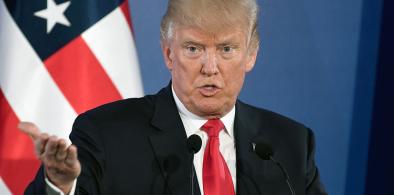
US President Donald Trump is now avoiding taking a stand on the India-China conflict in contrast to his earlier critical remarks about Beijing or that of Secretary of State Mike Pompeo

The Indian Army on Thursday stated that the disengagement process at the Line of Actual Control (LAC) with China is intricate and "requires constant verification"
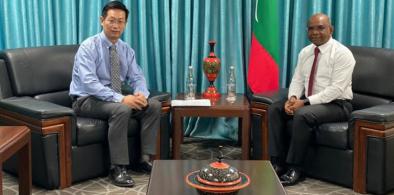
The Maldives foreign ministry has revealed that discussions will take place between the Maldives government and Chinese officials regarding the bilateral coordination mechanism

US Secretary of State Mike Pompeo said on Wednesday that he is confident the world's free nations will join together to face the challenges from China to India and other countries in Asia

Military delegates of India and China held deliberations stretching for nearly 15 hours on the disengagement and de-escalation of troops and materials on their borders in eastern Ladakh, during which the Indian side asked PLA troops to completely withdraw from Pangong Lake and Depsang area