The families of Pakistani citizens who have not been evacuated from China amid the coronavirus outbreak have rejected a government briefing, while calling for their return, it was reported on Thursday.



In 2025, Sri Lanka was ranked as the second most expensive housing market in the world based on rentals compared to average income. It is possible that market distortions caused by black economy and corruption have contributed to this.
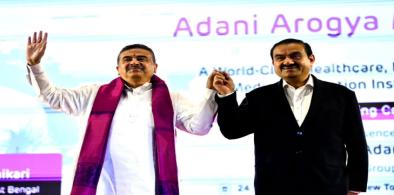
The larger opportunity before West Bengal is therefore not another round of infrastructure creation in isolation. It is the creation of an ecosystem in which infrastructure, private capital, local enterprise and skilled labour reinforce one another.
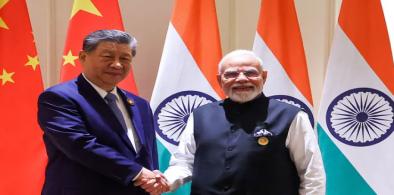
Why not begin by reopening serious discussions with Chinese conglomerate BYD about an Indian factory? BYD is now one of the world’s dominant EV manufacturers. Its Indian ambitions were caught in the post-Galwan investment freeze. Invite it back to the table—but on Indian terms

But the choice test applies to India as much as to the countries it hopes will follow its lead. If BRICS genuinely widens India's menu of markets, technology partners and financing sources without deepening its dependence on any one of them, it becomes a credible model for the rest of the Global South.

The families of Pakistani citizens who have not been evacuated from China amid the coronavirus outbreak have rejected a government briefing, while calling for their return, it was reported on Thursday.
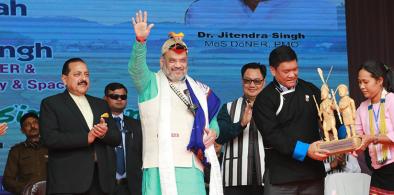
Even as it is bogged down by the coronavirus epidemic, China on Thursday reopened a hostile front with India as Beijing "firmly opposed" Indian Home Minister Amit Shah's visit to Arunachal Pradesh on its statehood day and warned India against "complicating" the border issue.

Indian Air Force's largest plane C-17 Globemaster's scheduled flight on Thursday to coronavirus affected city Wuhan in China to evacuate Indians stranded there has been delayed due to technical reasons
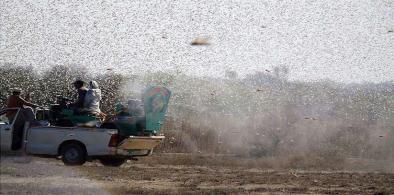
A team of experts from China is set to visit Pakistan to deliberate on the aerial management of locust swarms in the country. A senior official of the food security ministry told Dawn that the Chinese technical experts’ delegation will arrive in Islamabad on Sunday to start the evaluation of the locust situation
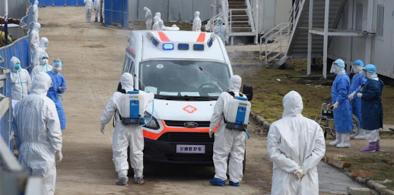
"How's the Josh," Lieutenant Colonel Manjunath asked the students camped in India Army quarantine base in Manesarand their reply was: "High Sir". It resonated across 10 barracks they were kept in after returning from China's Wuhan, the ground zero of coronavirus.
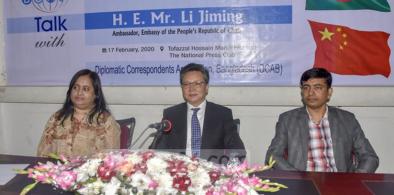
Chinese Ambassador in Bangladesh Li Jiming has advised against evacuating 171 Bangladeshi nationals from the locked-down cities in China's Hubei province, the epicentre of a deadly coronavirus, bdnews24 reported
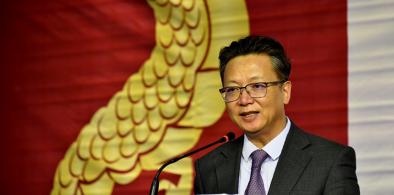
Chinese Ambassador to Bangladesh Li Jiming urged Bangladeshi businesses not to switch over its supply chain to any other countries as an alternative to China in the wake of the coronavirus outbreak.
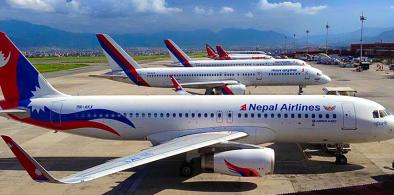
175 Nepalis who were stranded in Hubei Province of China after the outbreak of COVID-19 arrived in Kathmandu on a chartered Nepal Airlines plane.

Indian port authorities have decided not to allow the disembarkation of crew of ships from China, as well as Hong Kong, Macau, Thailand and Singapore, to avoid the spreading of the deadly coronavirus. "Disembarkation of crew of ships from China, Hong Kong, Macau, Thailand and Singapore are not allowed in order to avoid any risk of coronavirus spreading here. This condition is applicable in all the Indian ports," S. Senthilnathan, Health Officer, Chennai Port, told IANS.
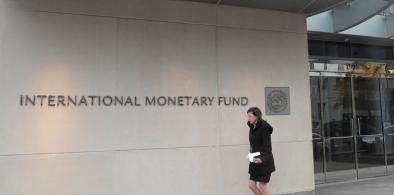
The visiting IMF mission has asked Islamabad "to reduce its trade and commerce reliance on Beijing" and look for other international options by signing free trade agreements (FTA) with other countries too, a media report said on Friday.
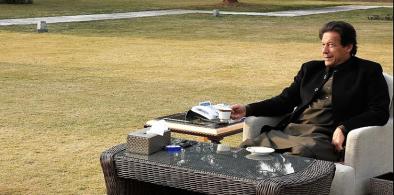
Pakistan Prime Minister Imran Khan has directed the Foreign Office (FO) to take every possible step to help Pakistani students stuck in the Chinese city of Wuhan, the epicentre of the novel coronavirus outbreak.
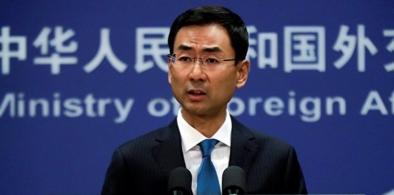
China says it stands ready to strengthen cooperation on the Belt and Road Initiative (BRI) with Sri Lanka for mutual benefits.
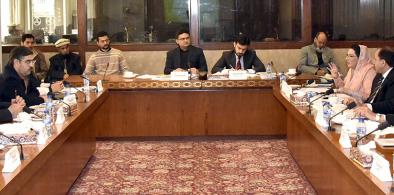
The Pakistan Senate has unanimously passed a resolution expressing solidarity with and support for China in combating the deadly novel coronavirus.
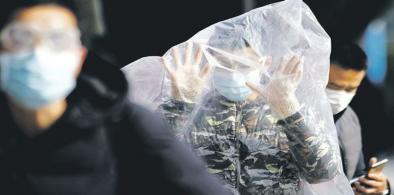
Rapid spread of the coronavirus in China has forced several factories to defer their plans to open shop post Lunar New Year holiday to next month
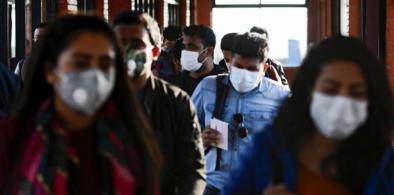
Nepal's National Human Rights Commission directed the government to immediately bring back Nepalis from Hubei, the epicentre of coronavirus outbreak, as students stuck in the Chinese province have started making frantic calls for evacuation