“One of the hardest things to keep in mind is that India is also a great power and it has its own beliefs, its own interests”, he said.


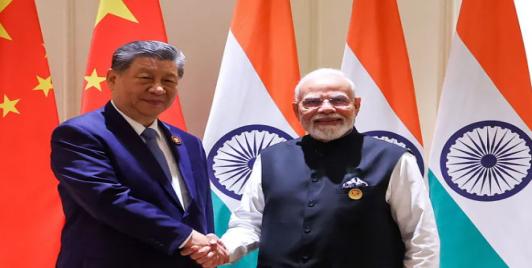
Why not begin by reopening serious discussions with Chinese conglomerate BYD about an Indian factory? BYD is now one of the world’s dominant EV manufacturers. Its Indian ambitions were caught in the post-Galwan investment freeze. Invite it back to the table—but on Indian terms
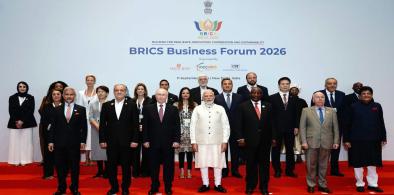
But the choice test applies to India as much as to the countries it hopes will follow its lead. If BRICS genuinely widens India's menu of markets, technology partners and financing sources without deepening its dependence on any one of them, it becomes a credible model for the rest of the Global South.
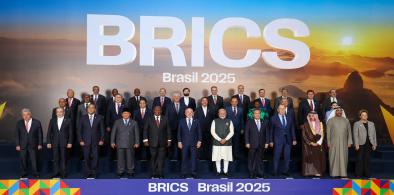
India’s stand for a dollar-based system is not a rejection of BRICS alignment or unity, but it is a determined choice to act in favour of self-interest like any other founding member. The key difference is India’s position has been the most transparent of all founding members rather than standing behind the collective rhetoric.
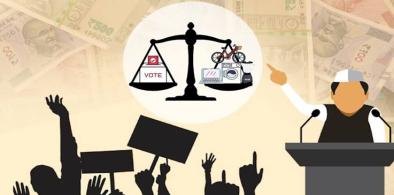
The evidence indicates that the increase in state borrowing over the past decade is best understood as the outcome of a changing fiscal federal system rather than simply an expansion of welfare politics.
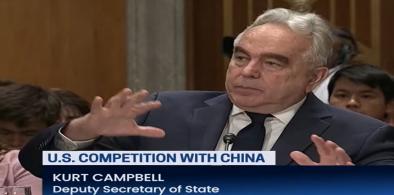
“One of the hardest things to keep in mind is that India is also a great power and it has its own beliefs, its own interests”, he said.
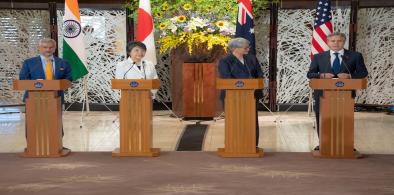
Recalling the 26/11 Mumbai and the 2016 Pathankot terrorist attacks. they called for “bringing the perpetrators of these attacks to justice without delay”. This explicit mention of terror attacks on India, purported to be engineered from Pakistani soil, is seen as a strong backing by Quad partners of India's stand on cross-border terrorism which New Delhi says is promoted and supported by the Pakistani State.
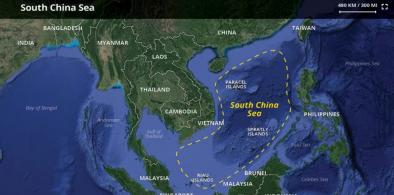
China's rising military and economic involvement in the region provides India with a strategic challenge to formulate a foreign and security policy blueprint for the Indo-Pacific.
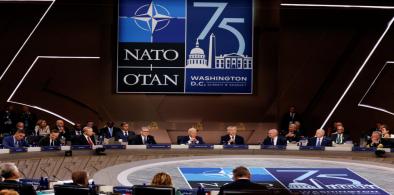
The participation of Indo-Pacific partners in the NATO summit epitomizes the breaking of traditional geopolitical barriers, ushering in what is often referred to as "the new geometry" of international relations.
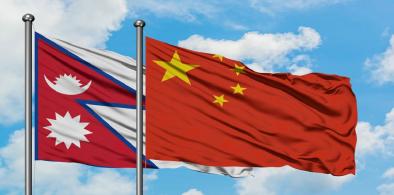
India introduced the Agnipath system of recruitment in its military, denying regular recruitment to thousands of Nepalese Gurkhas into the Indian Army, not only aggravating unemployment in Nepal, but more importantly, shattering the strong bond between the Indian and Nepalese armies.

From the Indian standpoint Prime Minister Modi may like to keep the Tibetan issue on the foreign policy agenda of his third term while dealing with a recalcitrant China. Its particular reference to the Tibetan issue remaining unresolved in accordance with international law may provide some opening to New Delhi to work on given the historical sensitivities of India's border dispute with China.
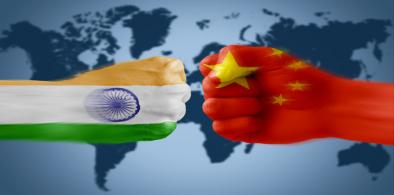
If NDA 3.0 wanted to show assertiveness to China, why were representatives of the Central Tibet Administration not invited for the osth-taking ceremony at Rashtrapati Bhavan on June 9, as they were invited in 2014 for the swearing-in of the then new NDA government.

New power tools being used by China to expand regional dominance have heightened regional security dilemmas and sparked arms races. They have also caused systemic wariness among nations of the Indo-Pacific who will long for the status quo of a stable rules-based order.
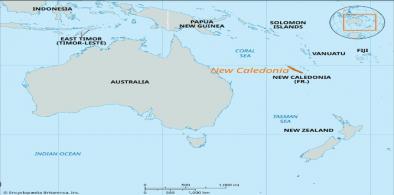
The potential implications of recent protests in New Caledonia are best understood in the context of a broader framework of China’s increasing presence in the South Pacific island countries.
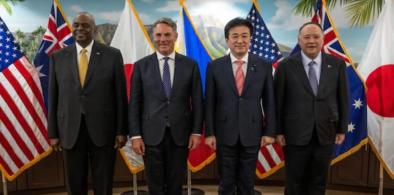
This new bloc is vital for both the US and regional players, especially the Philippines which is not part of the original Quad. For Australia and Japan, this new partnership represents a more focused security arrangement with greater on-the-ground ease of conducting military activities as compared to the more bureaucratic Quad.
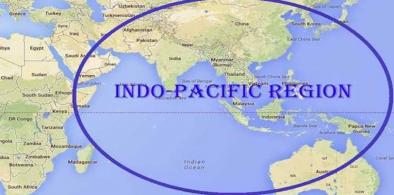
Bangladesh must exercise caution when considering the adoption of the Indo-Pacific Strategy advocated by the US and its regional allies. This move could potentially strain Bangladesh's friendship with China.
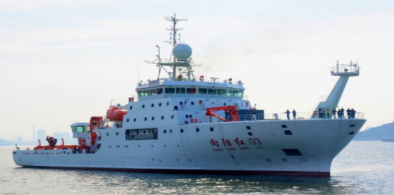
Over half of these 'research vessels' operated in the South China Sea, but their growing presence in the Indian Ocean has stirred regional tensions and is a matter of growing concern to India.
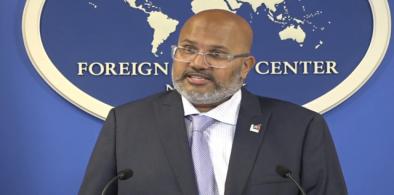
While most of the attention to keeping the Indo-Pacific region free and open has been focused on strategic issues, Venkataraman emphasized the critical role of the IPEF in boosting regional economic ties.
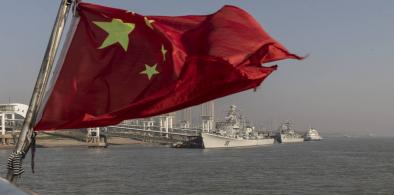
India has signed a $375 million contract with the Philippines for three batteries of BrahMos supersonic cruise missiles, among the most advanced in the world. This will be seen by Beijing as a direct threat to its interests in the South China Sea.

“We are all fighting a global war against our common enemy, which is the climate crisis,” said Dr Rajendra Shende