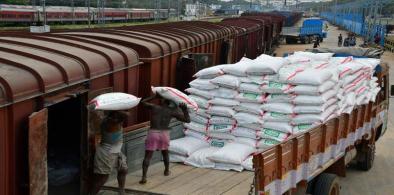
With the improvement of the Covid-19 situation worldwide, the global apparel supply chain is also recovering fast. As a result, exports from Bangladesh are growing at a faster clip
The same generative AI that allows criminals to craft perfect phishing emails in Sinhala (or Hindi, Bangla and Urdu) or clone a Chief Financial Officer's voice from a YouTube clip, can also detect those emails before they reach an inbox and flag that voice as synthetic before a payment is authorised. The technology exists. The question is whether South Asia's institutions will deploy it in time.
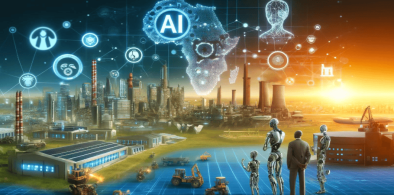
Artificial intelligence has the potential to transform border surveillance, maritime security, intelligence gathering, missile defense, logistics, and cyber warfare. In a country facing simultaneous challenges from China and Pakistan, AI-driven systems could substantially improve decision-making speed and operational efficiency. Conversely, the absence of such capabilities could expose critical weaknesses during future crises.

Companies are beginning to realise that AI may not merely deliver incremental improvements of five or ten percent. In some workflows, it may produce tenfold or even hundredfold gains in speed and efficiency. That is the speed businesses are now trying to capture. The race is no longer about experimenting with AI; it is about integrating AI into operational systems before competitors do.
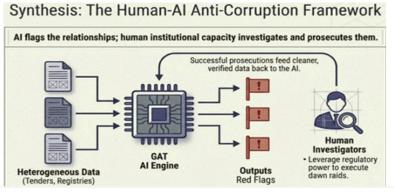
South Asia’s future depends on reliable infrastructure and trustworthy public services. Artificial intelligence—especially advanced technologies such as Graph Attention Networks—offers governments a powerful tool to reduce corruption in procurement, improve healthcare delivery, strengthen energy security and enhance public trust.
With the improvement of the Covid-19 situation worldwide, the global apparel supply chain is also recovering fast. As a result, exports from Bangladesh are growing at a faster clip
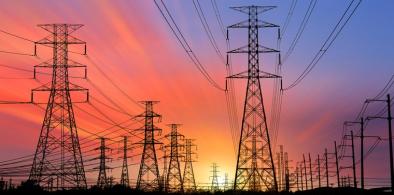
With the commencement of the Upper Tamakoshi hydropower project (456MW) last year, Nepal is expected to have around 600MW-800MW of surplus electricity this year. And, this will grow in the coming years as many small hydro projects are nearing completion
The new government, which came to power only last month, has squarely blamed former prime minister, Imran Khan, for the mismanagement of the economy. Ismail said Khan had left the fastest growing inflation in the history of Pakistan, and took record loans during his tenure, reported The Express Tribune.
Revenues from tourism contribute almost 70 percent of the country’s total GDP. In a recently released growth prospect, the Asian Development Bank (ADB) projected the Maldives to grow by 11 percent, mainly because of the rebound in the tourism industry
The World Bank has estimated Nepal’s hydropower potential around 20,000 MW. So aligning its energy policy closely with the BBIN (Bangladesh, Bhutan, India, Nepal) sub-regional vision will provide it with the much-needed potential for the export of this surplus energy to larger power consumers like India and Bangladesh
Of the $6 billion original bailout program, Pakistan managed to get only $3 billion as the previous government failed to fulfill its commitments for reforms. Furthermore, these reforms were further weakened when the outgoing government of former prime minister Imran Khan drastically reduced the prices of electricity and fuel
Pakistan is looking for the release of the $1 billion from the IMF package, Ismail said earlier, while blaming the country’s former prime minister Imran Khan for stalling the IMF program. During his last days in power, Khan had announced huge subsidies on fuel and electricity, a move that scuttled almost a year of reform work of his own government to get the IMF program back on track
Hasina said the country has made huge success in agricultural production and that should be leveraged in the export sector
West Bengal was the first state to organise a physical business summit since COVID pandemic struck, Chief Minister Banerjee stated
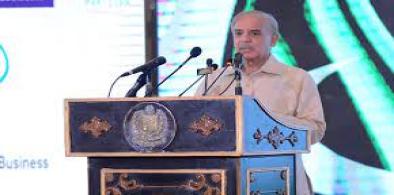
For Prime Minister Sharif, who is running a coalition government with partners united by the sole desire of keeping Imran Khan out, implementing necessary, but unpopular, reforms will not be an easy job. More so, when the country will go into elections in little more than a year's time, making political parties even more averse to painful measures
The country will need bridge financing of around $3 billion till the IMF finalizes its aid package. Talks are already underway with India and China for raising the money. Significantly, Bangladesh is expected to postpone the repayment of around the $450 million currency swap facility that it had extended to Sri Lanka
IMF’s projection for India is slightly higher than the World Bank’s 8 per cent earlier this month. The series of World Bank reports also had India as the fastest-growing major economy, with China following it at 5 per cent
Unlike India or also Bangladesh, Pakistan has suffered economic mismanagement; excessive dependence on foreign aid, whether from the IMF or China is also a factor
“Bangladesh and Nepal are now among the top ten export destinations for India with our total exports to these two countries amounting to over $16 billion,” Shringla said, terming them as “two success stories.”
Since 2020, after the pandemic began, Sri Lanka’s central bank has printed over two trillion rupees, in a move to keep interest rates low. This, however, resulted in a balance of payment crisis and also drove up inflation and stock prices (asset price inflation).