
Prior to the war, Russia was the top source market for its tourism. But the number of tourists has been declining as the war progressed, Solih said. The government’s expenditure, subsidies, and import bills are also rising.
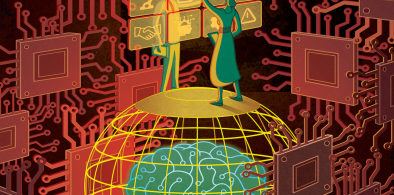
The same generative AI that allows criminals to craft perfect phishing emails in Sinhala (or Hindi, Bangla and Urdu) or clone a Chief Financial Officer's voice from a YouTube clip, can also detect those emails before they reach an inbox and flag that voice as synthetic before a payment is authorised. The technology exists. The question is whether South Asia's institutions will deploy it in time.
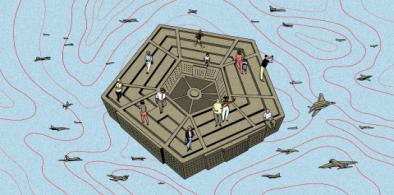
Artificial intelligence has the potential to transform border surveillance, maritime security, intelligence gathering, missile defense, logistics, and cyber warfare. In a country facing simultaneous challenges from China and Pakistan, AI-driven systems could substantially improve decision-making speed and operational efficiency. Conversely, the absence of such capabilities could expose critical weaknesses during future crises.
Companies are beginning to realise that AI may not merely deliver incremental improvements of five or ten percent. In some workflows, it may produce tenfold or even hundredfold gains in speed and efficiency. That is the speed businesses are now trying to capture. The race is no longer about experimenting with AI; it is about integrating AI into operational systems before competitors do.
South Asia’s future depends on reliable infrastructure and trustworthy public services. Artificial intelligence—especially advanced technologies such as Graph Attention Networks—offers governments a powerful tool to reduce corruption in procurement, improve healthcare delivery, strengthen energy security and enhance public trust.
Prior to the war, Russia was the top source market for its tourism. But the number of tourists has been declining as the war progressed, Solih said. The government’s expenditure, subsidies, and import bills are also rising.
Tourism accounts for 70 percent of the government’s total revenue. The government’s spending target on subsidies has already crossed the limit set by the budget 2022, making it extremely hard to reduce any taxes, which could result in potential revenue loss.
Indian authorities have explained that the wheat export ban has been undertaken to ensure domestic food availability and minimize food price-related inflation while supporting the legitimate requirements of India's neighbours and other nations in need.
Modi also invited Uniqlo's enhanced participation in India's journey to becoming a manufacturing hub for textiles, particularly through the use of technologies in textile manufacturing. Yanai said Uniqlo is exploring investments in the production and retail industry in India.
“Post pandemic, India has emerged much stronger in international trade and international exchanges. I believe that the target of a $5 trillion economy by 2030 is not only achievable but we can get there before that,” Puri said.
The import ban, though a necessary measure, will also impact the government’s revenue as luxury items are usually taxed heavily. The move was expected, especially when the government has failed to raise funds for its foreign exchange reserves. The talks with the IMF and other bilateral lenders in Gulf have yet to produce results.
Teledensity and internet users are fast expanding, Modi said, adding that mobile manufacturing units in India have expanded from just 2 to over 200 and the country is now the world's biggest mobile manufacturing hub.
“Although these facts are unpleasant and terrifying, this is the true situation,” he said, mincing no words while describing the state of the economy, which has all but collapsed
For months, the government has been in talks with the IMF not only for the revival of the $6 billion bailout package but also for extending the program's scope to $8 billion and period. After coming to power in April and promising to prioritize the economy, the new government led by Shehbaz Sharif now appears reluctant on tough measures, possibly due to the prevailing uncertain political environment
Last month, Commerce Minister Piyush Goyal said India hopes to become a permanent exporter of wheat, shipping as much as 15 million tons this year, compared with about 7.2 million in 2021-22. Officials are pushing the World Trade Organization to relax rules so that India can export from state reserves, Goyal said
The Indian government has decided to supply this quantity of urea immediately to Sri Lanka at the request of the Colombo despite a ban on the export of urea from India. Sri Lanka is the only country after Nepal to receive such assurance
The extension of exemption will help Afghan traders. Earlier, New Delhi also provided 50,000 metric tonnes of wheat to the country in the grip of a humanitarian crisis
Overall, the ties between the two countries are growing in all important domains, including security cooperation, climate change, food security, and energy sectors. In September 2021, two countries launched the US-Bangladesh Energy Taskforce, an initiative to help advance energy cooperation among the stakeholders of both countries
The government on Thursday announced a temporary ban on foreign tours of its employees and deferred the implementations of large projects relying on heavy imports as part of measures to save dollars, reported The Daily Star
In recent months, several prominent people in Pakistan, including officials and businessmen, have been advocating the resumption of trade ties with India which, they said, could greatly help the country’s ailing economy