The IN has been at the forefront in supporting the country’s security and diplomatic initiatives in the region through extensive bilateral and multilateral interaction, writes Cmdre Anil Jai Singh (retd) for South Asia Monitor


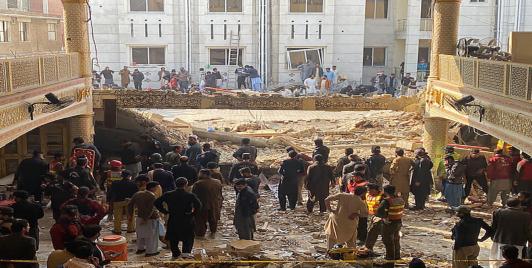
India must also recognise that Pakistan's internal security crisis has wider regional implications. Escalating Pakistan–Afghanistan tensions could create additional uncertainty along the western frontier, while attacks on Chinese projects could affect regional connectivity and investment.
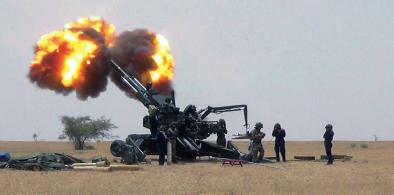
India has demonstrated that it can develop and manufacture modern artillery systems. What needs reassessment is how quickly we acquire, integrate and field them, and how effectively we ensure that new technologies communicate and operate together.
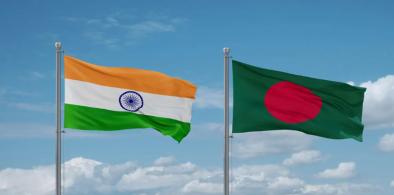
If India says the security of its Northeast, border management, trade and connectivity matter, Bangladesh can equally say that water sharing, deaths at the border, market access, energy security, river management and sovereign equality matter to it.
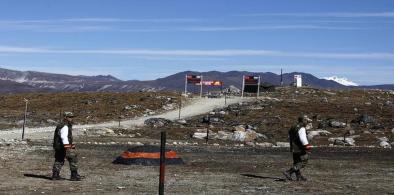
The Indian military views no disengagement in Arunachal Pradesh as part of a wider strategic recalibration, prompting India to match Chinese force rebalancing by shifting strike corps and resources equally across both northern and eastern fronts.

The IN has been at the forefront in supporting the country’s security and diplomatic initiatives in the region through extensive bilateral and multilateral interaction, writes Cmdre Anil Jai Singh (retd) for South Asia Monitor

If India has to progress towards deeper engagement under the ‘Neighborhood First’ policy, it has to integrate some of the genuine concerns of its strategic regional partners, writes Kumar Deep for South Asia Monitor
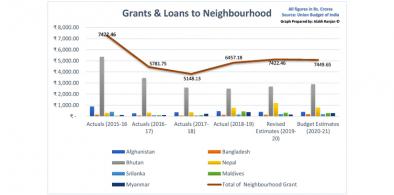
The enthusiasm Modi has shown towards the neighbourhood, through his numerous visits has not got translated in overall policy during these years, writes Alakh Ranjan for South Asia Monitor
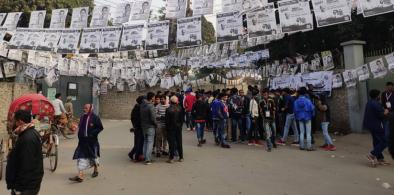
Fracturing political institutions like the Election Commission, Parliament and the Judiciary are also responsible for the popular apathy and political decay in Bangladesh, writes Akmal Hossain for South Asia Monitor
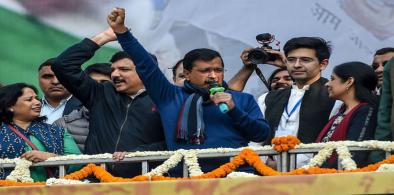
The BJP may have also harmed itself by its poisonous communalism which cannot but have put off some of the party’s own sensible supporters, not to mention the Left-Liberals, writes Amulya Ganguli for South Asia Monitor

The US pullout from Iraq, which will be perceived as withdrawal under pressure, will have a fallout in Afghanistan, writes Lt Gen PC Katoch (retd) for South Asia Monitor

In a country like Pakistan, where freedom of expression is strictly curtailed, guaranteeing that everything is in line with an openly orthodox and conservative interpretation of religion will only multiply the problem, writes Sanchita Bhattacharya for South Asia Monitor

How Ehsan could escape high-security detention and how he could reach Turkey, along with his family, remains a mystery that Islamabad is unable or unwilling to answer, writes Mahendra Ved for South Asia Monitor

If the Muslims were indeed considered equal citizens of a secular India, why would government ministers speak so disparagingly, and even scornfully, of anti-CAA protesters who are mainly burqa and hijab-clad women - ranging in ages from the twenties to the eighties - most of whom are out for the first time in the streets, writes Tarun Basu for South Asia Monitor
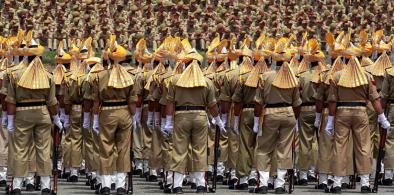
What is required to be done is that all enforcement agencies, like ED, CBI and, at the state level, the police, should be completely insulated from political masters, writes Vinod Aggarwal for South Asia Monitor
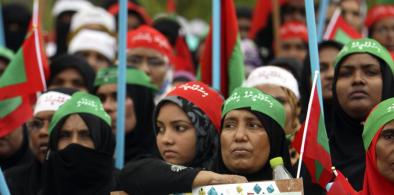
Increasing Islamic radicalisation and the influence of Pakistan and China in the island nation may be troublesome and India must adopt necessary measures to counter their influence at the earliest, writes Jai Kumar Verma for South Asia Monitor
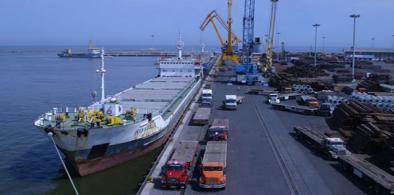
The enhanced allocation of resources serves as a signal to both Iran and Afghanistan that India is ready to walk the talk and hasten the completion of the project, especially at a time when the almost complete Gwadar port in Pakistan received its first container shipment, in mid-January, writes Nilova Roy Chaudhury for South Asia Monitor

The US-India relationship has a number of contentious issues, trade being the most important of them, writes Pranay Kumar Shome for South Asia Monitor
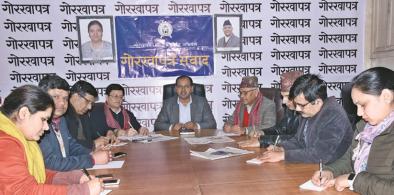
The MCC, which has approved 37 compacts for 29 countries since its inception in 2004, could extend a claim on products originating or produced from Nepal, which would unfortunately lose its sovereign rights over certain products which have their origin in Nepal, write Jivesh Jha and Nil Prasad Paneru for South Asia Monitor
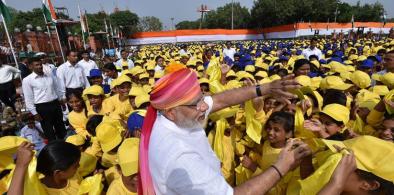
The success of Modi’s populist campaigns in 2014 and 2019 Lok Sabha elections, followed by the majoritarian mobilizations and lurking use of repression, pose a serious threat to liberal democracy in India, writes L T Om Prakash for South Asia Monitor