
Photo: Twitter

Bangladesh's 'Red Telephone' Breach: More to it Than Meets the Eye?

More importantly, the alleged sabotage occurred during a period of political transition following the developments of August 2024. Institutional loyalties, political rivalries, and competing networks of influence continue to shape Bangladesh's political landscape. In such a context, any breach involving the Prime Minister's secure communications infrastructure deserves careful examination.

Between the Melody Moment and the Hard Work Ahead: Modi's Europe Tour Outcome Will Depend on Delivery in Coming Years

India's MSME sector, the backbone of its export economy, remains largely unequipped to navigate European standards and certification requirements. As ABC Live noted, the next stage will be tougher than negotiation: India must now prove that its exporters, MSMEs, regulators, ports, testing labs, and state governments can actually use the agreement. A framework signed in Gothenburg means nothing to a textile exporter in Tiruppur who cannot get a product certified to EU standards.

Why India and Pakistan Must Move From Rivalry to Responsibility: In Fragmenting Global Order, South Asia Cannot Afford Internal Paralysis

The central lesson is simple: unresolved India-Pakistan hostility weakens South Asia from within. It prevents trade, blocks institutions, raises nuclear risk, politicizes water, militarizes borders, and diverts attention from human development. Both countries will continue to disagree on major issues. But disagreement does not require permanent hostility. Strategic maturity means building rules to manage conflict before conflict manages the region.

The Race for Strategic Minerals: South Asia's Geopolitical Moment

The Quad's Critical Minerals Initiative provides an important platform for achieving these objectives. Through coordinated investments, technology sharing and supply-chain diversification, the initiative seeks to create resilient and transparent mineral supply networks. Australia contributes abundant mineral reserves, Japan offers advanced processing technologies, the United States brings investment and innovation capabilities, while India provides a rapidly expanding market and growing manufacturing base.

More on Geopolitics and Strategic Affairs

Why Pakistan got trapped in its Kashmir plebiscite demand

The reason Pakistan was afraid of the plebiscite was that the raiders and troops it had sent in “had indulged in loot, arson, rape, and murder in the State. Scores of villages and towns were destroyed and hundreds of thousands of people uprooted, writes Arul Louis for South Asia Monitor

India's move will bring investments into Jammu & Kashmir, create employment

Pakistan can be expected to up the ante on terror, but any misadventure by Pakistan will be suitably responded to by India, writes  Lt Gen Prakash Chand Katoch (retd) for South Asia Monitor

In Kashmiri psyche, Hindu majoritarianism will replace a multicultural democratic India as national symbol

If, in the name of security, the BJP can, with one stroke, undo the federal asymmetry which was a product of the unique circumstances pertaining to the accession of J&K state to India, with a complex set of legal and constitutional mechanisms, the same can be done to the Northeast special powers, but with greater ease, writes Reeta Tremblay for South Asia Monitor

The course of three South Asian democracies - Nepal, Bhutan and Maldives

After a decade, these three countries - Nepal, a Hindu majority country, Bhutan, a Buddhist country and Maldives, an Islamic country - make a compelling study in the journey of democracy, writes Rishija Singh for South Asia Monitor

India's nuclear policy has destablised South Asia: A Pakistani view

Despite dramatization of Pakistan’s nuclear capabilities, it is quite clear that South Asia has remained safe from any major conflict due to Pakistan’s nuclear weapons, writes Rabia Javed for South Asia Monitor

The dichotomy in Bangladesh: Democracy or development

By narrowing the space for dissent and dichotomizing values, the ruling Awami League has effectively defanged the opposition, media as well as ordinary people writes Rishija Singh for South Asia Monitor

India's hyper-nationalist narratives helped Pakistan Army stay relevant

The warmongering narrative, primarily driven by the ruling party and the media at large, may fetch some electoral gains to the BJP  but it has proved to be welcome fodder for the Army in Pakistan as it tries to reinvent itself to remain relevant, writes Mayank Mishra for South Asia Monitor

India and Pakistan: Will there be a spring in ties?

As those who follow the India-Pakistan dynamic would know, there are two aspects to this relationship, often diametrically at odds with each other. A neutral observer would not know where the truth lies - perhaps, in between

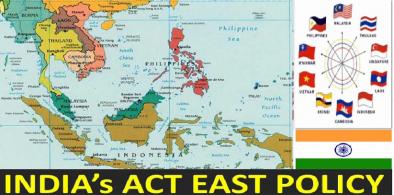
India-ASEAN partnership: New Delhi must provide a balance to Beijing

Some foreign policy analysts from Southeast Asia have questioned the lack of performance by India, hinting at a subtle resistance to the concept of “Indo-Pacific” as a replacement to the old “Asia-Pacific,” writes Tunchinmang Langel for South Asia Monitor

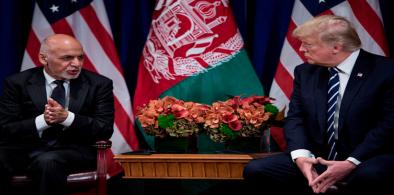
Afghan refugees in India: The nowhere people

Given their situation, the only reason most Afghan refugees are staying on in India is to get a chance to go to any European country, writes Khatima Emami for South Asia Monitor

History tells us Pakistan Army will play spoiler

In a tumultuous fortnight, during which many an illusion was shattered at the turn of the year, some home truths emerged in the chronically accident-prone ties between India and Pakistan