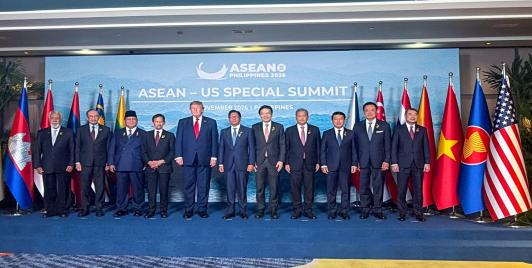
ASEAN summit leaders with Trump in Manila

ASEAN’s Illusion of Power: The Limits of Neutrality and Consensus

ASEAN never had a strong common strategic identity that can override the conflicting national security calculations of its members. The region consists of vastly different political systems, developmental capabilities, geopolitical affiliations, historical experiences and perceptions of external threats.

The Bay of Bengal: South Asia’s Emerging Maritime Security Challenge

The Palk Bay dispute illustrates a wider challenge for South Asian maritime governance. Coastal fishing communities frequently experience the consequences of strategic decisions without having equivalent opportunities to influence them. 

India Should Keep Starlink Out of Its Sky: Lessons from Ukraine

If a state allows a foreign private satellite network to handle part of its communications, it is in effect outsourcing part of its security and will eventually pay the price during a crisis, when it will be too late to negotiate. Ukraine found out that resilience does not mean ownership. 

The Strategic Implications of India's Association to Horizon Europe Programme: Major Step in Scientific and Technological Cooperation

Beyond funding opportunities, it indicates that Brussels and New Delhi increasingly see each other as long-term partners in shaping the technologies, standards and scientific solutions of the 21st century. The agreement therefore reflects not only stronger scientific cooperation, but also a broader convergence of strategic interests in an era of technological competition and geopolitical uncertainty.

More on Geopolitics, Security and Strategic Affairs

Challenging times for Indian foreign policy as new foreign secretary takes charge

Shringla, who came in from Washington where he served as India’s ambassador, will have his work cut out, writes  Nilova Roy Chaudhury for South Asia Monitor 
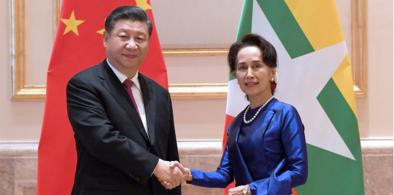
Will China’s strategic embrace of Myanmar spell more trouble for Rohingyas?

The strategic gameplan of support to the Rohingya militancy is clearly visible. One, for China, making them into militants can be used to destabilize many countries, including India in South Asia, thus weakening its economic competitors, writes Swadesh Roy for South Asia Monitor

South Asian countries must formulate legal frameworks to control marine litter

In South Asia, the issue of marine litter management is not taken as a priority by any of the nations, write Harsh Mahaseth and Shubham Sharma for South Asia Monitor 

Religious extremism taking hold in Afghanistan as Taliban influence spreads

Salafist movements, such as Hizb ut-Tahrir and the Jamiat-E Eslah, while opposing Taliban methods, are generally the same, and these movements, consciously or unconsciously, pave the way for Taliban recruitment in Afghanistan, Writes Saleem Payenda for South Asia Monitor

Vulnerable communities in Bangladesh to be worst hit by climate crisis

Bangladesh and Maldives, amongst others, are the most afflicted and vulnerable victims of environmental pollution and climate change, Write Akmal Hossain for South Asia Monitor

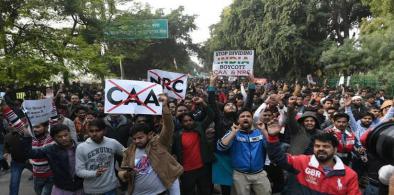
Anti-CAA protests in India mask Assam’s lonely struggle

The nature of protests and participation of people in anti-CAA rallies in Assam indicates that Assam rejects the communal agenda of the current BJP-led government and diversionary tactics of the mainstream media, write Minakshi Bujarbaruah & Rituparna Kaushik Bhattacharya for South Asia Monitor

What is drawing Iran and Taliban closer?

The Taliban has never been happy about Iran’s cultural influence in Afghanistan. When the Taliban ruled Afghanistan, they rejected any cultural links between Iran and Afghanistan and ignored Iran’s interests, writes Zahid Aria for South Asia Monitor

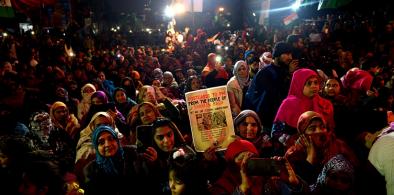
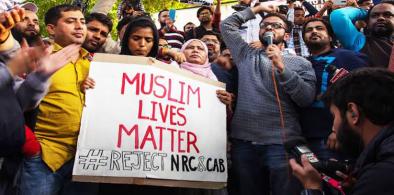
The profound symbolism of the Shaheen Bagh protests

The world must note the significance of the Shaheen Bagh phenomenon, as it highlights the power of Gandhian non-violent and secular protests in the face of the formidable State machinery, writes Brigadier Deepak Sethi (retd) for South Asia Monitor

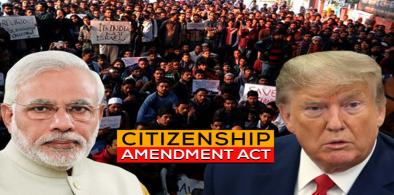
Was India's controversial citizenship act modeled on US legislation?

External Affairs Minister S Jaishankar missed an opportunity at the news conference with Secretary of State Mike Pompeo and the two other participants at last month’s 2+2 strategic dialogue to clearly explain India’s goals behind the CAA in the rare opportunity he got to make the case in public before the US media, writes Arul Louis for South Asia Monitor 

Is India heading for a constitutional crisis over CAA?

Nearly all the non-BJP state governments have ruled out implementing the two measures, thereby preparing the battlefield for an unprecedented confrontation which will shake up the federal polity, writes Amulya Ganguli for South Asia Monitor

Cracking down on student protests augurs ill for Indian democracy

The dissent by young India is being cast as a diabolical anti-national act, even while many of the leaders in the BJP led government cut their teeth in politics during their student days, writes C Uday Bhaskar for South Asia Monitor 

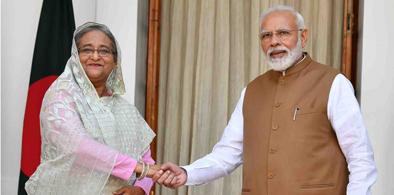
On CAA, India has scored a self-goal with friendly neighbours

Can India challenge the sovereignty of other nations and think of living peacefully with them, asks Mahendra Ved for South Asia Monitor  

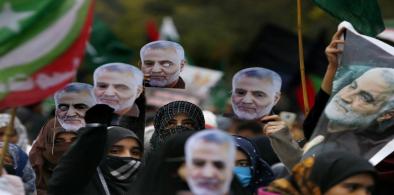
Soleimani’s killing and regional implications: Will the winners be China, Pakistan?

US Secretary of State Michael Pompeo spoke to Pakistani army chief Qamar J Bajwa on January 3, immediately after Soleimani’s killing, seeking Pakistani support, writes Lt Gen Prakash Katoch (retd) for South Asia Monitor

Assam: Betrayed by politicians, united strongly in anti-CAA protest

The issue of illegal immigrants, from Bangladesh to be precise, is, therefore, an old wound for the Assamese people. For someone familiar with the geography of the state, the changing demography is hard to miss, writes Azera Parveen Rahman for South Asia Monitor

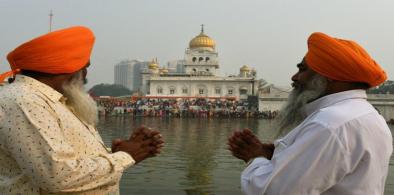
Attack on Sikh shrine exposes Pakistan’s disdain for minorities

The 'deep state' and the Imran Khan government should care about the pitiable condition of minorities in their own country instead of worrying about Muslim and Sikh minorities in India, writes Jai Kumar Verma for South Asia Monitor

Newsletter Subscription

The subscriber's email address.
Stay informed - subscribe to our newsletter.