There is a clear sense that something is missing in the present relationship between the Indian and Nepali governments. Both should work to develop harmony and trust and mitigate the trust deficit, writes Gaurab Shumsher Thapa for South Asia Monitor


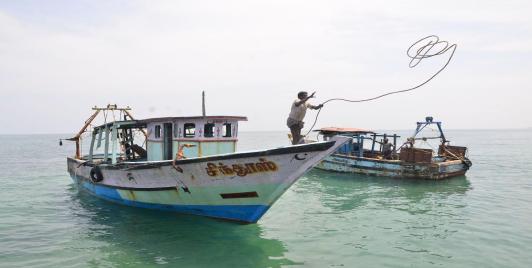
The Palk Bay dispute illustrates a wider challenge for South Asian maritime governance. Coastal fishing communities frequently experience the consequences of strategic decisions without having equivalent opportunities to influence them.

If a state allows a foreign private satellite network to handle part of its communications, it is in effect outsourcing part of its security and will eventually pay the price during a crisis, when it will be too late to negotiate. Ukraine found out that resilience does not mean ownership.

Beyond funding opportunities, it indicates that Brussels and New Delhi increasingly see each other as long-term partners in shaping the technologies, standards and scientific solutions of the 21st century. The agreement therefore reflects not only stronger scientific cooperation, but also a broader convergence of strategic interests in an era of technological competition and geopolitical uncertainty.

Recently declassified documents from the National Archives in Colombo have shed light on Jayaram's involvement in assisting Sri Lanka during the leftist guerrilla insurrection that engulfed the island nation. Acting on Jayaram's advice, 150 Indian Gurkha soldiers were reportedly deployed to protect Colombo International Airport.

There is a clear sense that something is missing in the present relationship between the Indian and Nepali governments. Both should work to develop harmony and trust and mitigate the trust deficit, writes Gaurab Shumsher Thapa for South Asia Monitor

Pakistan will try to enhance terrorist activities not only in J&K but in all of India. Pakistan’s Inter-Services Intelligence may activate and instruct its sleeper cells to carry out terrorist activities in communally sensitive places so that communal riots erupt in the country, writes J K Verma for South Asia Monitor

The Kashmir issue may have been handled deftly at the global politico-diplomatic level, but the abiding challenge for India remains domestic, writes C Uday Bhaskar for South Asia Monitor

PM Modi has made it clear that it cannot be business as usual. The UK would need to carefully consider whether its pre-1947 agenda of promoting an autonomous Muslim state at the intersection of South and Central Asia is a desirable objective for the West, wrties Ambassador Bhaswati Mukherjee (retd) for South Asia Monitor

Pakistan is unhappy that major players which could bail it out at the UN are all embroiled in their own affairs – the US trying to quit Afghanistan and China facing a trying time in Hong Kong, writes Mahendra Ved for South Asia Monitor

Boris Johnson has ended the British stance till now that Kashmir is a bilateral India-Pakistan issue, thereby delivering a lethal blow to India-Britain relations, writes Prakash Chand Katoch for South Asia Monitor

CDS by itself without its essential adjunct of integrated theater commands would be of little avail. It may turn out to be just one more four star-general, without any enhancement in Indian military’s war fighting capabilities, writes Lt-Gen Harwant Singh ( retd ) for South Asia Monitor

India has rudely shaken China, pushing back the bilateral Wuhan understanding with Beijing. It has hit not just China’s prime ally, but has moved close to Aksai Chin, the Kashmir territory Pakistan ceded to China, writes Mahendra Ved for South Asia Monitor

Religious leaders should promote interfaith dialogue. They should bring together followers of different persuasions for meaningful conversations. They should promote a dialogue of understanding and a shared sense of community with other faiths, writes Frank Islam for South Asia Monitor

The abolition of J&K’s special status will complete the ongoing process of annexation into the Indian Union, as it was a temporary provision, and will bring misguided and stone-pelting Kashmiri youth into mainstream politics, writes Sudhanshu Tripathi for South Asia Monitor

Experts are divided about the legality and constitutional propriety of the August 5 decisions in relation to Article 3 and the reorganization of states. What is at stake is the sanctity of constitutionalism and for PM Narendra Modi the way the Kashmir issue unfolds will define his political legacy, writes C Uday Bhaskar for South Asia Monitor

Internationally, the impact has been positive across the international community and, even China, although initially negatively disposed, has chosen not to be too vociferous in its protestations, writes Lt Gen Syed Ata Hasnain (retd) for South Asia Monitor

Haj will continue to be the harbinger of cultural and economic cooperation between India and Saudi Arabia, writes Dr H A Nazmi for South Asia Monitor
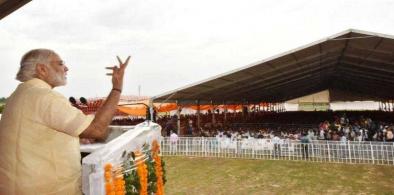
Those who have closely watched Modi believe that the prime minister wanted to give a clear signal that his government would be in a pro-active mode to handle long pending issues, writes Arun Anand for South Asia Monitor
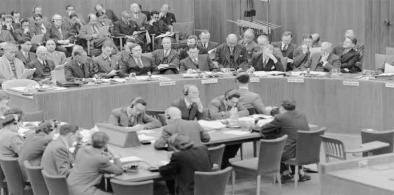
The reason Pakistan was afraid of the plebiscite was that the raiders and troops it had sent in “had indulged in loot, arson, rape, and murder in the State. Scores of villages and towns were destroyed and hundreds of thousands of people uprooted, writes Arul Louis for South Asia Monitor