The lack of homework by the Modi government on the adverse implications of the CAA is now clearly visible both domestically and internationally, writes Alakh Ranjan for South Asia Monitor


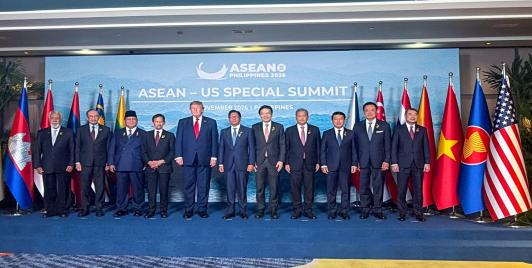
ASEAN never had a strong common strategic identity that can override the conflicting national security calculations of its members. The region consists of vastly different political systems, developmental capabilities, geopolitical affiliations, historical experiences and perceptions of external threats.
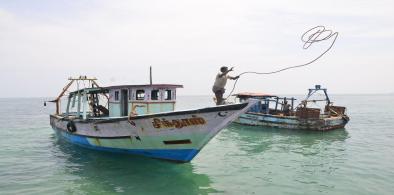
The Palk Bay dispute illustrates a wider challenge for South Asian maritime governance. Coastal fishing communities frequently experience the consequences of strategic decisions without having equivalent opportunities to influence them.

If a state allows a foreign private satellite network to handle part of its communications, it is in effect outsourcing part of its security and will eventually pay the price during a crisis, when it will be too late to negotiate. Ukraine found out that resilience does not mean ownership.

Beyond funding opportunities, it indicates that Brussels and New Delhi increasingly see each other as long-term partners in shaping the technologies, standards and scientific solutions of the 21st century. The agreement therefore reflects not only stronger scientific cooperation, but also a broader convergence of strategic interests in an era of technological competition and geopolitical uncertainty.
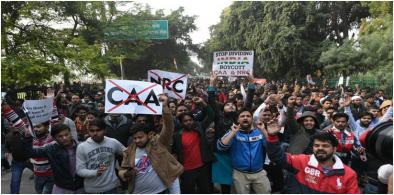
The lack of homework by the Modi government on the adverse implications of the CAA is now clearly visible both domestically and internationally, writes Alakh Ranjan for South Asia Monitor
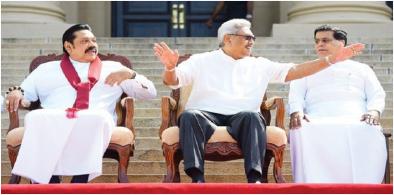
Sri Lanka is at the centre of the IOR and the country which will have greater stakes and leverage over this island nation will have an edge in the Indian Ocean, writes Alakh Ranjan for South Asia Monitor
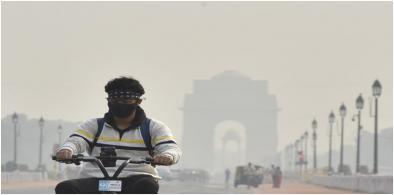
There are enough existing solutions to alleviate air pollution which is a result of a waste-disposal problem. However, there is a need to have political and administrative will to implement them, writes Anil Rajvanshi for South Asia Monitor
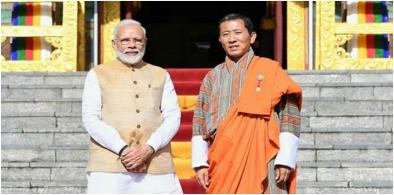
India understands the needs of Bhutan and is equally willing to diversify the relationship beyond hydropower. During his last visit, Modi showed India’s intent towards the diversification of bilateral relations, writes Alakh Ranjan for South Asia Monitor

Gandhi was an engineer at heart. He improvised and built equipment like better snake-catching tools, small cotton-spinning wheel (takli) and chappals (sandals) from used tires. In 1929, he even instituted an INR one lakh prize (INR 20 crores in today’s value; 2.6 times bigger than the Nobel Prize) for the design of a modern charkha (spinning wheel), writes Anil K Rajvanshi for South Asia Monitor
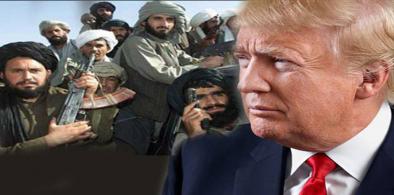
Trump realized that the draft deal, if signed, would be labeled a surrender to the Taliban, which would be politically damaging for him. Another reason could be that he never really wanted to meet the Taliban, but wanted to showcase the peace efforts made, and place indirect pressure on them through the subterfuge writes Lt Gen PC Katoch (retd) for South Asia Monitor

With India's growing political and strategic interest in the continent, and inclination to leverage its diaspora as an instrument of soft power, it’s natural for New Delhi to establish a beachhead in Somalia, that straddles the Horn of Africa, the source of the Nile and a gate to the Red Sea and the Gulf of Aden, through which tens of thousands of vessels pass through Somali waters every year in what is one of the world’s busiest sea-trading lanes, writes Tarun Basu for South Asia Monitor

Delhi has not yet made an official statement, but legitimizing the Taliban at a Camp David ceremony would have had an adverse impact on India’s strategic interests in the region, writes C Uday Bhaskar for South Asia Monitor

For an outsider, the NRC process has come to be perceived as anti-Muslim. This is drawing the line along religious identity—a factor to which the indigenous Assamese Muslim community does not agree, but whose voice has been largely ignored in this massive debate, writes Azera Parveen Rahman for South Asia Monitor
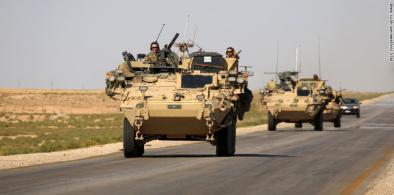
Trump ordering withdrawal of some troops is very much on the cards. The situation in Afghanistan over the next few months is unpredictable, with the internal turmoil and economic situation in Pakistan also deteriorating, writes Lt Gen Prakash Chand Katoch (retd) for South Asia Monitor

Sri Lanka, being an Indian Ocean island nation strategically located at the international maritime crossroads, has significant diplomatic influence in the West due its Christian community, write Srimal Fernando and Mizly Nizar for South Asia Monitor

The creation of a CDS cannot (and must not) be an isolated action because it carries with it a whole new ecosystem that can transform India’s national security paradigm. writes Admiral Arun Prakash (retd) for South Asia Monitor

Why can’t India begin by addressing the Balochistan problem at international forums, especially the heavy-handed suppression and continuing human rights abuses the people of that province face?, writes Nilova Roy Chaudhury for South Asia Monitor

Pakistan's only real option is to provoke large scale communal conflict simultaneously in states like Gujarat, Maharashtra, Uttar Pradesh, Assam and Kashmir, which can spread to other regions. That can be blamed on the ruling dispensation's 'anti-Muslim' policies, against which many voices have been raised in India, writes Subir Bhaumik for South Asia Monitor

Showing political will at the highest level is of little help unless it works at ground level. The government must take Kashmiri people, particularly the youth, into confidence to instill buoyancy into every faith-filled Kashmiri's heart, writes Debasish Bhattacharyya for South Asia Monitor