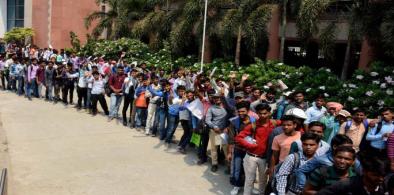
Thousands protest in PoJK's Rawalakot

Pakistan: Oppressor at Home, Peace Broker Abroad

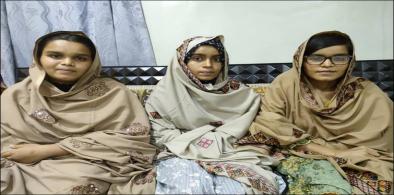
This contradiction—peace abroad, repression at home—defines Pakistan’s current posture. While Islamabad seeks international recognition as a mediator, its domestic record is marred by bloodshed and denial of democracy. The JAAC movement, rooted in basic economic grievances, has become a symbol of resistance against this hypocrisy. 

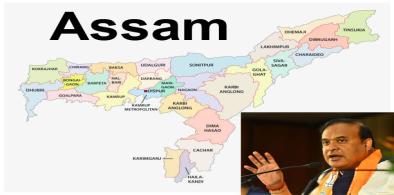
Myanmar, India and the Northeast: Balancing Security, Connectivity and Geopolitics

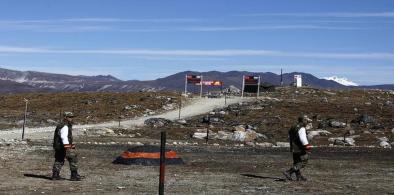
The strategic significance of the offensive lies in control over Kachin State’s heavy rare-earth deposits, which account for roughly half of the world’s supply and are critical for electric vehicles and wind turbines. The KIA took control of these lucrative mining areas near Pangwa and Chipwi in late 2024 and has since heavily fortified its positions.

Xi Jinping’s Loosening Leverage Over North Korea Amid Shifting Indo Pacific Security Dynamics

China in recent times has elevated some of its key bilateral relations, Vietnam, Pakistan, North Korea, to the level where they are now considered by Beijing as  consequential to regional and global peace and stability. China’s foreign and 'grand strategy' is aimed at realizing a shared destiny for mankind and nurturing a new type of great-power relations within a multipolar world. This requires a strategic alignment between China’s strategy and others.

Bangladesh's 'Red Telephone' Breach: More to it Than Meets the Eye?

More importantly, the alleged sabotage occurred during a period of political transition following the developments of August 2024. Institutional loyalties, political rivalries, and competing networks of influence continue to shape Bangladesh's political landscape. In such a context, any breach involving the Prime Minister's secure communications infrastructure deserves careful examination.

More on Geopolitics and Strategic Affairs

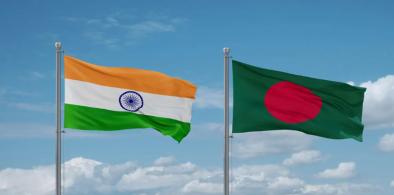
Chill in India-Bangladesh ties taking heavy toll on cross-border trade and infrastructure

Bangladeshi authorities have noted that Matarbari Port  will also support feeder vessel services from India’s Kolkata and Haldia ports. This transshipment framework could facilitate efficient trade not only for India but also for landlocked neighbors like Nepal and Bhutan. However, much of this potential remains unrealized, and may continue to do so, amid Bangladesh’s current domestic challenges and diplomatic tensions with India

The rot within: Police assault on army officer highlights crying need for systemic reforms

While there is no debate that soldiers must be treated with dignity, civilians too are equally deserving of such respectful treatment. India is a democratic nation governed by the rule of law, which must apply uniformly—whether to a uniformed individual or a civilian. There should be no space for such high-handed behavior by the police or any other government agency that represents state authority.

Can a fish market and a temple co-exist? Fishy politics in an Indian capital corner tells a larger story

An eclectic faith with no supreme authority, that accommodate diverse centres of belief and practice, can always be susceptible to manipulation and misinterpretation. A tendency to arrogate theological authority to a self-serving stream of thought and negation of other religio-cultural practices is alien to the spirit of Sanatan Dharma, which is inherently inclusive in character and sees no basis for excluding any belief.

Tahawwur Hussain Rana, extradited to India, can potentially throw light on Pakistan’s intelligence-terrorist nexus

Rana’s extradition is a legal victory for India, but it is symbolic considering that he was only one of the plotters of the Mumbai attacks. Headley, who was often described as a double agent working as an informant for the U.S. Drug Enforcement Agency (DEA) at one point, was the man on the ground. For reasons which have remained a mystery he managed to strike a deal with the U.S. law enforcement under which both his extradition to India and potential death sentence were taken off the table in return for lifelong cooperation.

Financing Sustainable Development: South Asia’s Struggles Amid Global Shifts

South Asia faces mounting challenges in financing sustainable development due to global funding gaps, debt pressures, and shifting U.S. policies. Explore the latest trends, data, and implications.

Time is running out: Bangladesh must intensify diplomatic engagement on Rohingya repatriation

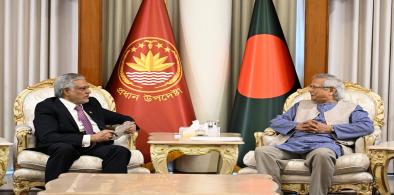
During his recent visit to China, Chief Adviser Dr. Muhammad Yunus urged Beijing to take a more proactive stance on Rohingya repatriation. In response, President Xi Jinping assured that China would raise the issue with Myanmar. Days later, Myanmar’s announcement signaled the potential influence of international stakeholders. The more pressure China exerts, the more likely Myanmar will cooperate

Modi visit to Sri Lanka: Religious diplomacy to boost ties

Most analysts believe that India changed Modi’s programme to appease the majority Buddhist community, which will be happy to see the Indian leader pay homage to Sri Maha Bodhi in Anuradhapura rather than visit the Tamil minority in Sampur in the east.

Can BIMSTEC succeed where SAARC failed?

The biggest problem of SAARC was the political rivalry between India and Pakistan, which has become a huge obstacle to effective regional policy making. BIMSTEC does not have that problem. Here, the goal is not competition, but cooperation to achieve economic prosperity. As a result, member countries are able to reach consensus and take practical development initiatives.

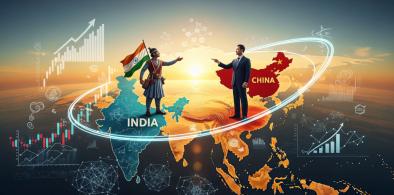
Beyond borders: Time to rekindle the bond between India and China, forge selective alliances

The diplomacy of restraint, recently practiced by both nations, can be a powerful asset in achieving ambitious climate targets. By working as complementary partners rather than competitors, India and China can manage growth and societal well-being in a more inclusive and sustainable manner, thereby mitigating the planet-wide existential threat of climate change.

Expedite the bridge to Singalatheevu: Open Letter to Indian Prime Minister Narendra Modi

A bridge between India and Sri Lanka is more than just an infrastructure project; it is a symbol of the enduring historic bond between two nations. As you pointed out, both countries "do not have a land boundary." The bridge shall represent our shared histories, mutual aspirations, and a commitment to a future of prosperity and cooperation between two neighbours.

The unfulfilled dream: Is SAARC doomed to die?

Currently, another organization called Bay of Bengal Initiative for Multi-Sectoral Technical and Economic Cooperation (BIMSTEC) is gaining importance in which several countries including India, Bangladesh, Bhutan, Nepal, Sri Lanka, Myanmar and Thailand are associated. It is creating a connection between South Asia and Southeast Asia, where Pakistan and Afghanistan are not included. India is currently focusing on BIMSTEC instead of SAARC

Pakistan's currency in free fall highlight severe economic challenges: Need to curb imports, enforce fiscal discipline

The poor performance of Pakistan’s currency is primarily driven by rapidly depleting foreign exchange reserves, which currently stand at $15.95 billion. This amount is well below the three-month import threshold and significantly lower than Bangladesh’s $25.31 billion. Low reserves restrict the central bank’s ability to intervene in currency markets, leading to increased exchange rate instability.

Pakistan’s Afghan refugee crisis: A policy driven by realpolitik is now a millstone around its neck

The Afghan refugee crisis in Pakistan is a complex issue. A situation that has evolved over four decades cannot be resolved in four years. Moreover, the refugees have integrated into Pakistani society not only due to religious and cultural similarities but also because their children, born in Pakistan, have never visited Afghanistan. They know Pakistan as their home. 

A colonial-era fort in Sri Lanka hosts a modern lit-fest: Shaping South Asian nation's cultural identity and economic rejuvenation

Works by Ali Kazim from Pakistan and Tayeba Begum Lipi from Bangladesh, besides Sri Lankan talent contributors featured in The Arts Trail, six exhibitions highlighting upcoming and renowned South Asian artists. The series, organized by Sri Lankan-based ARTRA magazine, explored themes from war to nature’s beauty.

Bangladesh at crossroads: People's patience may be running thin

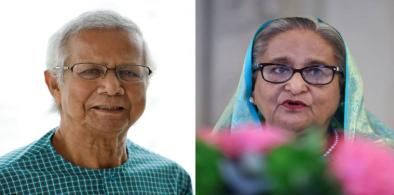
Adding another layer of complexity is the rising specter of radicalism. Reports suggest that extremist elements are gaining traction, with foreign actors allegedly playing a role in fueling Islamist movements. The Yunus government’s perceived leniency toward certain hardline factions has sparked concern, both domestically and internationally