Donald Trump with Pakistani PM Shehbaz Sharif and Pak Army chief Asim Munir

Why is Trump Betting Big on Pakistan? New Oil and Gas Finds Stir Regional Geopolitics

This is also the terrain through which the US 62 billion China-Pakistan Economic Corridor (CPEC) traverses, facing security threats from north to south, losing men and material in attacks by militants. That being the case, the US entry brings in another global player, ready to guard its interests against China’s looming presence. Is the South Asian region headed for a proxy war? 

Pakistan: Oppressor at Home, Peace Broker Abroad

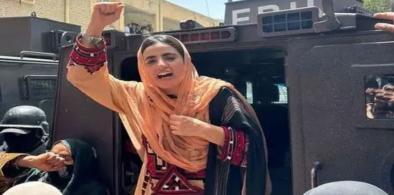
This contradiction—peace abroad, repression at home—defines Pakistan’s current posture. While Islamabad seeks international recognition as a mediator, its domestic record is marred by bloodshed and denial of democracy. The JAAC movement, rooted in basic economic grievances, has become a symbol of resistance against this hypocrisy. 

Myanmar, India and the Northeast: Balancing Security, Connectivity and Geopolitics

The strategic significance of the offensive lies in control over Kachin State’s heavy rare-earth deposits, which account for roughly half of the world’s supply and are critical for electric vehicles and wind turbines. The KIA took control of these lucrative mining areas near Pangwa and Chipwi in late 2024 and has since heavily fortified its positions.

Xi Jinping’s Loosening Leverage Over North Korea Amid Shifting Indo Pacific Security Dynamics

China in recent times has elevated some of its key bilateral relations, Vietnam, Pakistan, North Korea, to the level where they are now considered by Beijing as  consequential to regional and global peace and stability. China’s foreign and 'grand strategy' is aimed at realizing a shared destiny for mankind and nurturing a new type of great-power relations within a multipolar world. This requires a strategic alignment between China’s strategy and others.

More on Geopolitics and Strategic Affairs

Water Security and Regional Peace: Future of the Indus Waters Treaty in a Changing Climate

The Indus Waters Treaty has lasted more than 60 years, illustrating diplomacy's ability to handle one of South Asia's most sensitive resources. However, climate change and geopolitical tensions have called into question its significance. To guarantee that the treaty continues to prevent war and promote shared prosperity, Indian and Pakistani governments must update its provisions, invest in joint institutions, and view water as a shared strategic asset rather than a source of friction.

Iran at the Crossroads: In a Changing Region, Tehran’s Critical Choices Could Shape Change (Part IV)

Iran's demonstrated endurance to maintain its intrinsic rights to nuclear enrichment as an NPT state even under sanctions and its willingness to escalate without collapsing, is an important consideration for the Iranian regime. This issue was centre stage at the collapsed Islamabad negotiations. How Iran shapes its stand will be centre piece of future negotiations. 

The Strait as Leverage: Hormuz the New Geometry of Power? (Part III)

Iran’s role in this transformation is central. Its ability to influence the Strait has reshaped strategic thinking across the region and beyond. External powers must now operate within constraints that did not exist before. For the Gulf states, the implications are immediate and tangible. Their economic lifelines pass through this narrow corridor. Any disruption affects not only revenue but also national security.For the broader international community, the lesson is clear. 

Nepal’s Gen Z Government Faces a High-Stakes Test

Nepal’s Gen Z government is not just an experiment in youth-led politics—it is a high-stakes test of whether disruption can evolve into governance. The same streets that once roared with revolutionary energy can just as easily erupt again in frustration. If this new leadership fails to translate momentum into meaningful change, the cycle of instability will repeat itself

India’s set to Become Significant Player in Global Arms Market

India’s deepening defence ties with both the United States and the European Union are particularly significant. India’s designation as a “Major Defence Partner” by the US and the ongoing development of a long-term defence cooperation framework highlight the strategic convergence between the two countries. Similarly, the recent EU–India Security and Defence Partnership signals Europe’s recognition of India as a key player in maintaining regional and global stability

Shaken Shields: Turning Point for Gulf States (Part II)

The emerging framework is likely to be more complex and less centralised. It may involve a mix of external partnerships, regional cooperation, and internal capacity building. It will also require a different mindset, one that accepts uncertainty as a constant factor.

Pakistan Demonstrates its Geopolitical Importance in the World Order

This night was not about grandstanding; it was about results. Pakistan leveraged decades of ties with the U.S., deep cultural and geographic connections to Iran, and strong Gulf partnerships to create a channel no one else could. In an era of multipolar tensions, where flashpoints can ignite global crises, Islamabad showed it can convene, de-escalate, and deliver where others could not.

When Law Bends to Power: Gulf War Exposes Regional Vulnerabilities and Absence of Alternative Order

The unfolding conflict is not just a regional crisis. It is also putting the current global order under strain. Legal structures, economic systems and strategic alignments are all feeling this pressure. What we are seeing is not a clear collapse, but something more uncertain. Law is still in place, though its application varies. Interdependence continues, but it is increasingly used as leverage.There is no clearly defined alternative order ready to take the place of what is weakening

A Ceasefire Without Peace: Breathing Space for Difficult Compromises or Interval Before Next Confrontation? (Part I)

The most urgent and vital issue is the future management of the Strait of Hormuz. This narrow waterway supports a large part of the world’s energy supply. For many years, its security relied on Western naval dominance. That belief has now been challenged.Iran has demonstrated it can disrupt, threaten, and influence traffic through the Strait. 

A Foreign Push to Reshape Bangladesh Politics? Critical Reassessment of Yunus' Role Needed

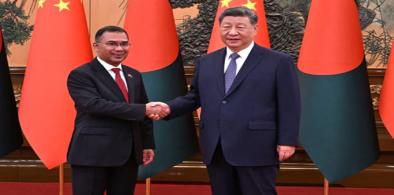
However, concerns persist that efforts to reshape Bangladesh’s political landscape have not ceased. There are allegations that Yunus has mobilized aligned groups, including student activists, to push for constitutional reforms that critics argue could weaken the current government and create conditions for renewed political upheaval.

Sri Lanka's Shadowy Ties With Israel: Between Disclosures and Reality

It becomes evident that the emergence of Sri Lanka–Israel relations in the 1980s was fundamentally driven by the realist imperatives of both states: Sri Lanka sought to strengthen its defence sector, while Israel aimed to legitimize its ties with Colombo. Each actor pursued distinct strategic objectives. However, what largely remains unknown is the US involvement in bringing Israel to Sri Lanka’s platform in the early 1980s. 

Price Tag of Deception: How Fast Fashion Exploits South Asia’s Supply Chain

It is high time South Asian countries not only pass stricter environmental regulations but also strictly enforce them, making sure that there is no factory releasing waste water without adequate treatment. Besides, upholding legally binding labour standards must also be a priority together with ensuring safety of the workplace environment.

Dhaka’s Dangerous Drift: Need for Serious Diplomacy to Resolve Rohingya Problem

The Rohingya dimension is inseparable from the question of AA engagement. Bangladesh hosts 1.4 million displaced Rohingya. While these numbers do not decrease, the fiscal, social, and security costs compound, pressing against the newly elected Bangladesh Nationalist Party’s electoral promises: a domestic agenda centered on growth in the Chattogram division, and a foreign policy agenda built around repatriation of the Rohingyas.

Cinema Is Not Policy, But Films Like Dhurandhar Culturally Reflect India’s Place in the World


The progression from Purab Aur Pachhim to Dilwale Dulhania Le Jayenge to Dangal is not a neat policy timeline. It is something subtler: a cultural echo of India’s journey from caution to engagement to assertion. The shift is not just in policy documents or diplomatic speeches; it is embedded in how stories are told, how characters behave, and how audiences respond.

Trincomalee as Regional Oil Hub: Sri Lanka Needs to Act Decisively to Secure its Energy Future

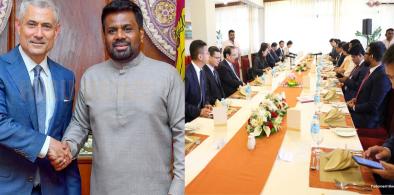
Against this backdrop, in 2025, India, Sri Lanka, and the UAE signed a trilateral Memorandum of Understanding to jointly develop Trincomalee. The agreement, involving the Indian Ministry of Petroleum and Natural Gas, the UAE Ministry of Investment, and Sri Lanka’s Ministry of Energy, was designed to enhance Sri Lanka’s energy security and integrate the country into regional energy networks.