US and Russian nuclear weapons

Whither Disarmament? Nuclear Weapons Remain Deeply Embedded in National Security Doctrines

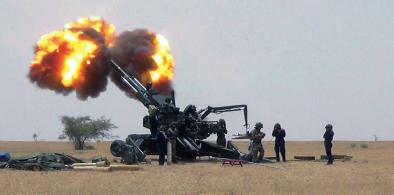
However, evolving regional dynamics, particularly China’s expansion and Pakistan’s tactical nuclear developments, continue to test the durability and interpretation of this doctrine. While India has officially reiterated its commitment to No First Use, debates persist within strategic circles about its future applicability under extreme scenarios.

With a New-Gen Government in Kathmandu, are India–Nepal Relations Headed for a Reset?

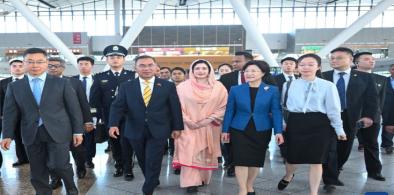
The significance of Shisir Khanal’s visit therefore lies not only in the agreements reached but in the broader message it conveyed. Both Kathmandu and New Delhi are signalling a willingness to move beyond the grievances and suspicions that have periodically defined their interactions. If the emphasis on development diplomacy, economic integration, and pragmatic cooperation is sustained, the current moment could indeed mark the beginning of a new chapter in India–Nepal relations.

Why is Trump Betting Big on Pakistan? New Oil and Gas Finds Stir Regional Geopolitics

This is also the terrain through which the US 62 billion China-Pakistan Economic Corridor (CPEC) traverses, facing security threats from north to south, losing men and material in attacks by militants. That being the case, the US entry brings in another global player, ready to guard its interests against China’s looming presence. Is the South Asian region headed for a proxy war? 

Pakistan: Oppressor at Home, Peace Broker Abroad

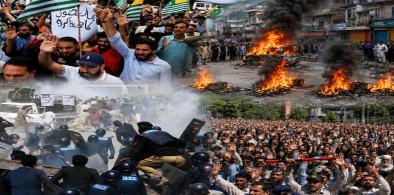
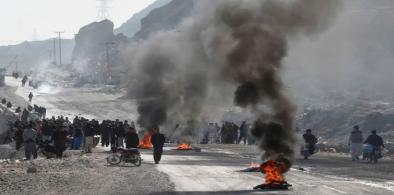
This contradiction—peace abroad, repression at home—defines Pakistan’s current posture. While Islamabad seeks international recognition as a mediator, its domestic record is marred by bloodshed and denial of democracy. The JAAC movement, rooted in basic economic grievances, has become a symbol of resistance against this hypocrisy. 

More on Geopolitics and Strategic Affairs

Deforestation Disrupting Ecosystems, Creating Habitat Loss of Wildlife in Pakistan: Needed Targeted Policy Interventions

Deforestation in Pakistan is a pressing issue with serious implications for wildlife and ecological balance. Habitat loss, human-wildlife conflict, and ecosystem disruption are already evident, and the situation will worsen without decisive action. While initiatives like large-scale tree planting are a step in the right direction, they must be complemented by strong policies, effective enforcement, and community involvement. 

Looming Energy Crisis in South Asia: Strait of Hormuz Disruption is Reshaping Benchmarks of Regional Leadership

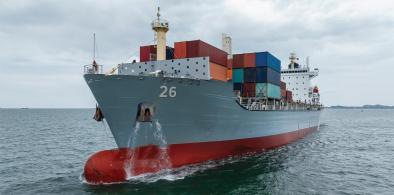
South Asian states prioritise partners who can deliver immediately in times of economic and political uncertainty. Despite expanding economic ties with China, they continue to turn to India for vital supplies like diesel, LPG and crude oil. This is not only about proximity but rather reflects a level of trust built through repeated experience. China, in response to the crisis, chose to restrict exports of refined fuels such as gasoline and diesel to protect its domestic market. 

Macroeconomic Stability and Fiscal Sustainability in South Asia: Takeaways from IMF–World Bank Spring Meetings

Macroeconomic stability and fiscal sustainability in South Asia are deeply interconnected and increasingly fragile. While the region continues to grow rapidly, structural weaknesses and external vulnerabilities pose significant risks. Insights from the World Bank and Asian Development Bank highlight that sustaining stability will require improved revenue mobilisation, credible fiscal consolidation, structural economic reforms and reduced exposure to external shocks.   

Climate Refugees Are Rising: Is South Asia Prepared for a Looming Climate Disaster?

South Asia is therefore not facing one climate migration crisis. It is facing many at once. Coastal displacement in Bangladesh and the Maldives is different from mountain displacement in Nepal and Bhutan. Flood displacement in Pakistan is different from drought-linked distress in Afghanistan. India contains almost every version of the crisis within one country. Sri Lanka shows how island and hill communities can be hit together. Yet the policy response remains fragmented.

A Mediator That Bleeds: Pakistan's Peacemaking Role is Riven by Contradictions

Pakistan is invited to the world's negotiating table. But a mediator's power is not spoken; it is demonstrated. A nation for whose people fuel is unaffordable, whose businesses are collapsing and whose independence is limited by 75 IMF conditions is not resilient. Until cheap energy is a strategic priority, until industrial decline is halted, until economic independence is restored, Pakistan's peacemaking pretensions will be hollow.

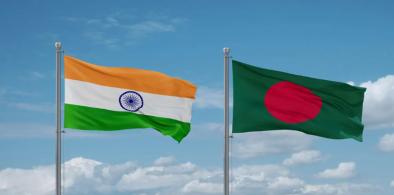
Will West Bengal State Elections Test India-Bangladesh Ties?

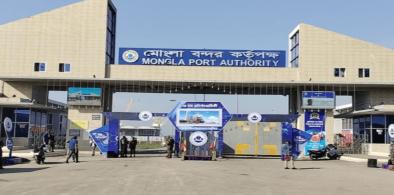
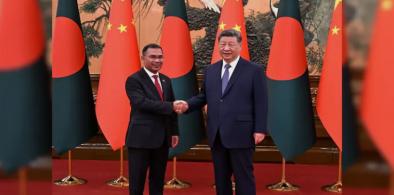
Economic ties are significant for both West Bengal and Bangladesh due to cultural linkages and geographic proximity. West Bengal acts as a gateway for Bangladeshis seeking access to medical facilities, education, and business opportunities. Significant trade also takes place through land ports. Hence, the first response of the BNP-led government would likely be to minimize any chances of a downturn in ties. New Delhi, too, will continue to prioritize Bangladesh, especially at a time when Dhaka has outlined defense modernization plans with likely Chinese help. 

How Sri Lanka Balanced India and China Ties to Maximise Developmental Gains

The architecture of financial and infrastructural assistance deployed by India and China in Sri Lanka differs significantly. Their infrastructure profiles, however, are not fundamentally competitive and instead represent distinct advantages that Sri Lanka has leveraged for its development. India and China are essential pillars of Sri Lanka's development future and economic ambitions.

Music, Peace Building and a Shared South Asian Moment

“The presence of the Sri Lankan singers “made this not just a local gathering, but a shared South Asian moment,” Nirupama Menon Rao said after the show. “Music does that so effortlessly. It crosses borders without asking for permission”.

AI, Energy, Health, and Integrity: South Asia’s New Frontline Against Procurement Corruption

South Asia’s future depends on reliable infrastructure and trustworthy public services. Artificial intelligence—especially advanced technologies such as Graph Attention Networks—offers governments a powerful tool to reduce corruption in procurement, improve healthcare delivery, strengthen energy security and enhance public trust.

How to Lose a Country in Four Years: Will the Taliban be Architects of Their Own Demise?

Yet ordinary Afghans refuse to stay silent. In Balkh province, people are turning public walls into canvases of defiance, spray-painting graffiti demanding education, rights, and freedom. These acts of artistic resistance, risking arrest and worse, echo the courage of exiled artists like Shamsia Hassani and Fatima Wojohat, whose work continues to amplify the cry for justice. Such quiet rebellion signals a population no longer cowed.

Trincomalee Energy Hub Development Will be a Strategic Milestone in India-Sri Lanka Ties

If one location matters most to India in Sri Lanka, it is Trincomalee. With one of the finest natural harbours in the world, Trincomalee has immense commercial, naval, and energy value. For decades, strategists in New Delhi have viewed it as critical to the security architecture of the Bay of Bengal.

SAARC vs BIMSTEC: Why Regional Integration is Failing in South Asia

South Asia cannot remain an archipelago of isolated economies connected only by shared history and mutual suspicion. Changing acronyms does not change reality. Summit declarations will not achieve true economic integration. True integration requires the political courage to dismantle physical and bureaucratic walls. Only then will the region stop holding its immense potential captive.
 

Body Blows to Indian Democracy: The Deeper Story of a Parliamentary Bill That Failed

The resultant reduced trust signals a declining democratic discourse that should be the biggest worry for the nation at this stage. The bill that failed thus tells the deeper story of all that is going wrong in the Indian democracy, bit by bit, in areas that are clearly visible and sometimes in many invisible ways.

Manipur’s Unfinished War: When Suppressed Conflict Returns with Firepower

Manipur today is not merely a regional crisis. It is a test of India’s democratic resilience. It highlights the limits of governance models that prioritize control over consensus. Without a shift toward genuine political engagement that addresses the fears, rights, and representation of all communities, the conflict will persist and resurface with greater intensity.
 

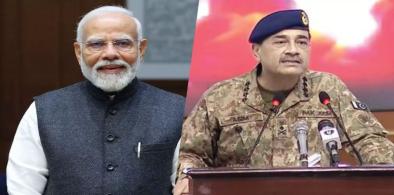
The Illusion of Strategic Mastery: How India’s Tactical "Smartness" Created a Diplomatic Opening for Pakistan

A significant factor in this "strongman" narrative is the influence of the Indian diaspora. Many unusually wealthy Indians living in the U.S. or U.K. cheer when India stands up to Western leaders. Their focus is emotional—seeking the pride of a "strong India" from the comfort of their adopted homes. However, these elites are dangerously out of touch with the majority of the Indian population.