

The Changing Transatlantic Relationship: Why Europe is Reluctant to follow Donald Trump on Iran
For decades, Europe generally followed Washington when American and European strategic interests broadly coincided. Iran exposes what happens when they do not. Europe still needs the United States for security—but increasingly wants to retain the right to say: “We share your objective, but we do not necessarily accept your method.”
 Aug 30, 2026
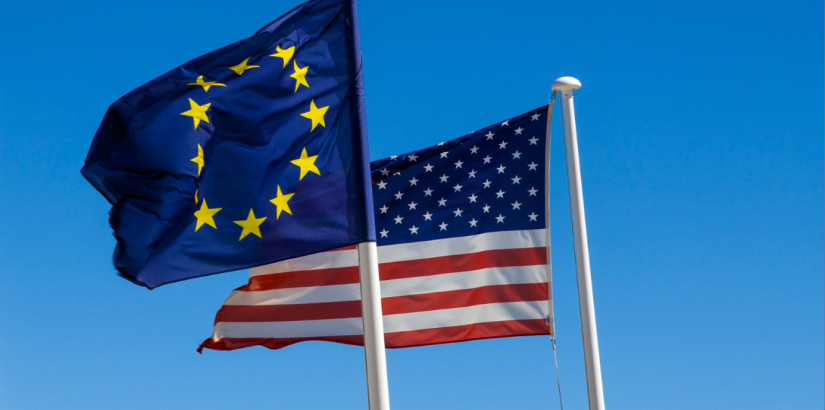
US President Donald Trump recently intensified his “maximum pressure” strategy, with US Treasury Secretary Scott Bessent warning countries that continue financial dealings with Iran that they could face U.S. retaliation. Washington’s new campaign—described by Trump as an “economic D-Day” and by the Treasury as “Operation Economic Outcast”—is explicitly designed to force third countries to choose between access to the U.S. financial system and continued economic relations with Iran.
Europe, however, has not simply fallen into line, because it has already tried the sanctions route and knows its limitations.
Where Europe differs with US
In recent years, the European Union has imposed extensive sanctions on Iran of its own. But Europeans learned an important lesson from Trump's first-term “maximum pressure” campaign after the U.S. abandoned the 2015 nuclear agreement with the Islamic Republic.
Europe wanted to preserve the Joint Comprehensive Plan of Action (JCPOA), while American secondary sanctions effectively made European companies choose between doing business with Iran and retaining access to the vastly more important U.S. market.
The EU even established INSTEX as a mechanism to facilitate legitimate trade with Iran outside the U.S.-dominated financial system. It ultimately failed to become a meaningful commercial channel and was discontinued in 2023.
So Europe is not naïve about the power of American sanctions. It is precisely because Europe has experienced that power that it is wary of becoming an instrument of Washington's Iran policy.
Washington's primary objective is now coercion and weakening Iran economically until Tehran accepts American demands.
Europe’s objective is to constrain Iran’s nuclear programme, keep open the Strait of Hormuz, limit Iranian missile and military capabilities, contain regional escalation and, ultimately, a negotiated settlement.
Indeed, if sanctions become so comprehensive that Tehran concludes it has nothing left to lose, the result could be greater Iranian retaliation, disruption of shipping and higher energy prices.
That is especially dangerous for Europe. The current conflict has already demonstrated the vulnerability of global energy and shipping markets to events around the Strait of Hormuz.
In other words, Washington can calculate that economic pain is an acceptable price for coercing Tehran. European governments have to calculate the price paid by European consumers and industries.
More Credibility with Iran
There is also a geopolitical calculation. The Europeans were central participants in the 2015 nuclear agreement. France, Germany and Britain—the E3—invested considerable diplomatic capital in negotiations with Tehran.
Europe therefore has something Washington currently lacks, a degree of institutional diplomatic credibility with Iran.
That asset becomes less valuable if European governments simply become junior partners in an American economic blockade.
Europe's logic is therefore why burn our remaining channels to Tehran merely to demonstrate solidarity with Washington?
There is another, more political reason for Europe's caution: European governments have become less willing to assume that American policy will remain consistent.
The experience since 2018 has been instructive. Europe helped negotiate the nuclear agreement with Iran. Trump subsequently withdrew from it. European governments then spent years attempting to preserve it.
From the European perspective, following Washington into a sweeping confrontation carries a risk: what happens if the American strategy changes again?
This concern is magnified by the increasingly personalized nature of U.S. foreign policy under Trump. A European government that dismantles its Iran trade relationships, sacrifices diplomatic channels and accepts significant economic costs cannot easily reconstruct them if Washington later decides that negotiation is preferable to confrontation.
More Conciliatory Approach
There is also a larger European issue hiding behind Iran. Initially, Europe appeared to support the US regime-change policy in Iran. But as weeks and months passed without any sign of political change in Tehran, European governments began to have second thoughts and grew increasingly hesitant.
The European Union , which presents itself as a peace project and a champion of international law, has conspicuously refrained from condemning the joint US-Israeli military assault on Iran in February, effectively signalling tacit approval.
Yet when it comes to Iran, the EU is far more vocal, routinely issuing condemnations over human rights concerns, Iran’s regional policies, and what it describes as internal repression. However, as the regime-change objective remained elusive, Europe now appears to be pursuing a more conciliatory approach towards Tehran.
For years, European leaders have talked about strategic autonomy, the ability to pursue European interests without automatically following Washington.
Iran is a particularly difficult test because Europe remains deeply dependent on the United States for security. Europeans therefore cannot simply oppose American policy.
But there is a difference between supporting America's security objectives and accepting every American economic instrument.
Preference for Multilateral Instruments
If Washington can effectively tell European companies: “Trade with Iran and lose access to America,” then the United States possesses enormous leverage over European economic policy.
From Brussels' perspective, accepting that principle would establish a dangerous precedent extending far beyond Iran.
It would mean that European foreign policy could increasingly be determined by whoever controls access to the U.S. financial system.
The European Union generally prefers sanctions to operate through multilateral or European legal mechanisms rather than simply adopting another country's unilateral sanctions.
Europe itself has imposed severe sanctions on Iran, including relating to nuclear proliferation, missiles, human rights and regional destabilisation. But European sanctions are presented as European policy, rather than an automatic extension of American policy.
The European foreign-policy establishment still believes that international agreements and institutions—particularly the UN, IAEA and negotiated arms-control arrangements—are important instruments of European power.
The JCPOA was, in that sense, a major European diplomatic initiative but also a failure. European officials have repeatedly argued that preserving such multilateral arrangements serves European security interests.
Against Open-ended Economic War
Europe's reluctance to join Trump's economic boycott should not be interpreted as European approval of Tehran. European governments have their own serious disagreements with Iran over nuclear enrichment, ballistic missiles, support for armed groups, human rights and regional destabilisation.
Indeed, the EU has imposed extensive sanctions on Iran. The difference is over method and endgame.
Washington increasingly appears to believe that maximum economic pressure would lead to Iranian economic collapse.
Europe is more inclined toward targeted pressure and diplomacy and regional de-escalation. Europe is economically weaker than the United States, but it may have a stronger incentive to resist an open-ended economic war with Iran.
America's economic weight allows Washington to impose secondary sanctions on foreign companies. But Europe is geographically closer to the Middle East and more exposed to the consequences of prolonged instability.
The Strait of Hormuz makes this particularly acute. Recent disruptions have already reduced oil flows and created concerns about global energy markets. Thus, for Europe, economic pressure on Iran can become economic pressure on Europe itself.
Europe also understands that sanctions only work if major alternative markets cooperate.
China remains Iran's most important economic partner and major buyer of Iranian oil. Russia remains broadly opposed to Washington's isolation strategy. Turkey and Gulf economies have substantial commercial interests in maintaining channels to Iran.
Washington can therefore pressure individual European companies very effectively—but a genuinely airtight global boycott is much harder to construct.
Indeed, the current U.S. campaign itself illustrates the problem: Washington has threatened countries such as China, Turkey and the UAE, but enforcement against the largest Iranian trading partners carries substantial geopolitical and economic costs.
Europe questions the economic and diplomatic costs of completely isolating Iran if China and other major powers will continue providing Tehran with alternative channels.
The Deeper Story
Europe is not rejecting pressure on Iran. It is rejecting the proposition that Trump should determine the precise level and form of that pressure.
There are three competing European interests: Keep Iran from becoming a nuclear-armed power, prevent a wider Middle Eastern war and another energy shock and preserve Europe's ability to conduct an independent foreign policy.
Trump's strategy prioritises the first objective through extreme economic coercion. European governments fear that pursuing it without sufficient regard for the second and third could make the situation worse.
The deeper story, therefore, is not really about Iran. It is about the changing transatlantic relationship.
For decades, Europe generally followed Washington when American and European strategic interests broadly coincided. Iran exposes what happens when they do not. Europe still needs the United States for security—but increasingly wants to retain the right to say: “We share your objective, but we do not necessarily accept your method.”
And that may be the most important reason Europe has given Trump's economic campaign against Iran a cooler reception than Washington expected.
(The author is Brussels-based Non Resident Fellow of the New Delhi-based Society for Policy Studies who has been tracking and reporting on EU and European affairs and NATO for the past four decades. The views expressed are personal. He can be reached at nawab_khan@hotmail.com. X: @NawabKhan10)







Post a Comment