

Representational Photo

India-China Eight-Point Agreement: A Tactical Thaw, but Trust Remains Elusive

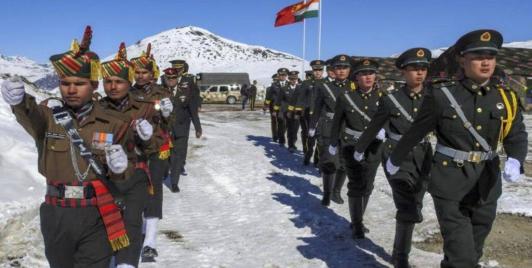
Hopes for Sino-Indian relations centre on a cautious diplomatic thaw, institutionalised border stability and renewed high-level engagement. Indian negotiators and defence planners are well aware that “trust must be verified”. While the activation of these eight points provides valuable channels to prevent an accidental kinetic clash on the ground, the real test of China’s sincerity will not be the joint statements signed in Beijing, but whether it ceases infrastructure build-ups and respects the historical patrolling rights of Indian troops along the LAC.

What's in a Name? Nomenclature Diplomacy Says Much About Changing Geopolitics

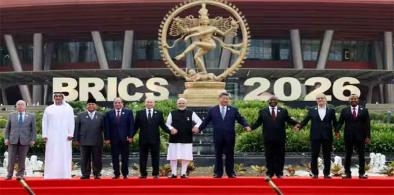
By removing the ‘Indo’ prefix from Indo-Pacific the US implicitly acknowledges that it no longer unilaterally defines the eastern strategic landscape. Regional organisations like BRICS continue to redefine the lexicon of ‘rules-based order’ to insulate themselves from western domination.

India-China Ties: Modi-Xi Meeting Signals Limited Thaw

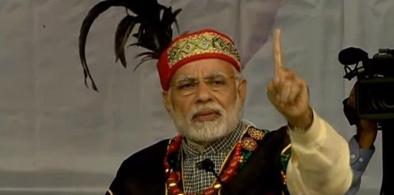
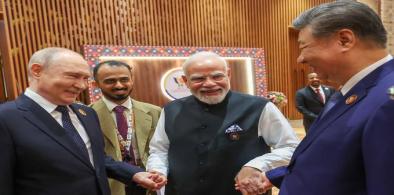
The bilateral discussion between Prime Minister Narendra Modi and Chinese President Xi Jinping on the sidelines of the 18th BRICS Summit indicates surge in mutual ties, particularly by way of trade. However, little can be expected by way of full settlement of the boundary dispute.

EU Fast-Tracks FTA with India as BRICS Summit Signals Shifting Geopolitical Dynamics

The timing of the EU announcement coincided with the BRICS+ Summit in New Delhi, creating speculation about whether the EU was seeking to reinforce its strategic engagement with India amid the growing influence of the BRICS grouping.

More on Geopolitics, Security and Strategic Affairs

Can Indian and Pakistani leaders rise above politics to build bridges through cricket?

Indian and Pakistani politicians can leverage the sport to resolve many outstanding issues between the neighbouring countries, provided there is an honest will on either side and the intentions are well-meaning. And the bilateral series can resume only if a Vajpayee-Musharraf-like initiative is taken by those occupying the highest positions in the two countries.


Lessons from Sri Lanka: Need for increased governmental accountability and transparency

South Asia must develop a common framework to hold politicians accountable and increase transparency in government dealings. Regional collaboration can reduce vulnerability.

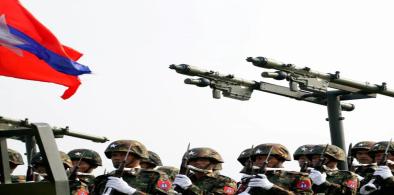
Myanmar's suspected nuclear ambitions will pose a grave threat to region

If Myanmar acquires a nuclear capability, it would be a disaster for South and Southeast Asia. A nuclear Myanmar is not in India, China, or other neighbouring countries' interests.  Recent border tensions between Myanmar and Bangladesh are the best example to understand the gravity of the situation. 

The evolving terror funding matrix: Pakistan, ISI and D Company and its global criminal web

Since Dawood moved to Karachi, the D Company syndicate has expanded incredulously. He is said to have invested over USD $28 billion in assets in Karachi alone and has diversified his businesses in several countries such as India, Morocco, the UK, UAE, Switzerland, Hong Kong, Thailand, Sri Lanka, Italy and France.

An agenda for BBIN countries: An idea whose time has come

The demonstrable success of BBIN cooperation may draw Sri Lanka and Maldives also into its ambit in the near future.  India's government and corporate sectors must work together to make BBIN cooperation a success to mutual advantage.

Red flags in India's Northeast: Is Act East Policy losing focus?

The question also arises – is  Delhi losing focus and getting diverted from the AEP by QUAD, Chinese influence on RCEP, and so on. If so then Delhi must decentralise the AEP to make it effective

BJP seeks to etch new lines on the political map of Jammu & Kashmir: Will this end its electoral drought in the Valley?

This doesn’t erase the irrefutable fact that a community that used to align with Kashmiri parties until now was shifting its preferences, the impact of which is bound to be felt in the electoral battle in the forthcoming assembly polls. If the BJP succeeds in reaping the electoral benefits in Jammu & Kashmir, it will have much more to tell the nation ahead of the 2024 polls in the country.

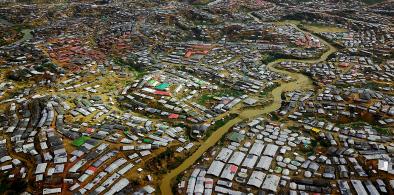
Bangladesh's Rohingya camps are growing security and environmental hazard

Activities of militant organizations have developed around the Rohingya camps in Cox's Bazar. A web of militancy is spreading in the camps with the money coming from six countries including the Middle East and Pakistan.

Pakistan's Chinese bugbear: Growing attacks pose a new security challenge for Islamabad

The Chinese presence in Pakistan, with or outside of the CPEC, and the TTP's defiance, although not directly related, do pose growing security challenges to Pakistan and China, especially when the two want to combine forces to extend the CPEC to Afghanistan.

RSS leader's outreach to Muslims: Reconciliation or cooption?

Today the international image of India, courtesy the RSS-BJP, is a Hindu supremacist one where minorities are insecure, where identity issues are getting precedence over the issues of livelihood. RSS is the fountainhead of this politics; it needs introspection if it is serious about the process of dialogue and reconciliation.

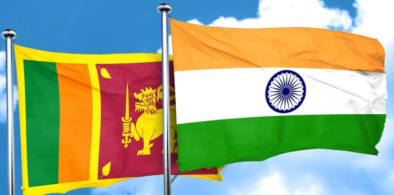
India and Sri Lanka need to circumvent irritants, focus on diversification of ties

India could reset its approach by engaging with Sri Lanka as a country in the Indo-Pacific region and not just as a neighbour.

India ‘matters more', seeks to be the 'bridge', the 'voice' for the developing world; generous recognition for India's actions

For India, global governance reform starts with Security Council reforms and here New Delhi got support across blocs at the General Assembly meeting from both the US and Russia, as well as other countries. It is the only country to get the backing of both Washington and Moscow.

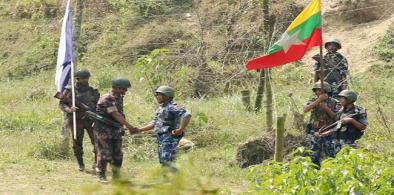
Bangladesh should tread cautiously in resolving growing border tensions with Myanmar, step up diplomacy

In a broadcast on Wednesday, Bangladesh Army Chief General S M Shafiuddin Ahmed stated that his troops were prepared to respond against Myanmarese provocations if necessary.

In the absence of water-sharing deal, India should help Bangladesh with Teesta water management

Building a reservoir on the Teesta will help Bangladesh create a climate-resilient infrastructure which will be useful in better managing the common river water.

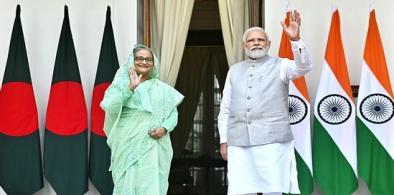
Bangladesh making steady progress in ensuring labor rights

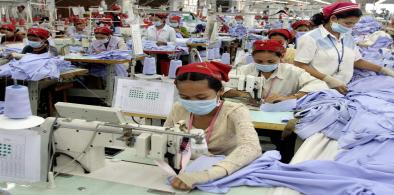
Functioning trade unions, decreasing number of child labourers and the introduction of labour courts and foundations are demonstrations of the extraordinary achievements of Bangladesh in ensuring labour rights.