Representational Photo

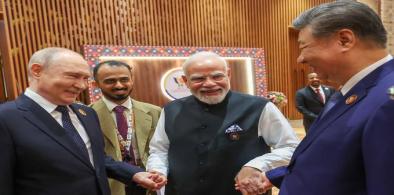
India-China Eight-Point Agreement: A Tactical Thaw, but Trust Remains Elusive

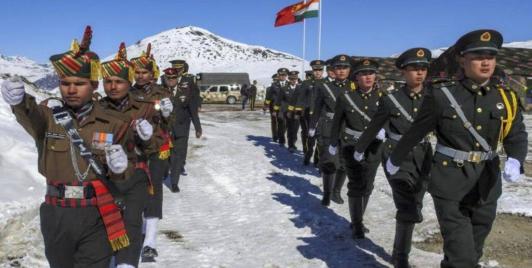
Hopes for Sino-Indian relations centre on a cautious diplomatic thaw, institutionalised border stability and renewed high-level engagement. Indian negotiators and defence planners are well aware that “trust must be verified”. While the activation of these eight points provides valuable channels to prevent an accidental kinetic clash on the ground, the real test of China’s sincerity will not be the joint statements signed in Beijing, but whether it ceases infrastructure build-ups and respects the historical patrolling rights of Indian troops along the LAC.

What's in a Name? Nomenclature Diplomacy Says Much About Changing Geopolitics

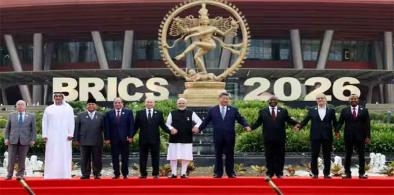
By removing the ‘Indo’ prefix from Indo-Pacific the US implicitly acknowledges that it no longer unilaterally defines the eastern strategic landscape. Regional organisations like BRICS continue to redefine the lexicon of ‘rules-based order’ to insulate themselves from western domination.

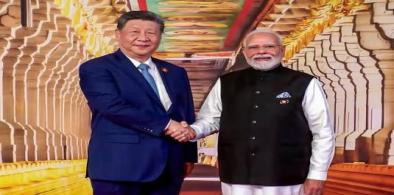
India-China Ties: Modi-Xi Meeting Signals Limited Thaw

The bilateral discussion between Prime Minister Narendra Modi and Chinese President Xi Jinping on the sidelines of the 18th BRICS Summit indicates surge in mutual ties, particularly by way of trade. However, little can be expected by way of full settlement of the boundary dispute.

EU Fast-Tracks FTA with India as BRICS Summit Signals Shifting Geopolitical Dynamics

The timing of the EU announcement coincided with the BRICS+ Summit in New Delhi, creating speculation about whether the EU was seeking to reinforce its strategic engagement with India amid the growing influence of the BRICS grouping.

More on Geopolitics, Security and Strategic Affairs

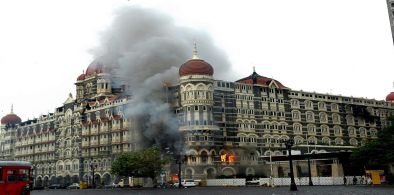
Remembering 26/11: The challenges remain but have the lessons been learnt?

It is imperative to understand counter-terror responses for India must come from an effective processing of intelligence alerts, quick mobilization of first responders, and a unified collaboration in carrying out the required operations under a single command control.

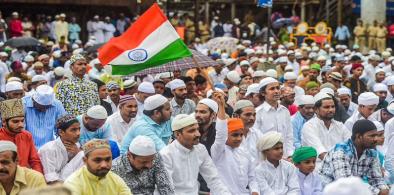
The myth and truth about Muslim 'population explosion' in India

The phobia of Muslim demographic dominance remains the basis of Hindu right-wing politics. It is a potent weapon to create apprehension and polarize voters

Why Nepal’s coming elections are of great interest to China

The indications are that Prime Minister Deuba will return to power in the general elections but this time the Chinese stakes in these elections are higher than before. With his third-term presidency, Xi Jinping is more than eager to realize China’s illegal territorial claims in India, Nepal and Bhutan.

Sri Lanka's Gota Go Gama protests: Creating a new space for religious and ethnic diversity

Gota Go Gama became a new political and cultural metaphor with numerous dimensions. It was a turning point for Sri Lanka that contributed to creating a new space for diversity.

Can military talks between Bangladesh and Myanmar be a prelude to larger solutions?

Improved military ties between Bangladesh and Myanmar can aid in the smoothing of ties and the resolution of long-standing issues such as the Rohingya crisis, maritime disputes, and trans-border crimes. 

Can Saudi Arabia play the intermediary between India and Pakistan?

Saudi Arabia has been reorienting its foreign policy, and while maintaining its individual relationships with India and Pakistan, it could possibly play a role as an intermediary between both countries. 

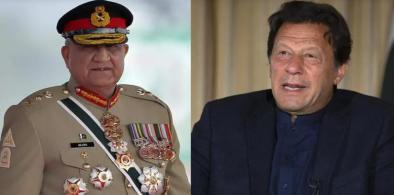
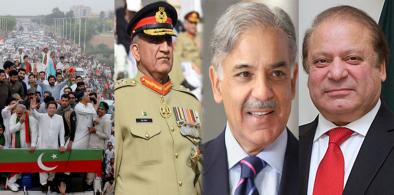
Is the army's 'political engineering' and 'proxy politics' doing Pakistan in?

Khan, the government, and the military establishment seem to have taken extreme positions, leaving no room for rapprochement for now, plunging Pakistan into political chaos.

The tragedy of South Asia: Travels through India, Sri Lanka, Bangladesh and Nepal

The tragedy of our times is that the South Asian region has the cultural resources to live with diversity. This has, in fact, been its millennial tradition. Despite these cultural resources, the region is mired in majority-minority conflicts that can be debilitating.

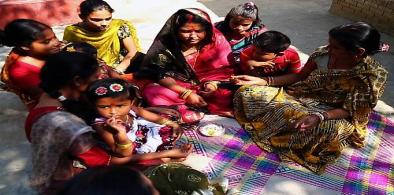
Woven dry-grass mats across South Asia are an expression of common culture

Transcending narrow geographical borders, handicrafts often make their own presence felt as a representation of humanity, connecting communities. One such important handicraft item is the dry grass mats of the region of South Asia

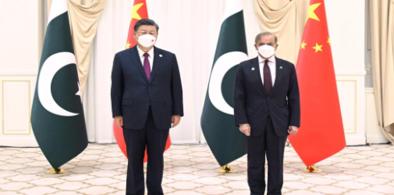
Pakistan PM’s China visit will reinforce the anti-India axis

Indian policymakers should be ready for the next phase of synchronized China-Pakistan actions to undermine India.

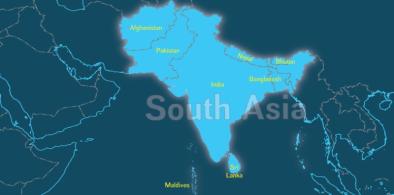
South Asia in the Developing Asia perspective: Need to balance external borrowings and growth impulses

The situation however has been somewhat different in certain countries of South Asia which have raised resources through external borrowings despite having current account deficits - Afghanistan, Maldives, Bhutan, Nepal Pakistan, and Sri Lanka.  Caution needs to be exercised by them in resorting to such borrowings.

Pakistan: Another winter of discontent

The salvation for Pakistan’s body politic, wherein democracy is aspired by those who are not democrats themselves, may remain unfortunately with the men in uniform.

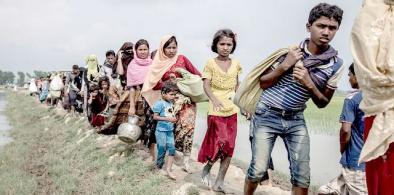
Rohingya crisis in Bangladesh: No light at the end of the return tunnel

There is no light at the end of the repatriation tunnel; one must look at other more viable and pragmatic scenarios rather than transporting almost a million people at gunpoint to Rakhine

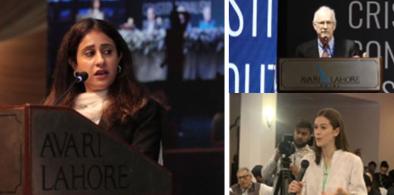
Struggles for democracy and human rights in South Asia: Taking forward Asma Jahangir's legacy

From religious bigotry in India targeting Muslims, to Sri Lanka’s economic woes and food insecurity, to the plight of the Afghans, particularly women, discussions at the conference took up these and other issues like the impact of climate change, press freedom and creeping censorship, to transgender rights, enforced disappearances, and arbitrary detentions.

Celebrating India's festival diversity: Festivals can enhance income, employment, mutual understanding

India annually celebrated major festival days of all faiths, but these festivities are largely confined to their believers. If those communities, however, were to become more open to secular participation on the principle that if faiths are for believers, associated festivities are for all to enjoy.