The present delay in conducting the national census, when even some of our South Asian neighbours have conducted theirs, despite covid difficulties, is cause for concern.


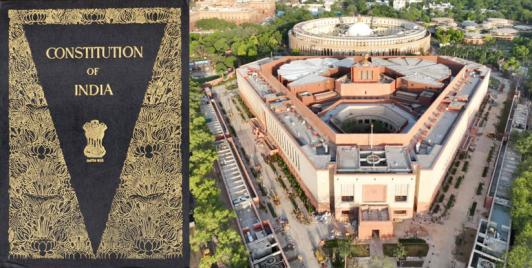
India’s constitutional design operates on the line of a fully functional parliamentary democracy anchored in constitutional supremacy rather than parliamentary sovereignty. In an era of evolving challenges, the supremacy of the Constitution continues to serve as the ultimate safeguard of Indian polity.

Eighty years after Partition, the overarching lesson of this comparative history of India and Pakistan is that national trajectories are not preordained by culture, talent, or geography. They are determined by the rules and values a state enshrines for itself in its formative years.
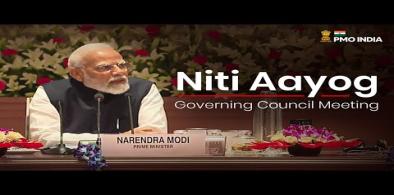
It is time the Indian district administration’s focus shifts to economic development and prosperity-building through strategic planning, resource mobilisation, and effective resource allocation; productivity enhancement, competitiveness, skill-building, employment generation and ensuring the security of life and property.

The man who once led Pakistan to its only World Cup triumph has now become the subject of an international cricketing appeal for humane treatment. The more the authorities try to keep his story behind prison walls, the more the cricketing world appears determined to take it beyond them.
The present delay in conducting the national census, when even some of our South Asian neighbours have conducted theirs, despite covid difficulties, is cause for concern.

Bangladesh has two laws on forest protection, only one of which, the 2019 revision of the 1927 Forest Act, makes even a glancing mention of infrastructure projects inside forests. It prohibits making any changes to a restricted forest, and threatens violators with up to five years in prison and up to 50,000 taka ($490) in fines. That hasn’t stopped the state from building multiple-lane roads through protected forests.

‘Third World’ and ‘Developed Nation’ are terms that are derogatory and ethnocentric in concept. The terns 'Global North' and the 'Global South' can offer researchers, columnists, as well as development partners a politically balanced perspective.
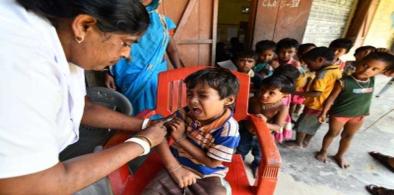
Interestingly, strategies employed during the Covid pandemic are being replicated. Much like the Cowin app was used to track and monitor Covid vaccinations, the Indian government plans an app to monitor every eligible child to ensure that they are up to date with their vaccination schedules

The port can grow to be one of the key hubs of trade and business in South Asia as a result of its geographic advantages and deep-sea port capabilities.

If India focuses on improving bilateral economic and connectivity initiatives with Bangladesh, the economic development of this region is inevitable.

The manner in which bulldozers as tools of retaliatory State violence and punishment are being normalised now is akin to illegal 'encounter' (extra-judicial) killings which have now been normalised by police forces across the country.

I learned, too, that on average, the Gulf countries send half a dozen coffins a week to Nepal with the remains of somebody’s beloved family member. This didn’t just apply to Nepal — workers from India, Bangladesh, Pakistan, and African countries faced a similar fate.
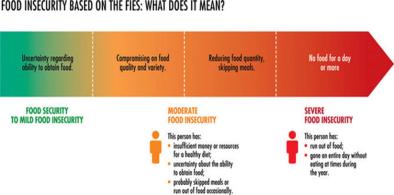
The root causes behind the food insecurity status of Sri Lanka are two-fold. Short-sighted policies such as the chemical fertilizer ban imposed by the Rajapaksa government generated a domino effect on agricultural production. Additionally, foreign exchange constraints severely limited food imports.

As Mahatma Gandhi said we should be the change that we want to see or in other words we should practice what we preach. That is never the case. So we heard pontification on how we should reduce the carbon footprint to make this world sustainable by people who never practice sustainable living in their personal life.

If trade and cultural relations between Bangladesh and Northeast India improve, the picture of the entire region will change.

Writers of the three winning entries, one from Pakistan and two from India, read their works out online at the Spelt conference to a full auditorium. The meritorious list included four stories from Pakistan, three from India, two from Nepal and one from the Philippines.

The ranking process is a vicious circle wherein higher-ranking institutions can mobilize more resources and vice versa. Unfortunately, those institutions which are not part of this frenzy competition will eventually be excluded from the higher education space dominated by the current neoliberal discourse.

The space industry is keenly looking forward to the Indian government's new space policy and hoping for ease of doing business to take a practical shape.
What applies to India can also work for other nations. So one hopes that world leaders participating in COP27 will reach actionable decisions and obtain the funding already promised by the developed countries to make a serious start to creating a sustainable global environment and avoid further climate change within the next few decades.