
In South Asia as a whole, the report said, “The Russian Federation’s invasion of Ukraine has weighed on growth in the South Asia region (SAR) after a solid recovery in the second half of last year and amplified pre-existing vulnerabilities”
Nepal does not need to become Silicon Valley. It does not need to copy India, China, Singapore or Canada. Nepal needs an AI strategy rooted in its own realities: young talent, hydropower potential, local problems, growing IT services, tourism, agriculture, small businesses and a global diaspora.
The core data architecture — a national road safety data lake, AI-powered enforcement, multilingual public awareness — is replicable at any scale, in any South Asian language, in any South Asian urban or rural road environment. The technology does not need to be reinvented for Dhaka, Kathmandu or Karachi. It needs to be validated in Colombo and Delhi first.
However, 118 countries, mostly developing ones, do not participate in international discussions on AI governance, according to UNCTAD. This means that billions of people may live within rules they were not involved in making.
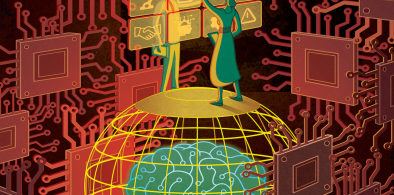
What we are witnessing today may only be the opening chapter. The next breakthroughs in AI may not emerge from software laboratories alone, but from nuclear reactors, cooling technologies, offshore infrastructure, advanced materials, and energy networks. The race to build intelligence has quietly become a race to master power and heat.
In South Asia as a whole, the report said, “The Russian Federation’s invasion of Ukraine has weighed on growth in the South Asia region (SAR) after a solid recovery in the second half of last year and amplified pre-existing vulnerabilities”
Significantly, the country’s IT exports are rising and has already crossed over $2 billion in the first eight months of the current financial year. In 2021, the Overseas Investor Chamber of Commerce and Industry (OICCI) said in its report that the country had the potential of $10 billion in annual IT exports.
From Thursday this week, Nepal started selling electricity, around 37 MW to Indian buyers, Nepal Electricity Corporation spokesperson Suresh Bhattarai confirmed to The Kathmandu Post. More bids are invited to sell 200 MW in India’s power exchange market on a long-term basis.
Officials of both Nepal and Sri Lanka are already in talks with Indian officials about procuring fertilizers on an immediate basis. Nepal’s Agriculture Minister Mahendra Rai Yadav this week held talks with his Indian counterpart Mahendra Singh Tomar to import 60000 tons of urea and 20000 tons of DAP.
The country’s foreign exchange reserves are declining and just enough to cover imports for two months. Last week, authorities announced a ban on over two dozen luxury and other items to save foreign exchange reserves.
At a time when foreign exchange reserves are draining due to rising import bills, the country is due to pay major loans in 2023 and 2024. Going forward, if the recovery of the tourism industry gets impacted by the ongoing crisis, it will further limit the Maldives' government’s ability to fulfill its external debt obligations.
With the economic crisis and the shortage of forex, the Indian credit line of USD 500 million for fuel imports has provided a lifeline to the island nation, which is currently experiencing its worst economic crisis since gaining independence in 1948. With long lines for fuel, cooking gas, essentials in short supply and long hours of power cuts, the public has been suffering for months.
“As the economy recovers [from the Covid-19 pandemic], our assistance will increase access to economic opportunities by promoting employment in critical sectors such as tourism and renewable energy. It will also enhance social service delivery in the islands,” Faris H Hadad-Zervos, the World Bank Country Director for Maldives, Nepal, and Sri Lanka was quoted as saying by The Times of Addu.
On Friday, when asked about the possibility of importing cheap fuel and wheat from Russia, Pakistan's Foreign Office didn’t rule out the possibility. Khan has constantly accused the Sharif government of not pursuing talks with Russia for fuel.
Sri Lanka will require fertilizers worth over $500 million this year and the government has sought fertilizers both from India and China. New Delhi had earlier assured of all possible help. While New Delhi has extended assistance worth over $3 billion this year, China has yet to extend any significant help despite Colombo’s repeated request.
Prior to the war, Russia was the top source market for its tourism. But the number of tourists has been declining as the war progressed, Solih said. The government’s expenditure, subsidies, and import bills are also rising.
Tourism accounts for 70 percent of the government’s total revenue. The government’s spending target on subsidies has already crossed the limit set by the budget 2022, making it extremely hard to reduce any taxes, which could result in potential revenue loss.
Indian authorities have explained that the wheat export ban has been undertaken to ensure domestic food availability and minimize food price-related inflation while supporting the legitimate requirements of India's neighbours and other nations in need.
Modi also invited Uniqlo's enhanced participation in India's journey to becoming a manufacturing hub for textiles, particularly through the use of technologies in textile manufacturing. Yanai said Uniqlo is exploring investments in the production and retail industry in India.
“Post pandemic, India has emerged much stronger in international trade and international exchanges. I believe that the target of a $5 trillion economy by 2030 is not only achievable but we can get there before that,” Puri said.