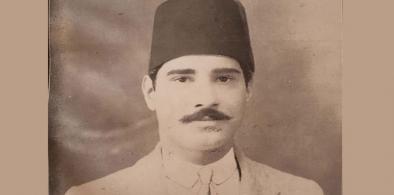

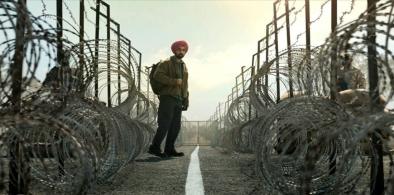

My grandfather’s journey across Wagah is a story I have heard Karamat Sahib narrate many times. As I write, I can hear his raspy voice recount it to me, as he did when I joined him for the immersion of Kuldip Nayar’s ashes.
The result was a phenomenal script with a stellar cast and a music which not only took the storyline ahead but also paused to reflect upon each moment. Satyajit’s rendition of the story has several of his beliefs reflected, including his anti-war stance, his love for performative arts, including various forms of classical dance, his love for history and regional history, amidst others, his stance against caste and class discrimination and oppression of the poor and the tyranny and subjugation of the ruling class
It is a neat division and the first part of 70 pages is the Kotia-Ketaki memoir. In the second section, Chandana picks up the narrative and weaves the micro family history of the Jonas family with the macro events of the late 19th century and her grandmother's journey that brought her to Santiniketan in the 20th century.
Today, the tape-jama survives on the margins of a rapidly changing marketplace. It is still found in local bazaars, though no longer a default festive purchase for children. Yet its significance lies beyond its material presence. The garment endures as a symbol of memory—of simpler times, of long summer afternoons, and of a cultural ethos shaped by resourcefulness and tradition. Its soft cotton folds carry stories of Bengal’s textile heritage, its artisanal practices, and its ability to absorb and reinterpret external influences. In doing so, the pinny becomes more than a childhood dress—it is a living archive of history and identity.
According to the latest (2024) survey by the International Mother Language Institute, 45 languages have been identified as existing now in Bangladesh out of which there are 11 indigenous languages including Lushai (Mizo)—that have become critically endangered. Based on UNESCO data, a handful of languages which have made it to the endangered list in Bangladesh are in such a forlorn state that only 5-12 older folks from respective communities can still converse in them.
My grandfather’s journey across Wagah is a story I have heard Karamat Sahib narrate many times. As I write, I can hear his raspy voice recount it to me, as he did when I joined him for the immersion of Kuldip Nayar’s ashes.
"Poor Economics" serves as a call to action for policymakers, development practitioners, and researchers. By demonstrating the power of small, well-designed interventions, Banerjee and Duflo inspire a more humble and patient approach to fighting poverty.
The high cost of living in capitals like Islamabad and Delhi and the rising summer temperatures due to climate change is increasing alternative energy expenditures. “Who said that renewable energy has to be in the form of big power plants like an elephant?” asks India’s ‘Solar Man’ , Prof. Chetan Solanki.
He was unfailingly generous in lending his name in support of the causes I and others reached out to him for, endorsing resolutions ranging from human rights and democracy to peace between India and Pakistan. In 2018 he joined many public intellectuals in urging Bangladesh to release the photojournalist Shahidul Alam. He was also among the public intellectuals including Amartya Sen who endorsed a letter calling on Pakistan to release the jailed publisher-editor of the Jang Group Shakilur Rahman, in 2020.
Yet, despite Nehru’s disenchantment with his Afro-Asian partners, there is no denying that China did its best to undermine India’s ascendancy in the developing world and that Indian frustration with its northern neighbour grew all the more resentful because of New Delhi’s role in helping Beijing develop its links with other Afro-Asian nations.
The vision of Agnikul is to bring space within everyone’s reach, aiming to enable launches from anywhere, anytime and affordably.
The Joy of Urdu’s focus on linguistic preservation, cultural enrichment, plus promotion of social justice, and positive change through bilingual presentations and discussions helps ensure that the richness of Urdu remains alive in modern times.
The preservation of sacred trees and tree groves is paramount in the fight against rampant deforestation in India. This is a unique practice that sadly is in decline; in the interest of cleaner air and healthy communities, it needs to be promoted and preserved, not only amongst the Indian population but worldwide.
The new influencing geopolitical factor, Ved observes, is the emergence of China as the regional, even global player, in the “Heart of Asia” in what can become the new avatar of the 19th century “Great Game”. The contexts have changed, but not the strategic interests of the players, old and new.
This historic expedition, the first of its kind, marks a significant milestone in India’s maritime history.
Quite a few years ago I had given a lecture at my alma mater IIT Kanpur. I asked the students if I had the power to grant them a US green card how many would like to migrate. In the auditorium of around 200 students most raised their hands. This pursuit of excellence can be helped by the constant exposure of students to lectures by achievers. Students at an impressionable age once inspired can do wonders in later life.
We must also insulate enterprises from pressure and extortion by local power elites, which adversely distorts factory pricing and ultimately adds a burden to the consumer price. This will also enable enterprises to maintain healthy returns within the fixed MRP system, especially for FMCG
Despite all my patriotic feelings, I do not recommend a visit to Kashmir. It is ill-organized and ill-prepared to receive the rush of tourists. It lacks elementary infrastructure, basic amenities, and essential facilities at present. Worse, the tourists are always at the mercy of the local mafia.
This production of matter, life forms and galaxies will keep on happening till the space is “exhausted”, and then the cycle reverses which will finally lead to time and space coming into equilibrium. This is the eternal Brahmakala cycle where all life is destroyed at its end.
As someone from Karachi, where heritage and culture find little importance and are often forgotten, where the metropolis pushes the seashore backward, the Sri Lankan experience felt surreal. The land of Ridi Vihare held impeccable beauty and gave us much to learn and take back.