

Amid Geopolitical Realignment, Russia's Outreach to Islamic World: Putin Underscores Importance of Islam in Russian Society
Though with a Muslim population much larger than most of the OIC member countries, India has not been given its membership due to Pakistan’s objection and, unlike Russia, has not applied for observer status either. However, organisers of the KazanForum invited local Indian Consul General Jeysundkhar, who is based in Kazan, for the special session "Greater Eurasian Partnership: Development Strategy"
 May 28, 2026
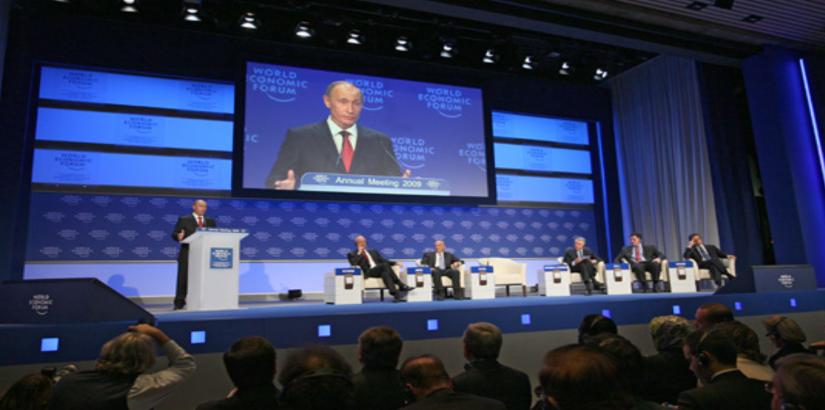
Russian Federation’s prosperous Muslim majority Republic of Tatarstan - rich in oil with advanced industry - has become Moscow’s pivot to the Islamic world as Western Europe through its sanctions has cordoned it off in the West, while West Asia is undergoing a realignment of forces following the Israeli-US attack on Iran. Amid this geopolitical storm nations are looking for safe harbour. Russia seems to be successfully capitalising on the fears of the Islamic world which was predominantly oriented towards the West during the Cold War.
On May 12-17, 2006 more than 250 delegates representing Islamic nations from North African Egypt and Algeria to Indonesia and Brunei in South-East Asia assembled for the 17th KazanForum in the capital of Tatarstan.
Kazan has been declared the cultural capital of Islamic World for 2026 by the Organisation of Islamic Cooperation (OIC, Russia holds observer status in this body). The culture ministers of OIC countries gathered there for their session chaired by Russian Federation’s Culture Minister Olga Lyubimova, who offered the counterparts from Islamic countries expertise in organising and modernising their cultural infrastructure.
The central event of the KazanForum was the meeting of the Russia-Islamic World Strategic Vision Group which was held in the modern Information Technology Park bearing the name of the founder of Soviet Computer Sciences, an ethnic Tatar, Bashir Rameev.
Emphasis on Shared Values and Culture
The central theme of the meeting was the idea of shared values as the foundation for cooperation and mutual understanding between Russia and the Islamic world.
In his welcome address, Russian President Vladimir Putin underscored the role of Islam in Russian society: "Islam is one of the world's most widespread religions in Russia. It is practiced by millions of our citizens, who make a significant contribution to the development of the national economy, science, culture, and social sphere. We strive to deepen friendly relations with all Islamic states."
Raees (head) of Republic of Tatarstan, Rustam Minnikhanov, noted that his republic represents the northernmost European Islam which is well known for religious tolerance: “ All residents of Tatarstan - Muslims, Orthodox Christians, Jews consider themselves as equal Tatarstanis belonging to Russia without any discrimination.”
Raees Minnikhanov, who chairs the local chapter of the Russia-Islamic World Strategic Vision Group, noted that over the past 20 years, Russia's relations with the countries of the OIC have become noticeably more constructive and multifaceted.
Federal officials in their speeches at KazanForum stated that shared values serve as a foundation not only for the Russian Federation’s internal societal consolidation but also for productive international dialogue with the Islamic world.
By the end of 2025, Russia's trade turnover with OIC countries had grown by 5.9%, while Russian exports had increased by 8.3%.
Though with a Muslim population much larger than most of the OIC member countries, India has not been given its membership due to Pakistan’s objection and, unlike Russia, has not applied for observer status either. However, organisers of the KazanForum invited local Indian Consul General Jeysundkhar, who is based in Kazan, for the special session "Greater Eurasian Partnership: Development Strategy," where development of regional models of sustainable cooperation were discussed.
Importance of Tatarstan to Russia
Situated 800 km east of Moscow in East-European plains on banks of the Volga and Kama rivers, Tatarstan has the total area of 67836 square km with a population of 4.01 million people of which 53.6 percent are Muslims, 39.3 percent ethnic Slav Russians and other religious communities including Jews, Buddhists and Krishnaites.
Capital Kazan hosts the Russian empire's third university after Moscow, St. Petersburg and is well known as the alma mater of the leader of Bolshevik Revolution Vladimir Ilich Lenin (Ulyanov).
It is also Russia’s major IT hub and has first-hand expertise in Artificial Intelligence and digitalisation of the economy.
Tatarstan is a major oil producer of Russia, with a highly developed petro-chemical industry. Incidentally, the famous “Druzhba” [Friendship] oil pipeline to West Europe originates here at the Almetiev oilfield of Tatneft oil corporation.
Tatarstan is home to Russia’s biggest truck plant KAMAZ situated in Naberezhnye Chelny city on the banks of Kama river.
Besides this Tatarstan and its capital Kazan are a major centre of aviation and defence industry including, helicopter plant and TU-160 strategic bombers, naval shipyard.
All these factors make it attractive to the countries of the Global South, who are looking for safe havens to park their wealth amid the weaponization of the western financial system.
FinTech Platform as per Sharia Law
According to Talia Minullina, Head of the Investment Development Agency of the Republic of Tatarstan, a FinTech platform has been created to facilitate investments in accordance with Sharia law of Islamic banking.
"This year we signed 120 agreements on the platform. Among them we can mention agreements on the land grain project, on sports, culture, education, innovations, information technologies, employment and migration policy."
Historically, Kazan was the Russian Empire’s forepost in trading with the Muslim world in Central Asia and Tatar merchants were active players in advancing Moscow’s economic interests. Today they are rediscovering their forgotten role in a new geopolitical scenario.
(The author is a veteran journalist and independent Eurasia analyst based in Moscow. Covered former Soviet Union-Russia from Gorbachev to Putin. Views expressed are personal. He can be reached at shuklamoscow@gmail.com)

Post a Comment